Tsai Chia-Fen, Chuang Chia-Hsien, Wang Yen-Po, Lin Ya-Bo, Tu Pei-Chi, Liu Pei-Yi, Wu Po-Shan, Lin Chung-Yen, Lu Ching-Liang
Faculty of Medicine, National Yang Ming Chiao Tung University, Taipei, Taiwan.
Department of Psychiatry, Taipei Veterans General Hospital, Taipei, Taiwan.
Front Aging Neurosci. 2022 Jul 27;14:885393. doi: 10.3389/fnagi.2022.885393. eCollection 2022.
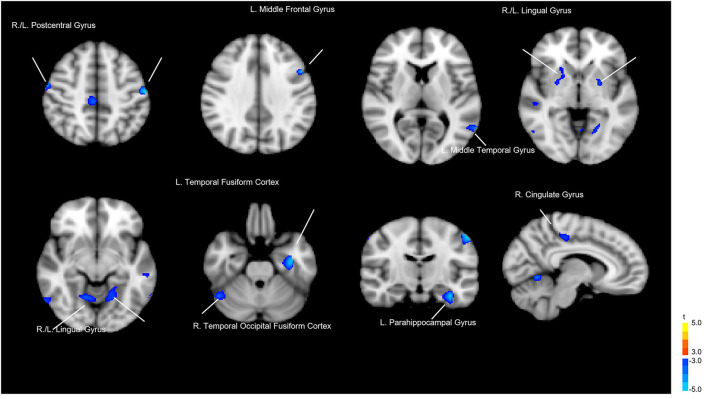
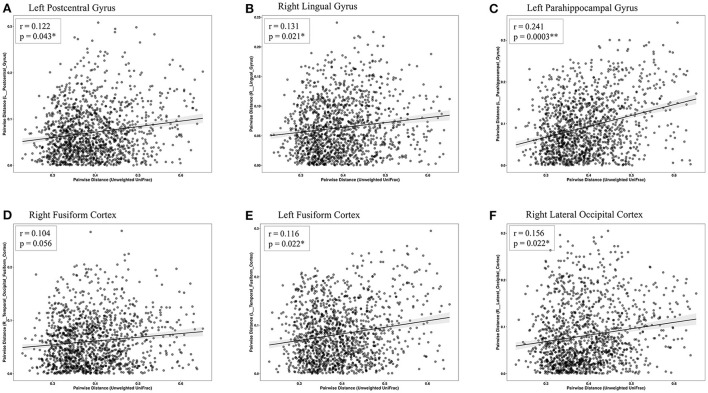
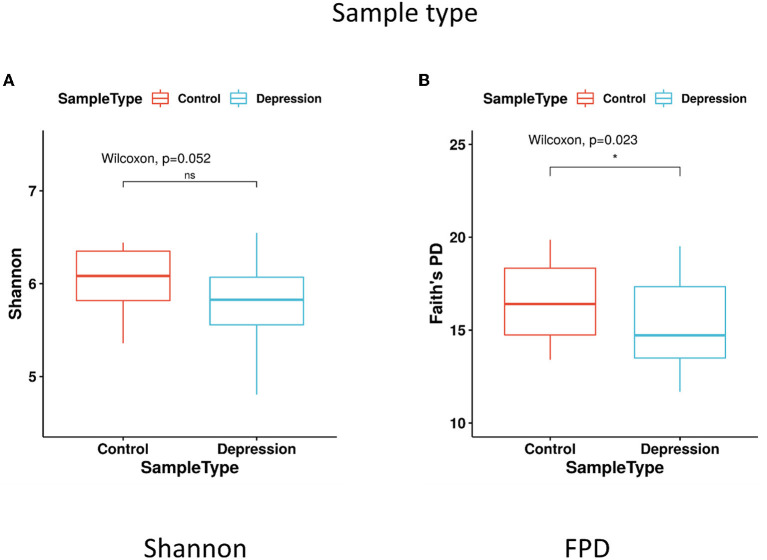
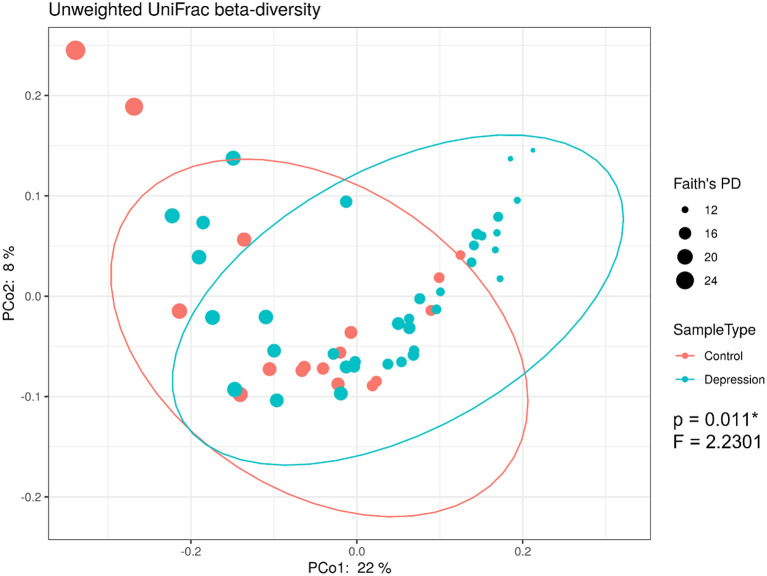
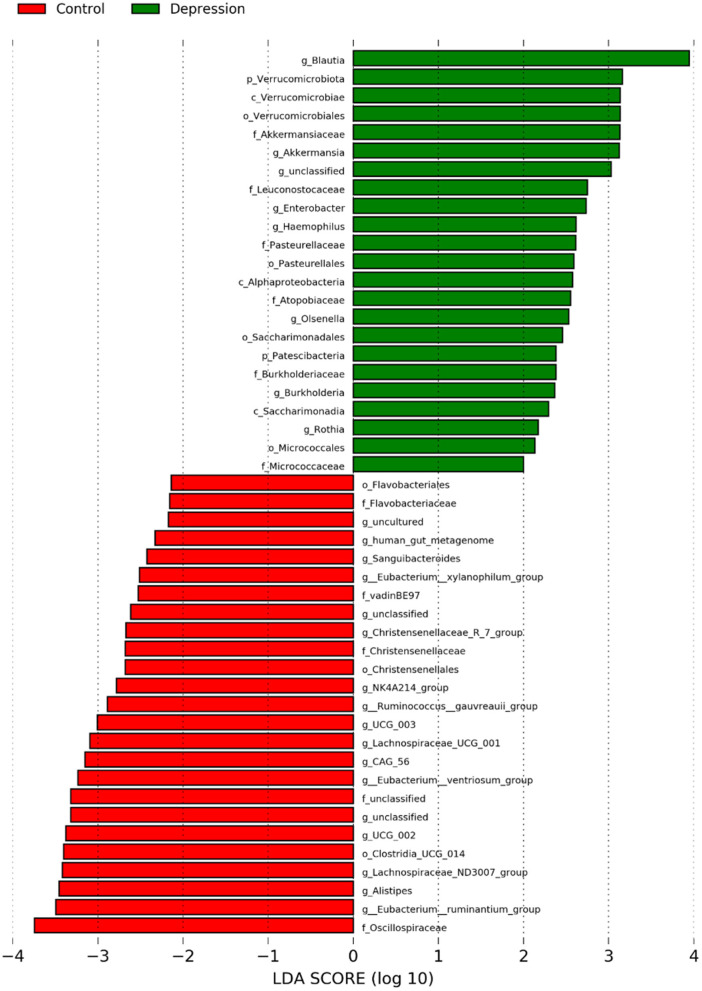
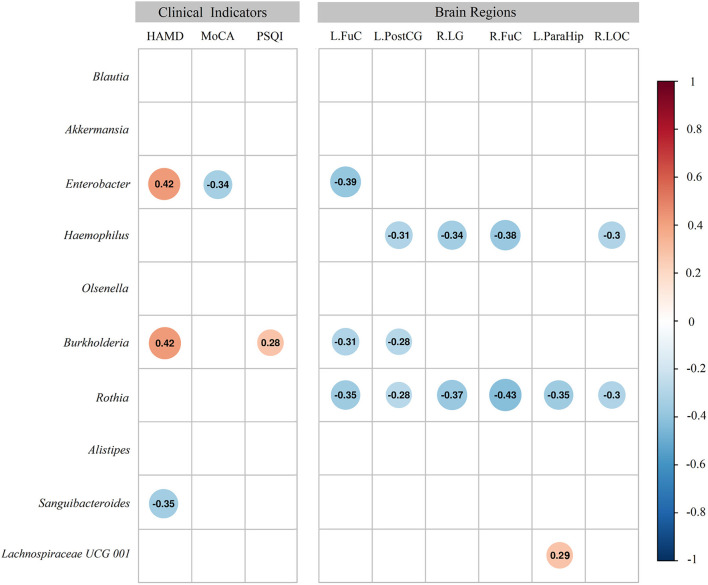
Depression is associated with gut dysbiosis that disrupts a gut-brain bidirectional axis. Gray matter volume changes in cortical and subcortical structures, including prefrontal regions and the hippocampus, have also been noted in depressive disorders. However, the link between gut microbiota and brain structures in depressed patients remains elusive. Neuropsychiatric measures, stool samples, and structural brain images were collected from 36 patients with late-life depression (LLD) and 17 healthy controls. 16S ribosomal RNA (rRNA) gene sequencing was used to profile stool microbial communities for quantitation of microbial composition, abundance, and diversity. T1-weighted brain images were assessed with voxel-based morphometry to detect alterations in gray matter volume between groups. Correlation analysis was performed to identify the possible association between depressive symptoms, brain structures and gut microbiota. We found a significant difference in the gut microbial composition between patients with late-life depression (LLD) and healthy controls. The genera and were positively correlated with depressive symptoms and negatively correlated with brain structural signatures in regions associated with memory, somatosensory integration, and emotional processing/cognition/regulation. Our study purports the microbiota-gut-brain axis as a potential mechanism mediating the symptomatology of LLD patients, which may facilitate the development of therapeutic strategies targeting gut microbes in the treatment of elderly depressed patients.
抑郁症与肠道菌群失调有关,肠道菌群失调会破坏肠-脑双向轴。在抑郁症患者中,还发现包括前额叶区域和海马体在内的皮质和皮质下结构的灰质体积发生了变化。然而,抑郁症患者肠道微生物群与脑结构之间的联系仍然难以捉摸。我们收集了36例老年抑郁症(LLD)患者和17名健康对照者的神经精神测量数据、粪便样本和脑部结构图像。采用16S核糖体RNA(rRNA)基因测序对粪便微生物群落进行分析,以定量微生物组成、丰度和多样性。使用基于体素的形态学方法评估T1加权脑图像,以检测两组之间灰质体积的变化。进行相关性分析,以确定抑郁症状、脑结构和肠道微生物群之间可能的关联。我们发现老年抑郁症(LLD)患者与健康对照者的肠道微生物组成存在显著差异。某属和某属与抑郁症状呈正相关,与记忆、体感整合以及情绪处理/认知/调节相关区域的脑结构特征呈负相关。我们的研究表明,微生物群-肠-脑轴是介导老年抑郁症(LLD)患者症状的潜在机制,这可能有助于制定针对肠道微生物的治疗策略,用于治疗老年抑郁症患者。