Yuan Jun, Liu Rongpeng, Sheng Shasha, Fu Haihui, Wang Xiaoyun
School of Nursing, Jiangxi University of Chinese Medicine, Nanchang, China.
Research Center for Traditional Chinese Medicine Resources and Ethnic Minority Medicine, Jiangxi University of Chinese Medicine, Nanchang, China.
Front Plant Sci. 2022 Jul 28;13:889370. doi: 10.3389/fpls.2022.889370. eCollection 2022.
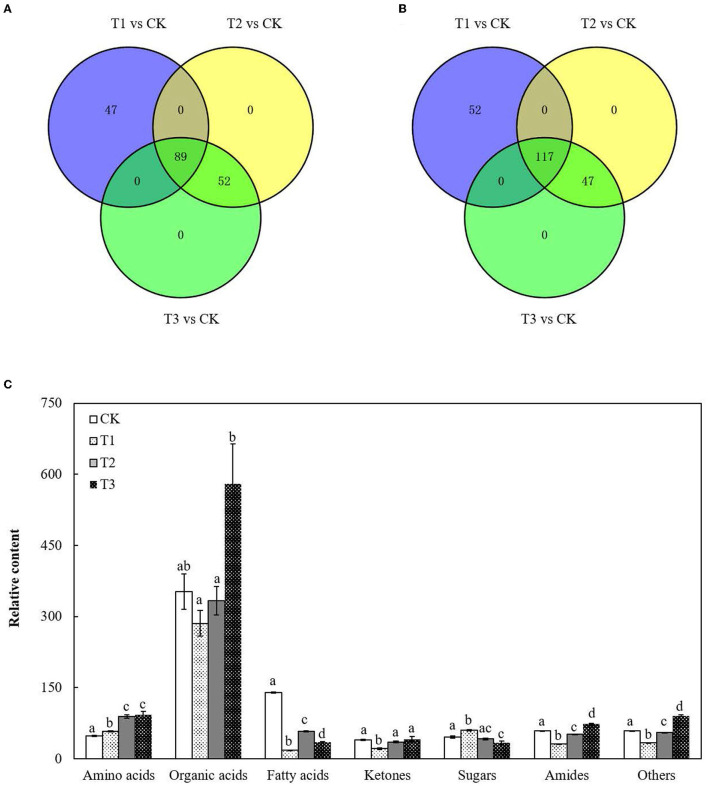
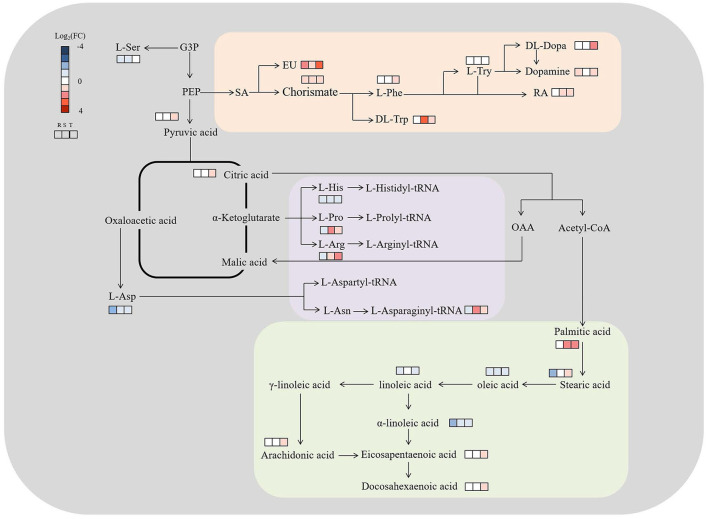
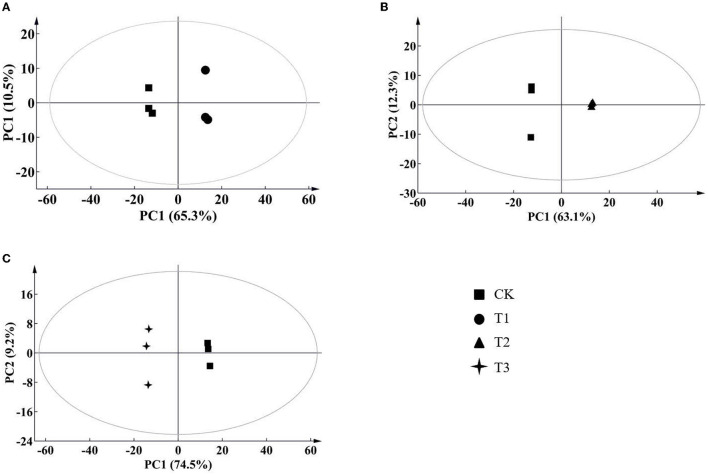
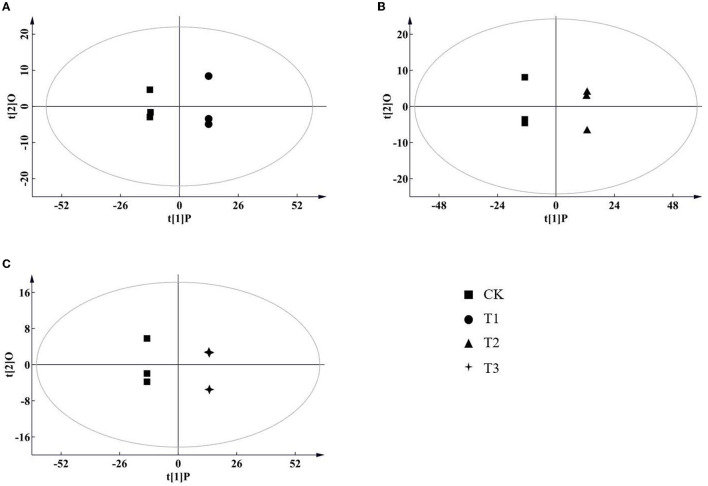
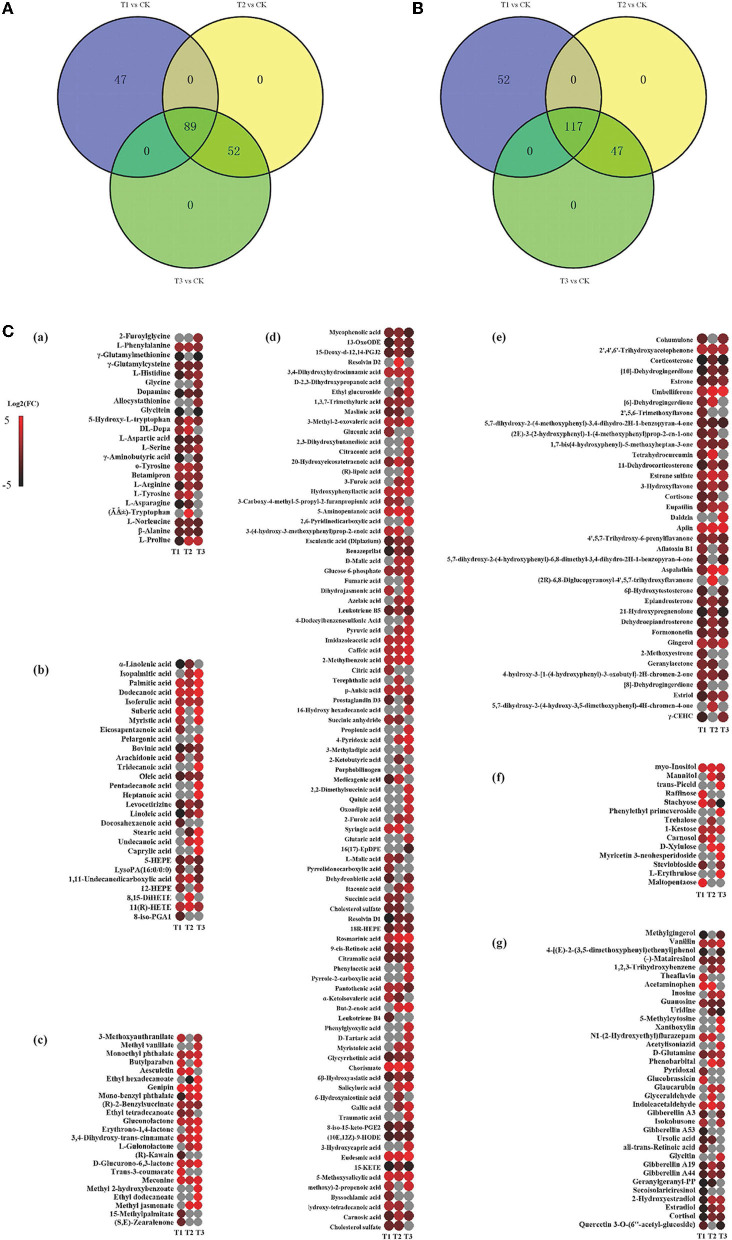
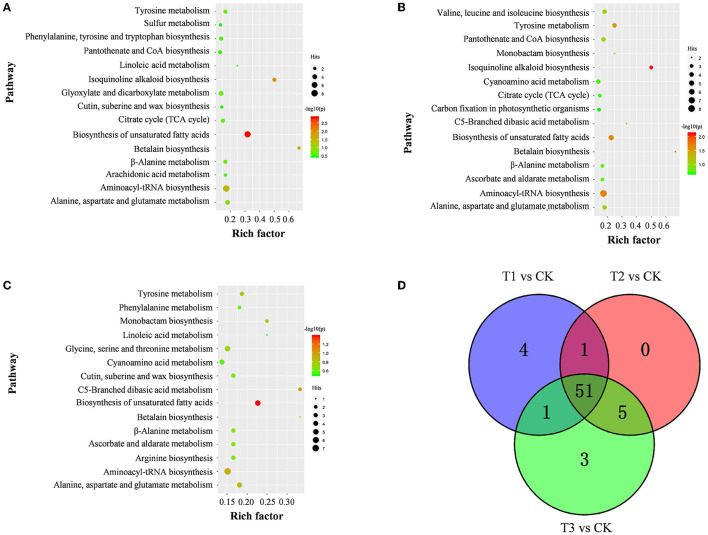
, a medicinal and edible plant, has been extensively applied to treat cardiovascular diseases and chronic hepatitis. Cadmium (Cd) affects the quality of , posing serious threats to human health. To reveal the metabolic mechanisms of 's resistance to Cd stress, metabolite changes in roots treated with 0 (CK), 25 (T1), 50 (T2) and 100 (T3) mg kg Cd by liquid chromatography coupled to mass spectrometry (LC-MS/MS) were investigated. A total of 305 metabolites were identified, and most of them were amino acids, organic acids and fatty acids, which contributed to the discrimination of CK from the Cd-treated groups. Among them, mainly upregulated o-tyrosine, chorismate and eudesmic acid in resistance to 25 mg kg Cd; DL-tryptophan, L-aspartic acid, L-proline and chorismite in resistance to 50 mg kg Cd; and L-proline, L-serine, L-histidine, eudesmic acid, and rosmarinic acid in resistance to 100 mg kg Cd. It mainly downregulated unsaturated fatty acids (e.g., oleic acid, linoleic acid) in resistance to 25, 50, and 100 mg kg Cd and upregulated saturated fatty acids (especially stearic acid) in resistance to 100 mg kg Cd. Biosynthesis of unsaturated fatty acids, isoquinoline alkaloid, betalain, aminoacyl-tRNA, and tyrosine metabolism were the significantly enriched metabolic pathways and the most important pathways involved in the Cd resistance of . These data elucidated the crucial metabolic mechanisms involved in Cd resistance and the crucial metabolites that could be used to improve resistance to Cd stress in medicinal plant breeding.
[植物名称]是一种药食两用植物,已被广泛应用于治疗心血管疾病和慢性肝炎。镉(Cd)会影响[植物名称]的品质,对人类健康构成严重威胁。为揭示[植物名称]对镉胁迫的代谢机制,采用液相色谱-质谱联用(LC-MS/MS)技术研究了用0(对照)、25(T1)、50(T2)和100(T3)mg·kg镉处理的[植物名称]根系中的代谢物变化。共鉴定出305种代谢物,其中大多数是氨基酸、有机酸和脂肪酸,这些有助于区分对照与镉处理组。其中,[植物名称]在抵抗25 mg·kg镉时主要上调邻酪氨酸、分支酸和泽兰酸;在抵抗50 mg·kg镉时上调DL-色氨酸、L-天冬氨酸、L-脯氨酸和分支酸盐;在抵抗100 mg·kg镉时上调L-脯氨酸、L-丝氨酸、L-组氨酸、泽兰酸和迷迭香酸。它在抵抗25、50和100 mg·kg镉时主要下调不饱和脂肪酸(如油酸、亚油酸),在抵抗100 mg·kg镉时上调饱和脂肪酸(尤其是硬脂酸)。不饱和脂肪酸生物合成、异喹啉生物碱、甜菜碱、氨酰-tRNA和酪氨酸代谢是显著富集的代谢途径,也是[植物名称]抗镉的最重要途径。这些数据阐明了[植物名称]抗镉的关键代谢机制以及可用于提高药用植物育种中对镉胁迫抗性的关键代谢物。