Department of Orthopedics, Chongqing Key Laboratory of Pediatrics, Ministry of Education Key Laboratory of Child Development and Disorders, National Clinical Research Center for Child Health and Disorders, China International Science and Technology Cooperation base of Child development and Critical Disorders, Children's Hospital of Chongqing Medical University, Chongqing, China.
Front Public Health. 2022 Jul 27;10:879523. doi: 10.3389/fpubh.2022.879523. eCollection 2022.
Osteosarcoma (OS) is the primary malignant bone tumor that most commonly affects children and adolescents. Recent years effective chemotherapy have improved the 5-year survival in osteosarcoma patients to up to 60%-70%. Still, there is a lack of novel therapeutic strategies to enhance further survival. Our study aimed to evaluate the clinical significance of pretreatment inflammatory-based parameters, including PLT, NLR, and SII, as prognostic indicators of survival in pediatric osteosarcoma patients.
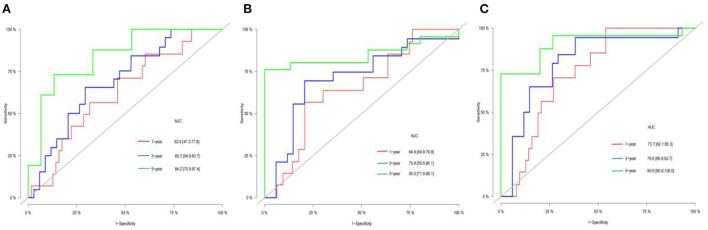
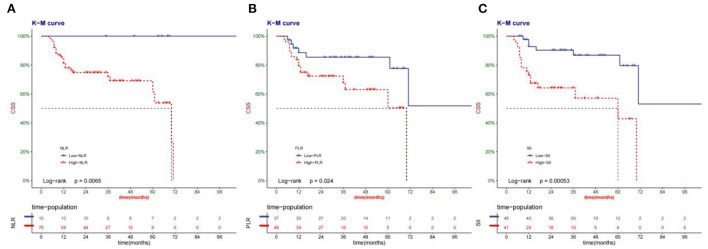
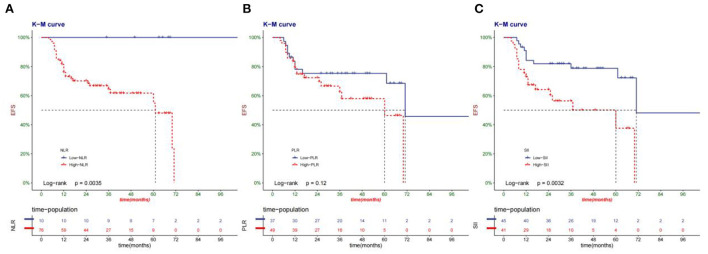
A total of 86 pediatric osteosarcoma patients between 2012 and 2021 in the Department of Orthopedics or tumor Surgery of Children's Hospital affiliated to Chongqing Medical University were retrospectively analyzed. The clinicopathological variables and systematic inflammatory biomarkers, including NLR, PLR and SII, was performed by the A Receiver operating characteristic (ROC) curve and Cox proportional risk regression model. According to the results of multivariate analysis, a prognostic nomogram was generated, and the concordance index (C-index) was calculated to predict the performance of the established nomogram. The survival curve was plotted by the Kaplan-Meier method.
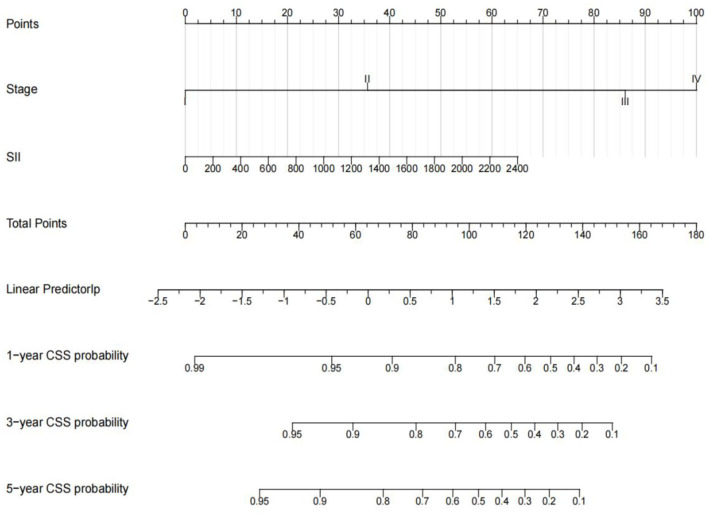
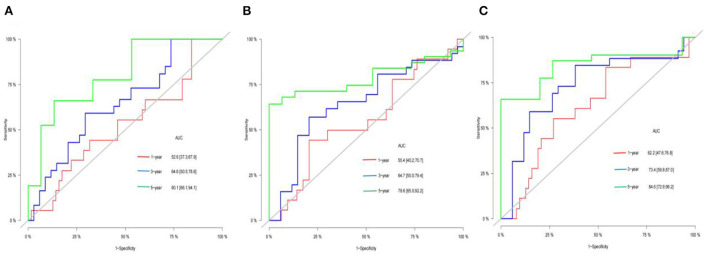
Univariate analysis showed that TNM stage, tumor size, NLR value, PLR value, SII value, neutrophil count and platelet count were related to CSS ( < 0.05). According to multivariate analysis, only TNM stage ( = 0.006) and SII values ( = 0.015) were associated with poor prognosis.To further predict survival in pediatric osteosarcoma patients, multivariate Cox regression analysis was used to predict cancer-specific survival at 1, 3 and 5 years. And constructed a nomogram model to predict children's CSS. The C-index of the nomogram is 0.776 (95%CI, 0.776-0.910), indicating that the model has good accuracy.
Preoperative SII and TNM staging are independent prognostic markers for pediatric osteosarcoma patients. SII may be used in conjunction with TNM staging for individualized treatment of pediatric osteosarcoma patients in future clinical work.
骨肉瘤(OS)是最常见于儿童和青少年的原发性恶性骨肿瘤。近年来,有效的化疗使骨肉瘤患者的 5 年生存率提高至 60%-70%。然而,仍然缺乏新的治疗策略来进一步提高生存率。我们的研究旨在评估术前炎症相关参数(包括血小板、中性粒细胞与淋巴细胞比值和炎症指标)作为儿童骨肉瘤患者生存的预后指标的临床意义。
回顾性分析 2012 年至 2021 年在重庆医科大学附属儿童医院骨科或肿瘤外科接受治疗的 86 例儿童骨肉瘤患者的临床病理变量和系统炎症生物标志物,包括 NLR、PLR 和 SII。采用受试者工作特征(ROC)曲线和 Cox 比例风险回归模型进行分析。根据多变量分析的结果,生成一个预后列线图,并计算一致性指数(C-index)以预测建立的列线图的性能。通过 Kaplan-Meier 方法绘制生存曲线。
单因素分析显示,TNM 分期、肿瘤大小、NLR 值、PLR 值、SII 值、中性粒细胞计数和血小板计数与 CSS 相关(<0.05)。根据多因素分析,只有 TNM 分期(=0.006)和 SII 值(=0.015)与不良预后相关。为了进一步预测儿童骨肉瘤患者的生存情况,我们采用多变量 Cox 回归分析预测儿童骨肉瘤患者的 1、3 和 5 年癌症特异性生存率,并构建了一个预测儿童 CSS 的列线图模型。该列线图的 C-index 为 0.776(95%CI,0.776-0.910),表明该模型具有良好的准确性。
术前 SII 和 TNM 分期是儿童骨肉瘤患者的独立预后标志物。在未来的临床工作中,SII 可能与 TNM 分期联合用于儿童骨肉瘤患者的个体化治疗。