Xu Jijian
Department of Chemical and Biomolecular Engineering, University of Maryland College Park, College Park, MD, 20742, USA.
Nanomicro Lett. 2022 Aug 16;14(1):166. doi: 10.1007/s40820-022-00917-2.
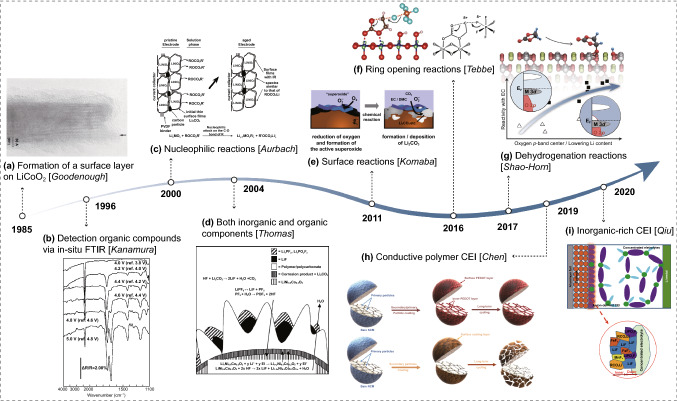
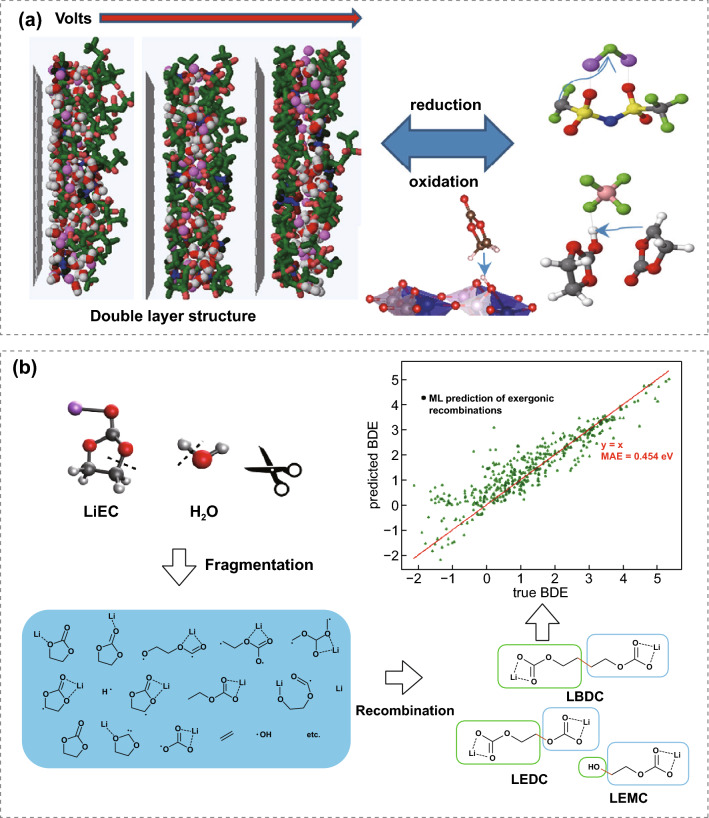
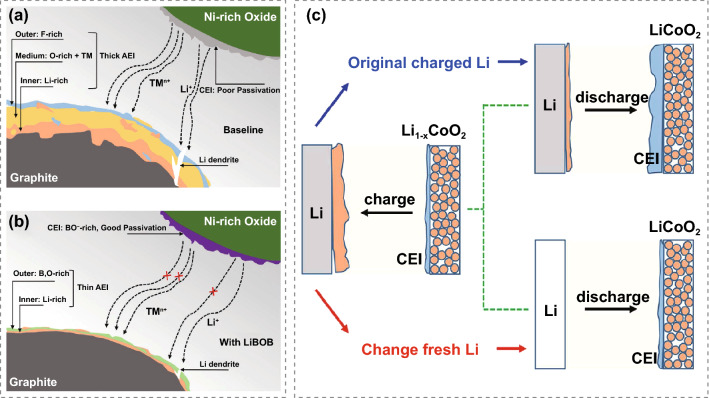
The thermal stability window of current commercial carbonate-based electrolytes is no longer sufficient to meet the ever-increasing cathode working voltage requirements of high energy density lithium-ion batteries. It is crucial to construct a robust cathode-electrolyte interphase (CEI) for high-voltage cathode electrodes to separate the electrolytes from the active cathode materials and thereby suppress the side reactions. Herein, this review presents a brief historic evolution of the mechanism of CEI formation and compositions, the state-of-art characterizations and modeling associated with CEI, and how to construct robust CEI from a practical electrolyte design perspective. The focus on electrolyte design is categorized into three parts: CEI-forming additives, anti-oxidation solvents, and lithium salts. Moreover, practical considerations for electrolyte design applications are proposed. This review will shed light on the future electrolyte design which enables aggressive high-voltage cathodes.
目前商用碳酸盐基电解质的热稳定性窗口已不足以满足高能量密度锂离子电池对正极工作电压不断提高的要求。对于高压正极电极而言,构建一个坚固的正极-电解质界面(CEI)以将电解质与活性正极材料分离,从而抑制副反应至关重要。在此,本综述简要介绍了CEI形成机制和组成的历史演变、与CEI相关的最新表征和建模,以及如何从实际电解质设计的角度构建坚固的CEI。对电解质设计的关注分为三个部分:CEI形成添加剂、抗氧化溶剂和锂盐。此外,还提出了电解质设计应用的实际考虑因素。本综述将为实现高电压正极的未来电解质设计提供思路。