Department of Internal Medicine, University of Toledo, 2100 West Central Ave, Toledo, OH, 43606, USA.
University of Toledo Libraries, University of Toledo, Toledo, OH, USA.
Clin Rheumatol. 2022 Dec;41(12):3615-3627. doi: 10.1007/s10067-022-06307-8. Epub 2022 Aug 16.
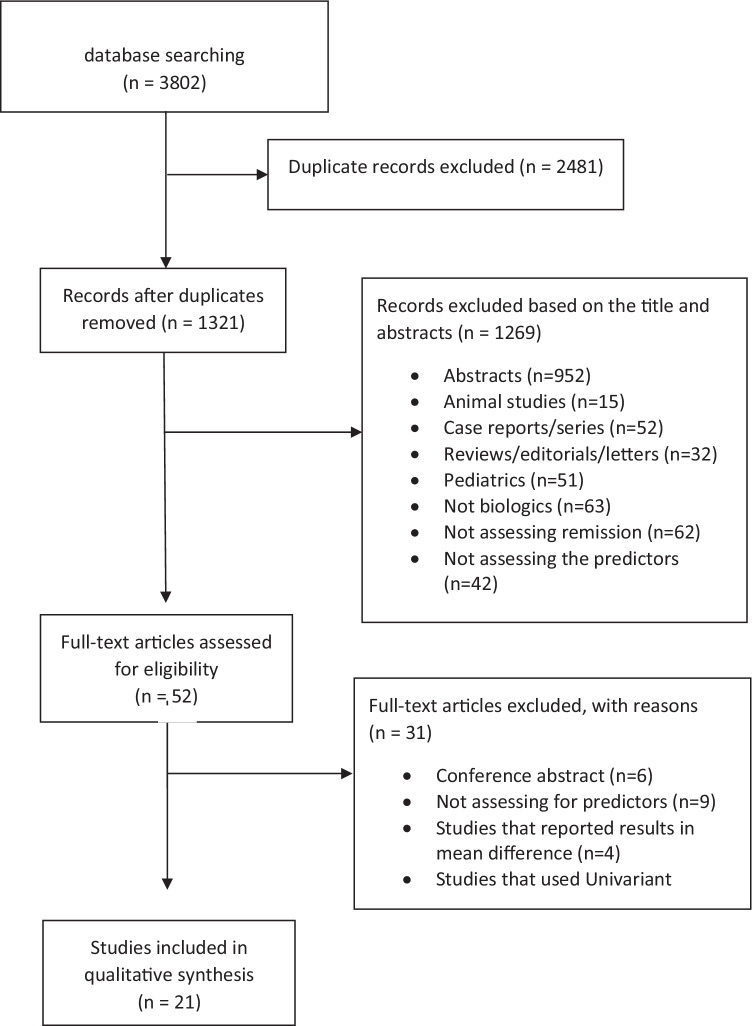
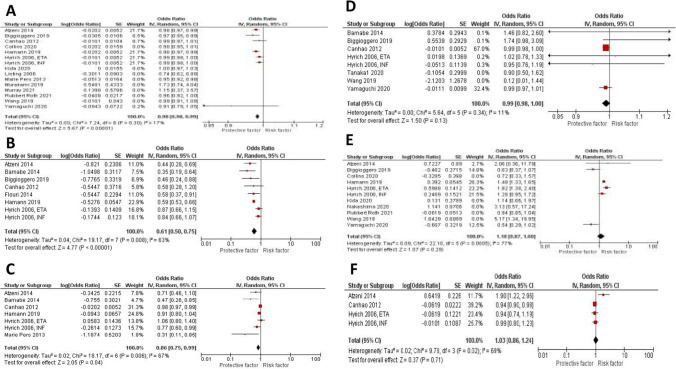
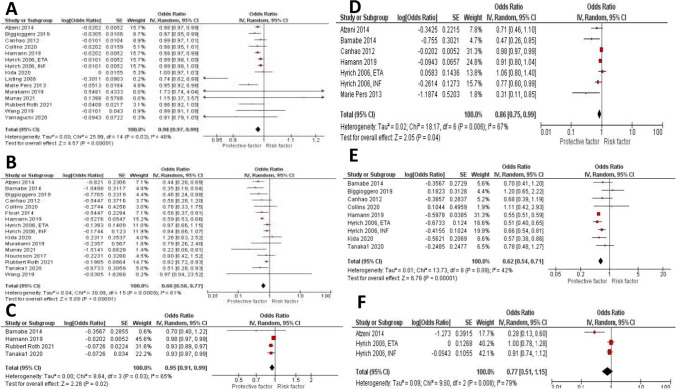
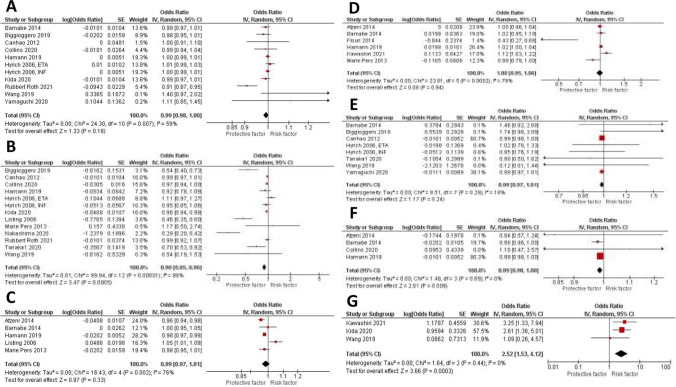
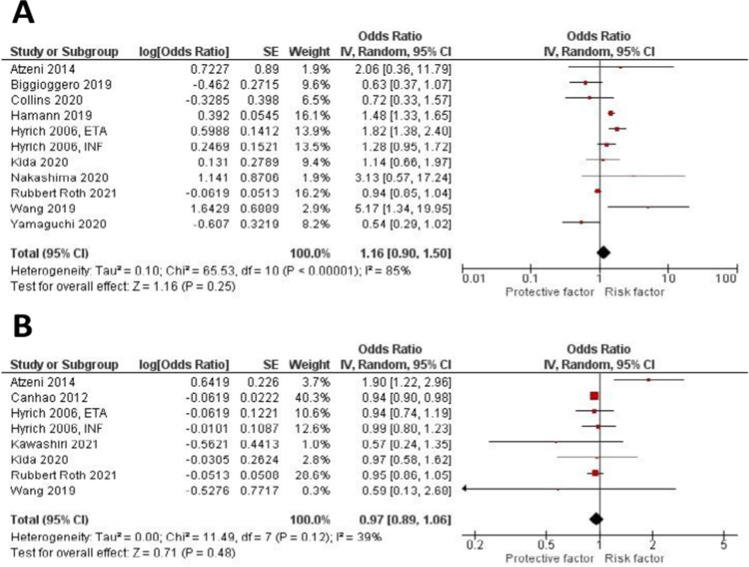
Biologics have emerged as an effective treatment of rheumatoid arthritis (RA). However, there is a significant proportion of patients who fail to respond to biologics. Identifying the predictors that affect the response to biologics remains challenging. A comprehensive literature search of PubMed, Embase, and Web of Science databases was conducted through May 1, 2022. We included all studies that used a multivariate model to assess for the predictors of remission in RA patients treated with biologics. We calculated pooled odds ratios (OR) with 95% confidence intervals (CI) for risk factors reported in ≥ 3 studies using a random-effects model. A total of 16,934 patients with RA who were treated with biologics were included in twenty-one studies. Our study showed that old age (OR 0.98 (0.97, 0.99), P < 0.00001), female gender (OR 0.66 (0.56, 0.77), P < 0.00001), smoking history (OR 0.86 (0.75, 0.99), P 0.04), obesity (OR 0.95 (0.91, 0.99), P 0.02), poor functional status (OR 0.62 (0.48, 1.27), P < 0.00001), high disease activity (OR 0.90 (0.85, 0.96), P 0.0005), and elevated erythrocyte sedimentation rate (OR 0.99 (0.98, 1.00), P 0.009) were poor predictors of remission. On the other hand, positive anti-citrullinated protein antibodies (OR 2.52 (1.53, 4.12), P 0.0003) was associated with high remission rate. Old age, female gender, obesity, smoking history, poor functional status, high disease activity, and elevated ESR at the time of diagnosis have been associated with poor response to biologics. Our findings could help establish a risk stratification model for predicting the remission rate in RA patients receiving biologics.
生物制剂已成为治疗类风湿关节炎 (RA) 的有效方法。然而,仍有相当一部分患者对生物制剂治疗反应不佳。确定影响生物制剂反应的预测因素仍然具有挑战性。通过 2022 年 5 月 1 日对 PubMed、Embase 和 Web of Science 数据库进行全面文献检索,纳入了所有使用多变量模型评估接受生物制剂治疗的 RA 患者缓解预测因素的研究。我们使用随机效应模型计算了在≥3 项研究中报告的危险因素的汇总比值比 (OR),置信区间 (CI) 为 95%。共有 16934 名接受生物制剂治疗的 RA 患者纳入了 21 项研究。我们的研究表明,年龄较大(OR 0.98 (0.97, 0.99),P < 0.00001)、女性(OR 0.66 (0.56, 0.77),P < 0.00001)、吸烟史(OR 0.86 (0.75, 0.99),P 0.04)、肥胖(OR 0.95 (0.91, 0.99),P 0.02)、功能状态差(OR 0.62 (0.48, 1.27),P < 0.00001)、疾病活动度高(OR 0.90 (0.85, 0.96),P 0.0005)和红细胞沉降率升高(OR 0.99 (0.98, 1.00),P 0.009)是缓解不良的预测因素。另一方面,抗瓜氨酸化蛋白抗体阳性(OR 2.52 (1.53, 4.12),P 0.0003)与高缓解率相关。诊断时的高龄、女性、肥胖、吸烟史、功能状态差、疾病活动度高和红细胞沉降率升高与生物制剂反应不佳有关。我们的发现有助于建立预测接受生物制剂治疗的 RA 患者缓解率的风险分层模型。