Wallace William, Chan Calvin, Chidambaram Swathikan, Hanna Lydia, Iqbal Fahad Mujtaba, Acharya Amish, Normahani Pasha, Ashrafian Hutan, Markar Sheraz R, Sounderajah Viknesh, Darzi Ara
Department of Surgery & Cancer, Imperial College London, St. Mary's Hospital, London, W2 1NY, UK.
Institute of Global Health Innovation, Imperial College London, South Kensington Campus, London, SW7 2AZ, UK.
NPJ Digit Med. 2022 Aug 17;5(1):118. doi: 10.1038/s41746-022-00667-w.
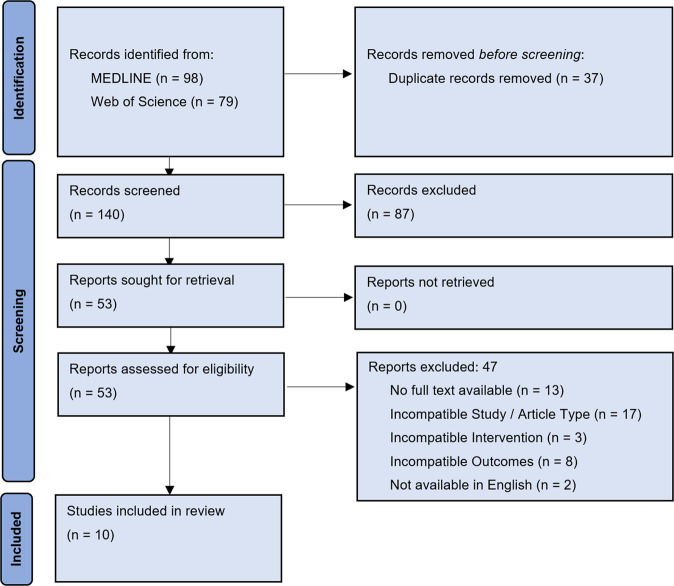
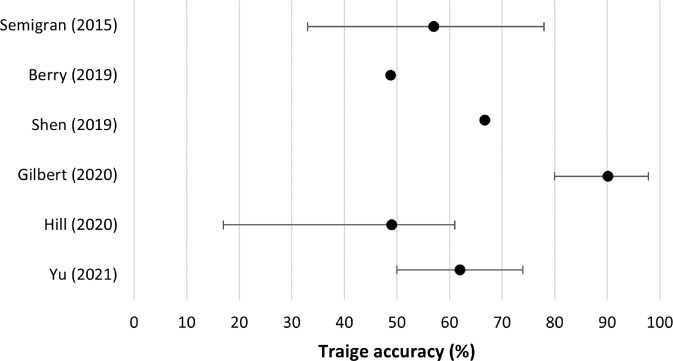
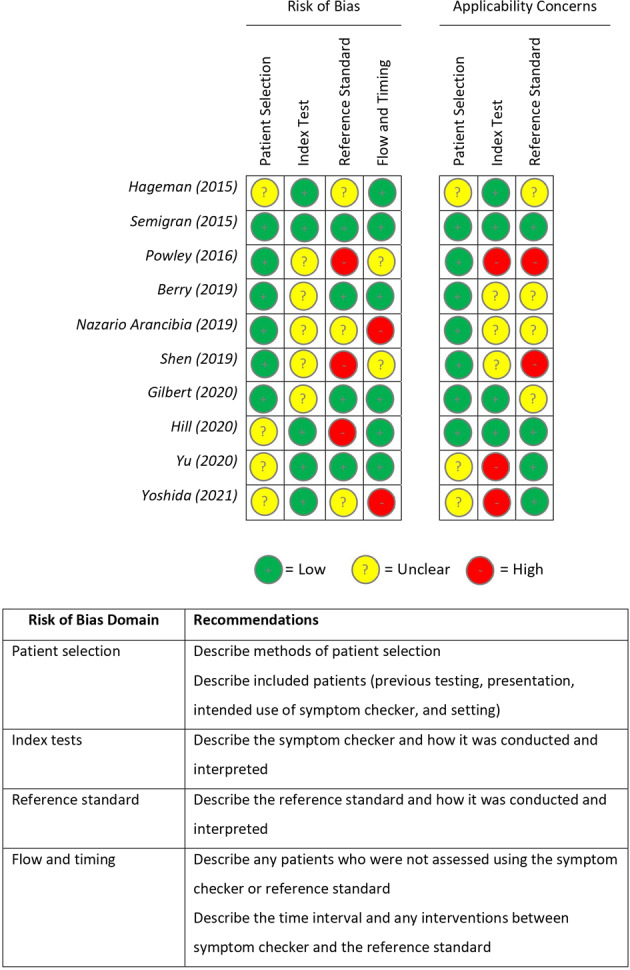
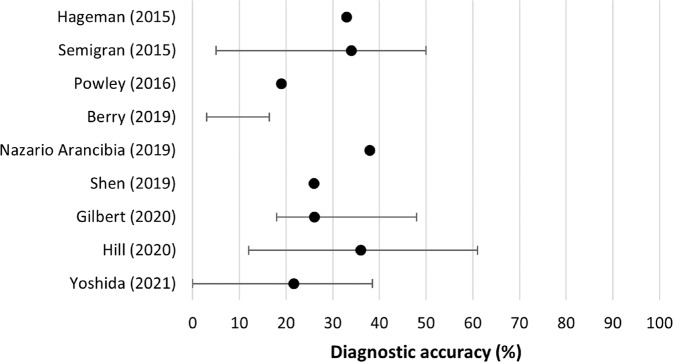
Digital and online symptom checkers are an increasingly adopted class of health technologies that enable patients to input their symptoms and biodata to produce a set of likely diagnoses and associated triage advice. However, concerns regarding the accuracy and safety of these symptom checkers have been raised. This systematic review evaluates the accuracy of symptom checkers in providing diagnoses and appropriate triage advice. MEDLINE and Web of Science were searched for studies that used either real or simulated patients to evaluate online or digital symptom checkers. The primary outcomes were the diagnostic and triage accuracy of the symptom checkers. The QUADAS-2 tool was used to assess study quality. Of the 177 studies retrieved, 10 studies met the inclusion criteria. Researchers evaluated the accuracy of symptom checkers using a variety of medical conditions, including ophthalmological conditions, inflammatory arthritides and HIV. A total of 50% of the studies recruited real patients, while the remainder used simulated cases. The diagnostic accuracy of the primary diagnosis was low across included studies (range: 19-37.9%) and varied between individual symptom checkers, despite consistent symptom data input. Triage accuracy (range: 48.8-90.1%) was typically higher than diagnostic accuracy. Overall, the diagnostic and triage accuracy of symptom checkers are variable and of low accuracy. Given the increasing push towards adopting this class of technologies across numerous health systems, this study demonstrates that reliance upon symptom checkers could pose significant patient safety hazards. Large-scale primary studies, based upon real-world data, are warranted to demonstrate the adequate performance of these technologies in a manner that is non-inferior to current best practices. Moreover, an urgent assessment of how these systems are regulated and implemented is required.
数字和在线症状检查器是一类越来越多地被采用的健康技术,患者可以输入自己的症状和生物数据,以生成一组可能的诊断结果和相关的分诊建议。然而,人们对这些症状检查器的准确性和安全性提出了担忧。本系统评价评估了症状检查器在提供诊断和适当分诊建议方面的准确性。检索了MEDLINE和科学网,查找使用真实或模拟患者来评估在线或数字症状检查器的研究。主要结果是症状检查器的诊断和分诊准确性。使用QUADAS-2工具评估研究质量。在检索到的177项研究中,有10项研究符合纳入标准。研究人员使用多种医疗状况评估症状检查器的准确性,包括眼科疾病、炎性关节炎和艾滋病毒。共有50%的研究招募了真实患者,其余的使用模拟病例。尽管症状数据输入一致,但在纳入的研究中,主要诊断的诊断准确性较低(范围:19%-37.9%),且在各个症状检查器之间存在差异。分诊准确性(范围:48.8%-90.1%)通常高于诊断准确性。总体而言,症状检查器的诊断和分诊准确性参差不齐且较低。鉴于众多医疗系统越来越倾向于采用这类技术,本研究表明,依赖症状检查器可能对患者安全构成重大危害。有必要基于真实世界数据进行大规模的初步研究,以证明这些技术的性能不劣于当前最佳实践。此外,需要对这些系统的监管和实施方式进行紧急评估。