Departamento de Biología Experimental, Facultad de Ciencias Experimentales, Universidad de Jaén, Campus Las Lagunillas S/N, 23071, Jaén, Spain.
Leibniz-Institute of Freshwater Ecology and Inland Fisheries (IGB), Müggelseedamm 301, 12587, Berlin, Germany.
Sci Rep. 2022 Aug 17;12(1):13960. doi: 10.1038/s41598-022-18051-9.
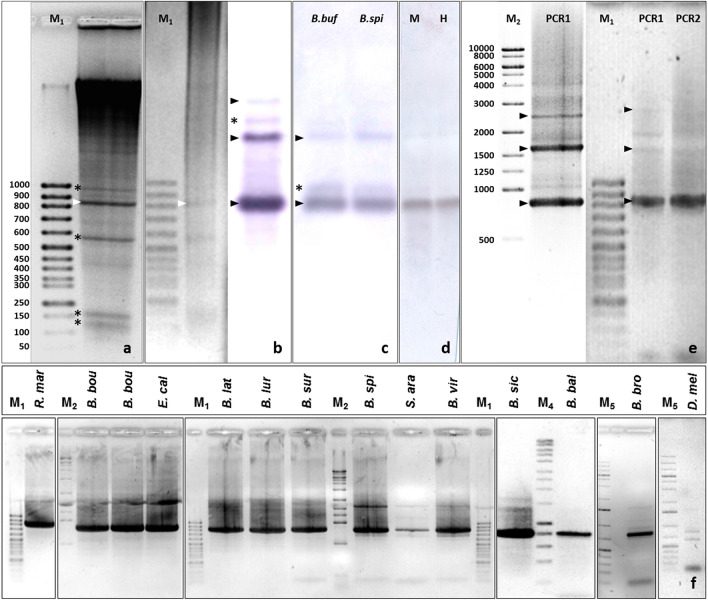
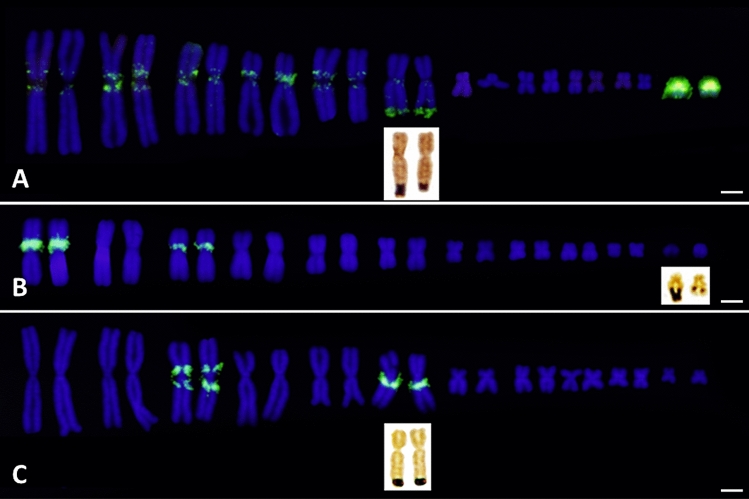
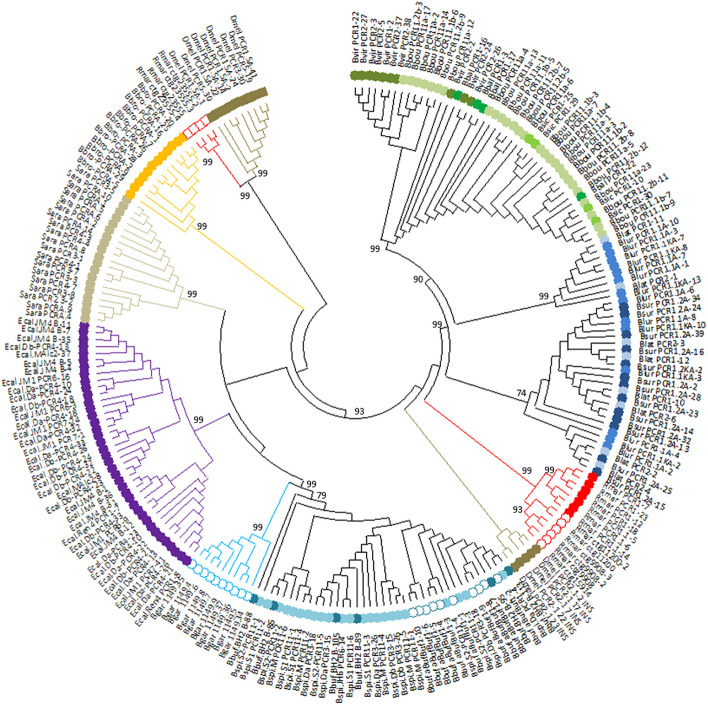
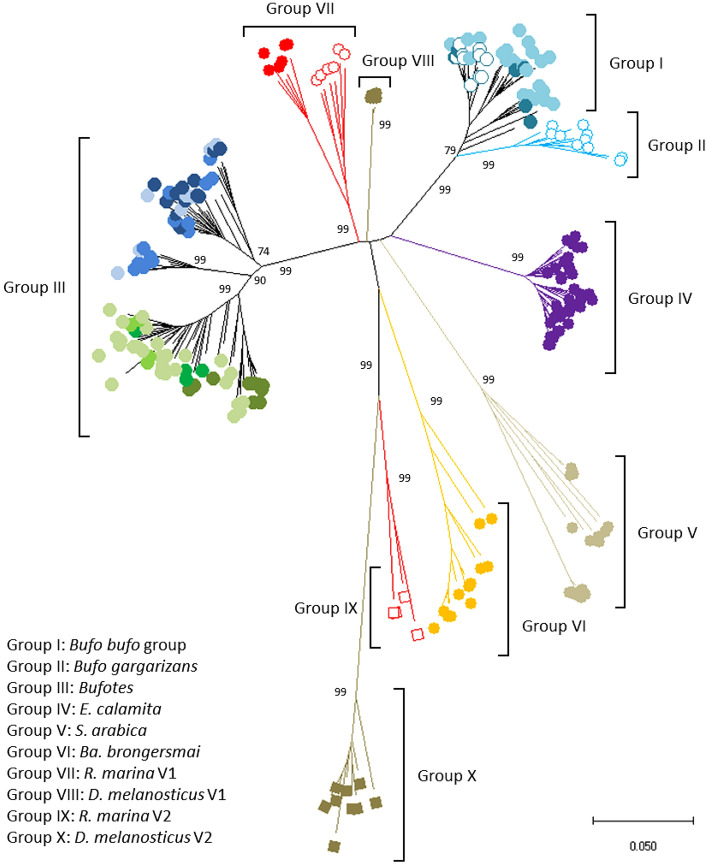
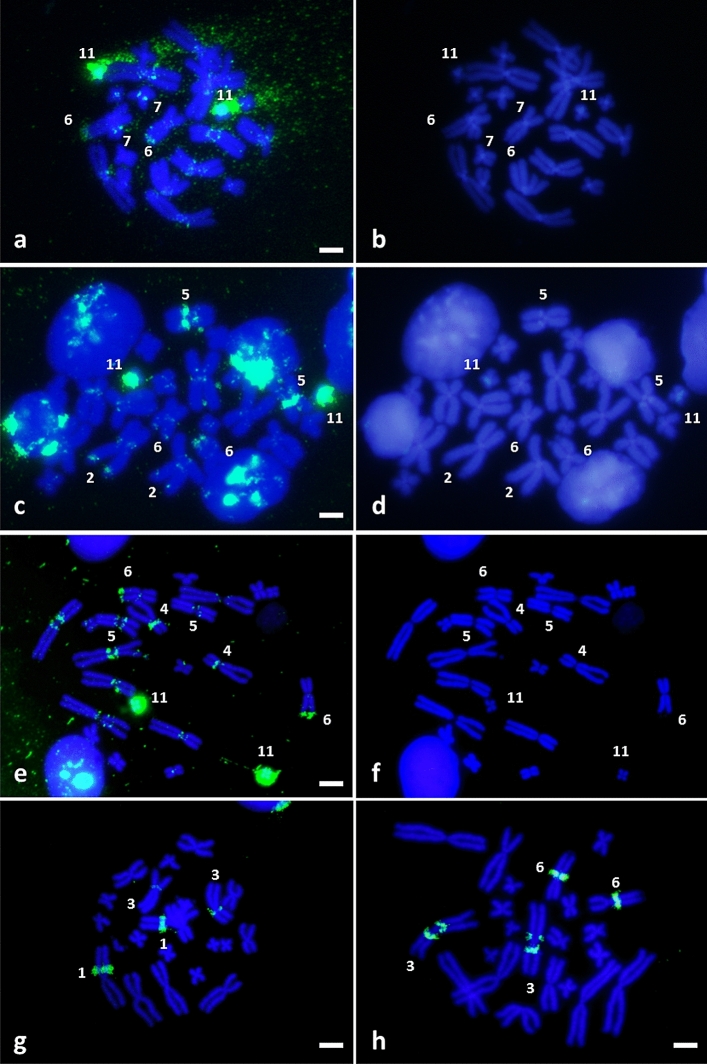
Amphibians have some of the most variable genome sizes among vertebrates. Genome size variation has been attributed to repetitive and noncoding DNA, including satellite repeats, transposable elements, introns, and nuclear insertions of viral and organelle DNA. In vertebrates, satellite DNAs have been widely described in mammals, but few molecular studies have been carried out in amphibians. Here, we provide a detailed characterization of a new family of satellite DNA, present in all 15 examined species of the family Bufonidae. Southern-blot analysis and PCR reveal that this satellite is formed by monomers of 807 bp, is organized in tandem arrays, and has an AT-content of 57.4%. Phylogenetic analyses show that most clades exhibit species-specific variances, indicating that this satellite DNA has evolved by concerted evolution. The homogenization/fixation process is heterogeneous in Bufonidae, where the genera Bufo and Bufotes do not show species-specific differences, while populations from Rhinella marina exhibit population-specific changes. Additionally, variants of this satellite DNA have been identified in Duttaphrynus melanostictus and R. marina, supporting the 'library hypothesis' (a set, 'library', of satellite DNAs is shared by a species group). Physical mapping in Bufo bufo, Bufo spinosus, Epidalea calamita and Bufotes viridis provides evidence that this repetitive DNA is not dispersed in the karyotype, but accumulated in pericentromeric regions of some chromosomal pairs. This location, together with its presence in the transcriptomes of bufonids, could indicate a role in centromere function or heterochromatin formation and maintenance.
两栖动物的基因组大小在脊椎动物中具有最大的可变性。基因组大小的变化归因于重复和非编码 DNA,包括卫星重复序列、转座元件、内含子以及病毒和细胞器 DNA 的核插入。在脊椎动物中,卫星 DNA 在哺乳动物中得到了广泛的描述,但在两栖动物中进行的分子研究很少。在这里,我们详细描述了一种新的卫星 DNA 家族,该家族存在于Bufonidae 家族的所有 15 种被检查的物种中。Southern-blot 分析和 PCR 显示,这种卫星由 807bp 的单体组成,串联排列,AT 含量为 57.4%。系统发育分析表明,大多数分支表现出物种特异性的变异,表明这种卫星 DNA 是通过协同进化进化而来的。Bufonidae 中的同源化/固定过程是不均匀的,其中 Bufo 和 Bufotes 属没有表现出物种特异性差异,而 Rhinella marina 的种群则表现出种群特异性的变化。此外,在 Duttaphrynus melanostictus 和 R. marina 中也发现了这种卫星 DNA 的变体,支持了“文库假说”(一组卫星 DNA,“文库”,由一个物种群共享)。在 Bufo bufo、Bufo spinosus、Epidalea calamita 和 Bufotes viridis 中的物理图谱提供了证据表明,这种重复 DNA 不是分散在染色体组型中,而是积累在一些染色体对的着丝粒区。这个位置,加上它在蟾蜍转录组中的存在,可能表明其在着丝粒功能或异染色质形成和维持中的作用。