Fetal Medicine Unit, St Michaels Hospital, University of Bristol, Bristol, United Kingdom.
Paediatric Congenital Heart Surgery, Bristol Royal Hospital for Children, University Hospitals Bristol and Weston NHS Foundation Trust, Bristol, United Kingdom.
Birth Defects Res. 2022 Oct 15;114(17):1079-1091. doi: 10.1002/bdr2.2072. Epub 2022 Aug 18.
Congenital anomalies affect over 2% of pregnancies, with congenital heart disease (CHD) the most common. Understanding of causal factors is limited. Micronutrients are essential trace elements with key roles in growth and development. We aimed to investigate whether maternal micronutrient deficiencies increase the risk of fetal CHD through systematic review of published literature.
We performed a systematic review registered at PROSPERO as CRD42021276699. Ovid-MEDLINE, Ovid-EMBASE, and Cochrane Library were searched from their inception until September 7, 2021. Case control trials were included with a population of biological mothers of fetuses with and without CHD. The exposure was maternal micronutrient level measured in pregnancy or the postpartum period. Data extraction was performed by one author and checked by a second. Risk of bias assessment was performed according to the Scottish Intercollegiate Guidelines Network guidance. We performed a narrative synthesis for analysis.
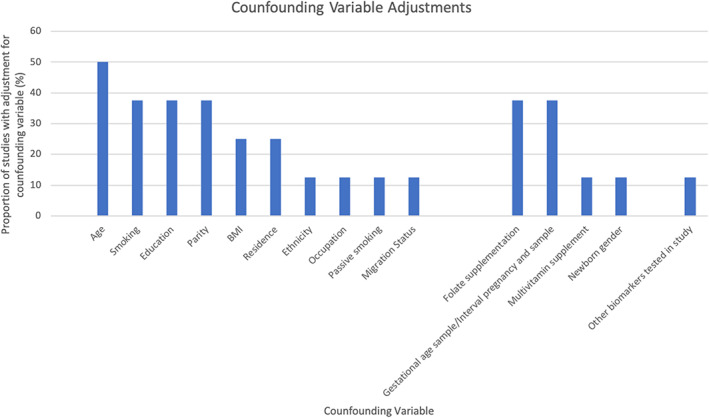
726 articles were identified of which 8 met our inclusion criteria. Final analysis incorporated data from 2,427 pregnancies, 1,199 of which were complicated by fetal CHD assessing 8 maternal micronutrients: vitamin D, vitamin B12, folate, vitamin A, zinc, copper, selenium, and ferritin. Studies were heterogenous with limited sample sizes and differing methods and timing of maternal micronutrient sampling. Definitions of deficiency varied and differed from published literature. Published results were contradictory.
There is not enough evidence to confidently conclude if maternal micronutrient deficiencies increase the risk of fetal CHD. Further large-scale prospective study is required to answer this question.
先天性异常影响超过 2%的妊娠,其中先天性心脏病(CHD)最为常见。对病因的了解有限。微量营养素是必需的微量元素,在生长和发育中起着关键作用。我们旨在通过系统审查已发表的文献来研究母体微量营养素缺乏是否会通过增加胎儿 CHD 的风险。
我们在 PROSPERO 中进行了系统审查,注册号为 CRD42021276699。检索了 Ovid-MEDLINE、Ovid-EMBASE 和 Cochrane Library,从其开始到 2021 年 9 月 7 日。纳入了病例对照试验,其人群为胎儿有或没有 CHD 的生物母亲。暴露是在妊娠或产后期间测量的母体微量营养素水平。由一位作者进行数据提取,并由第二位作者进行检查。根据苏格兰校际指南网络指南进行偏倚风险评估。我们进行了叙述性综合分析。
确定了 726 篇文章,其中 8 篇符合我们的纳入标准。最终分析纳入了 2427 例妊娠的数据,其中 1199 例妊娠伴有胎儿 CHD,评估了 8 种母体微量营养素:维生素 D、维生素 B12、叶酸、维生素 A、锌、铜、硒和铁蛋白。研究具有异质性,样本量有限,母体微量营养素采样的方法和时间也不同。缺乏的定义各不相同,与已发表的文献也不同。发表的结果相互矛盾。
没有足够的证据可以自信地得出母体微量营养素缺乏是否会增加胎儿 CHD 的风险。需要进一步进行大规模前瞻性研究来回答这个问题。