Washington University, St Louis, MO, USA and a clinical editor for Aesthetic Surgery Journal.
Hackensack Meridian School of Medicine, Nutley, NJ, USA and a clinical editor for Aesthetic Surgery Journal.
Aesthet Surg J. 2023 Feb 3;43(2):230-244. doi: 10.1093/asj/sjac225.
There has been an increasing need to acquire rigorous scientific data to answer the concerns of physicians, patients, and the FDA regarding the self-reported illness identified as breast implant illness (BII). There are no diagnostic tests or specific laboratory values to explain the reported systemic symptoms described by these patients.
The aim of this study was to determine if there are quantifiable laboratory findings that can be identified in blood, capsule tissue pathology, or microbes that differentiate women with systemic symptoms they attribute to their implants from 2 control groups.
A prospective blinded study enrolled 150 subjects into 3 cohorts: (A) women with systemic symptoms they attribute to implants who requested implant removal; (B) women with breast implants requesting removal or exchange who did not have symptoms attributed to implants; and (C) women undergoing cosmetic mastopexy who have never had any implanted medical device. Capsule tissue underwent detailed analysis and blood was sent from all 3 cohorts to evaluate for markers of inflammation.
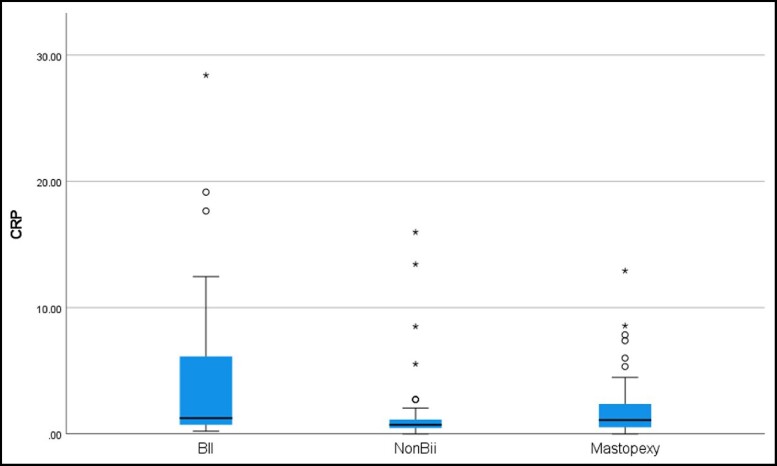
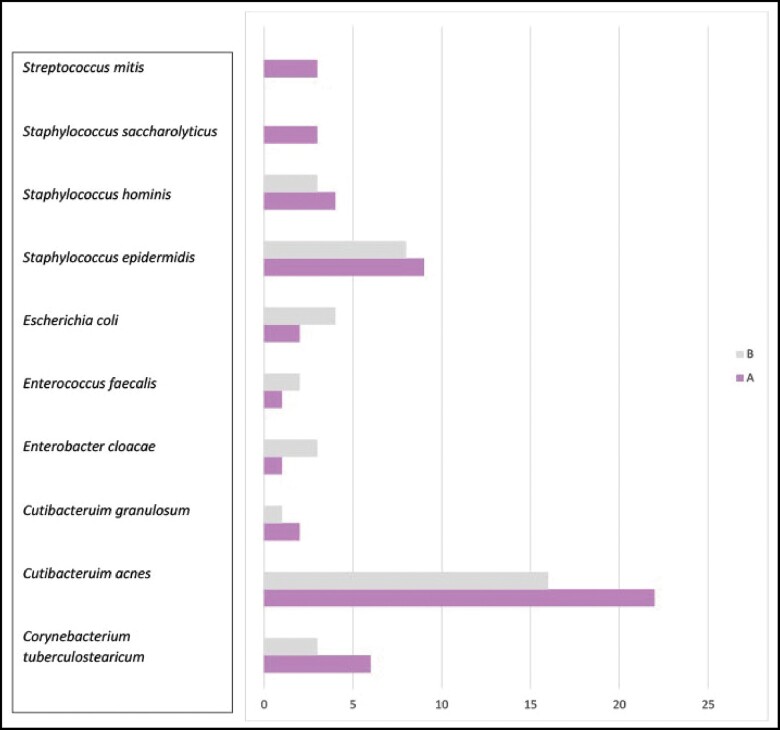
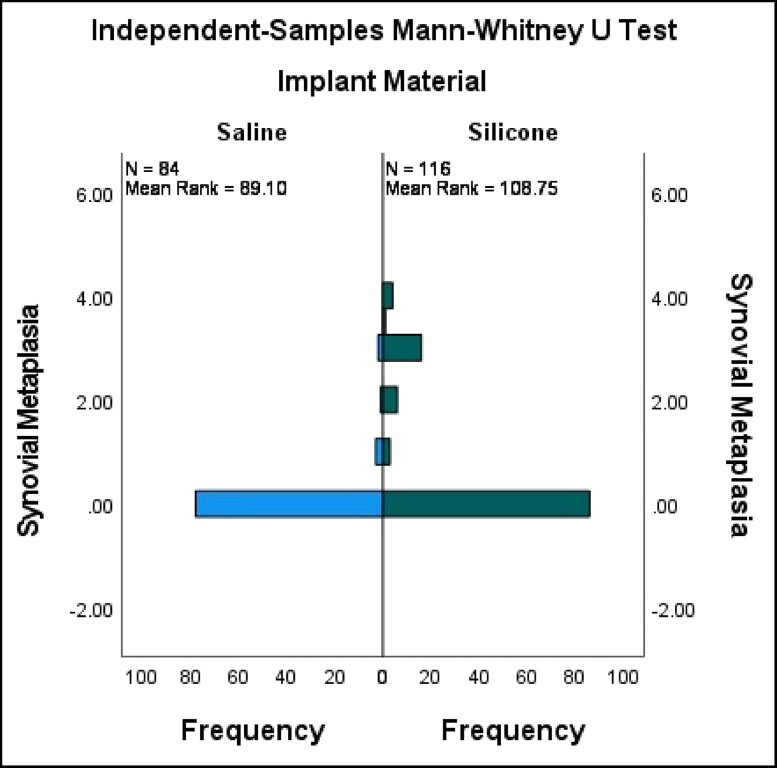
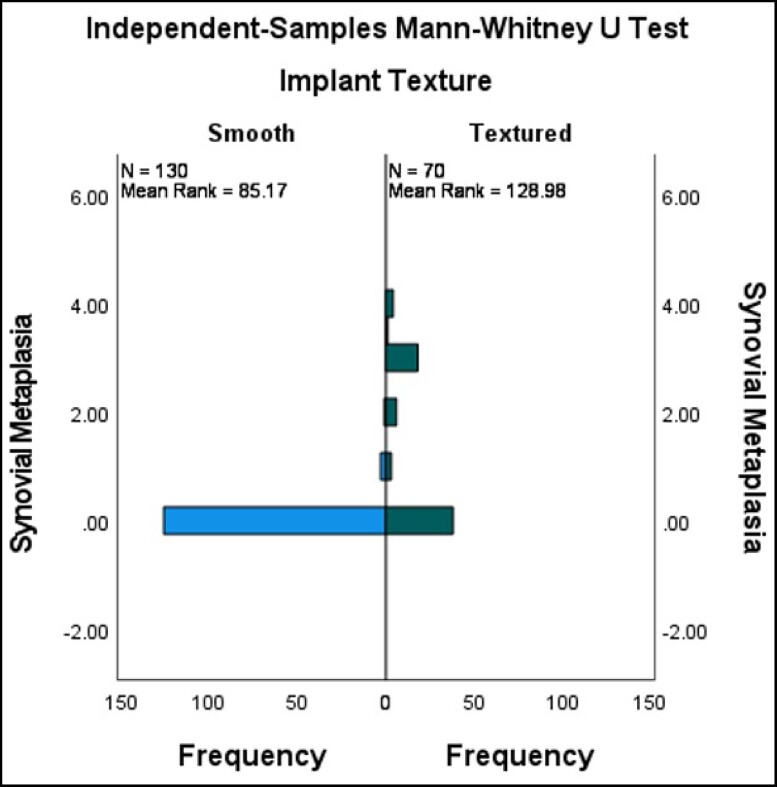
No significant histologic differences were identified between the cohorts, except there were more capsules with synovial metaplasia in the non-BII cohort. There was no statistical difference in thyroid-stimulating hormone, vitamin D levels, or complete blood count with differential between the cohorts. Next-generation sequencing revealed no statistically significant difference in positivity between Cohort A and B. Of the 12 cytokines measured, 3 cytokines, interleukin (IL)-17A, IL-13, and IL-22, were found to be significantly more often elevated in sera of subjects in Cohort A than in Cohorts B or C. The enterotoxin data demonstrated an elevation in immunoglobulin G (IgG) anti-Staphylococcus aureus enterotoxin A in Cohort A. There was no correlation between the presence of IgE or IgG anti-Staphylococcal antibody and a positive next-generation sequencing result.
This study adds to the current literature by demonstrating few identifiable biomedical markers to explain the systemic symptoms self-reported by patients with BII.
越来越需要获取严格的科学数据来回答医生、患者和 FDA 对自我报告的乳房植入物相关疾病(BII)的关注。目前没有诊断测试或特定的实验室值可以解释这些患者所描述的全身性症状。
本研究旨在确定是否存在可在血液、囊组织病理学或微生物中识别的量化实验室发现,这些发现可将全身性症状归因于植入物的女性与 2 个对照组区分开来。
前瞻性、双盲研究纳入了 150 名受试者,分为 3 个队列:(A)全身性症状归因于植入物并要求取出植入物的女性;(B)要求取出或更换植入物且无植入物相关症状的女性;(C)从未植入过任何植入式医疗器械的接受美容乳房上提术的女性。对囊组织进行了详细分析,并从所有 3 个队列中抽取血液以评估炎症标志物。
除了非 BII 队列中滑膜化生的囊更多外,3 个队列之间没有明显的组织学差异。队列之间的促甲状腺激素、维生素 D 水平或全血细胞计数差异均无统计学意义。下一代测序显示 A 队列和 B 队列之间的阳性率没有统计学差异。在测量的 12 种细胞因子中,3 种细胞因子,白细胞介素(IL)-17A、IL-13 和 IL-22,在 A 队列的受试者血清中升高的频率明显高于 B 队列或 C 队列。肠毒素数据显示 A 队列 IgG 抗金黄色葡萄球菌肠毒素 A 升高。IgE 或 IgG 抗葡萄球菌抗体的存在与下一代测序阳性结果之间没有相关性。
本研究通过证明很少有可识别的生物医学标志物来解释 BII 患者自我报告的全身性症状,为当前文献增添了新内容。