Banerjee Shreya, Sarkar Rakesh, Mukherjee Arpita, Miyoshi Shin-Ichi, Kitahara Kei, Halder Prolay, Koley Hemanta, Chawla-Sarkar Mamta
Division of Virology, ICMR-National Institute of Cholera and Enteric Diseases, Kolkata, West Bengal, India.
Division of Pharmaceutical Sciences, Graduate School of Medicine, Dentistry and Pharmaceutical Sciences, Okayama University, Okayama, Japan.
Front Microbiol. 2022 Aug 2;13:951716. doi: 10.3389/fmicb.2022.951716. eCollection 2022.
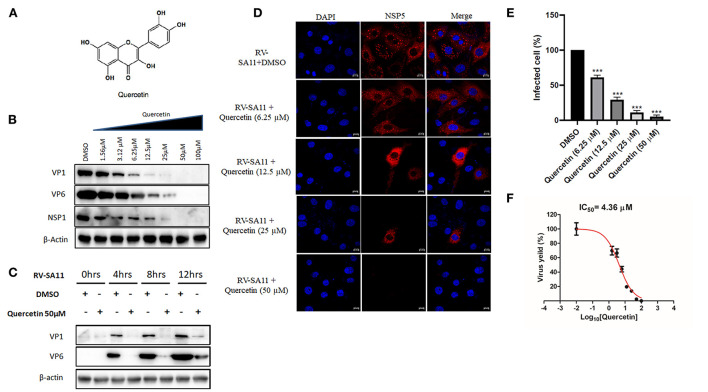
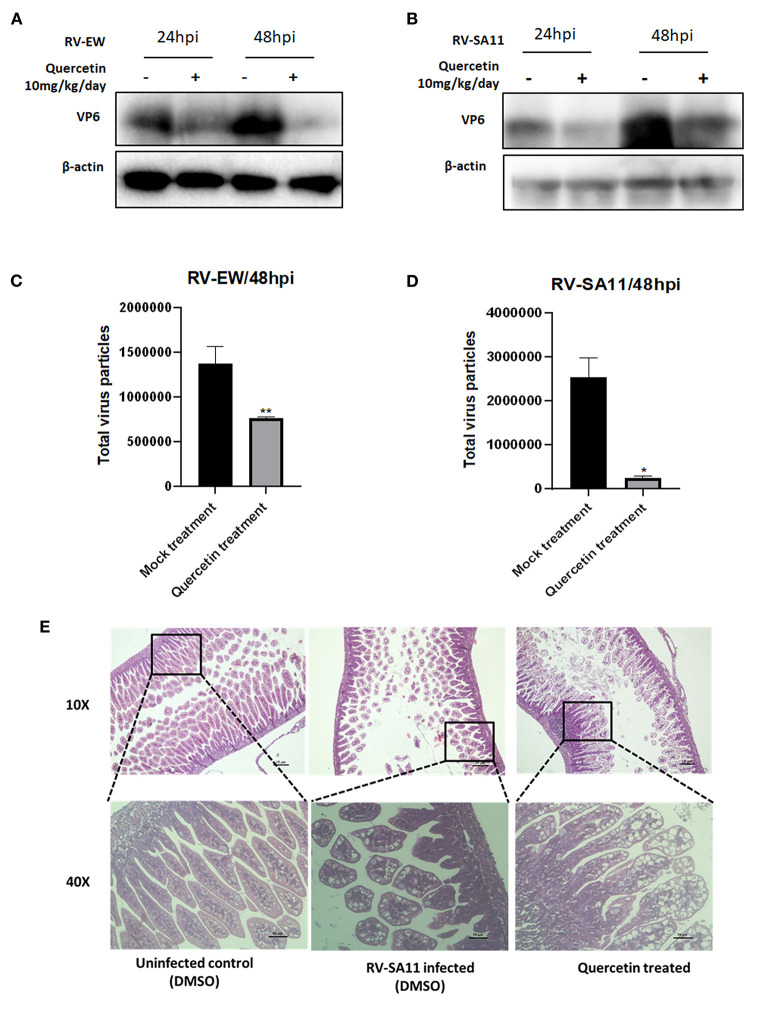
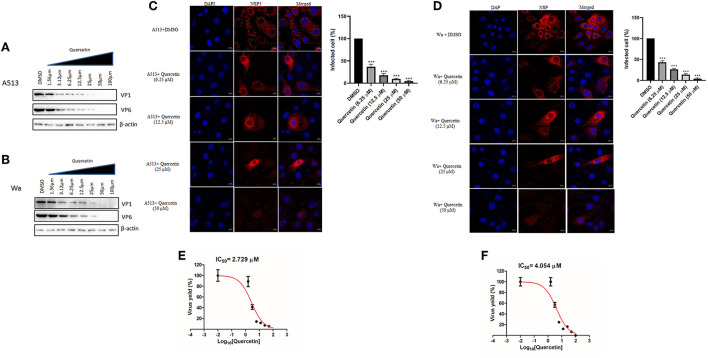
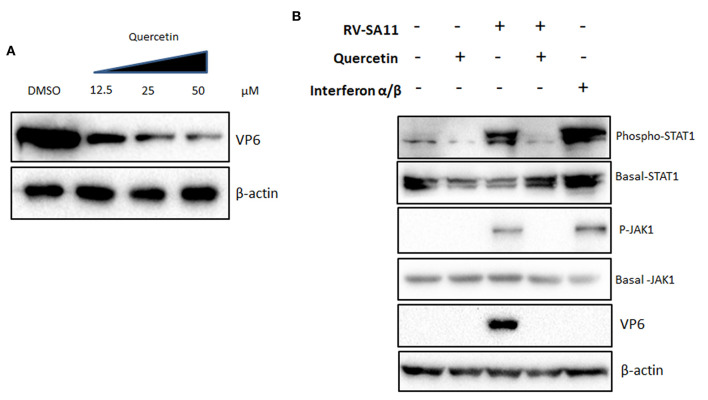
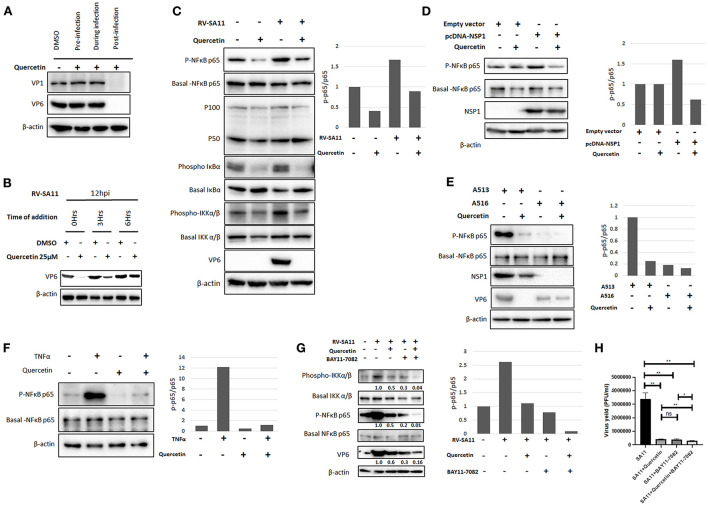
Rotavirus (RV) is the leading cause of acute gastroenteritis and watery diarrhea in children under 5 years accounting for high morbidity and mortality in countries with poor socioeconomic status. Although vaccination against RV has been implemented in more than 100 countries, the efficacy of vaccine has been challenged in low-income settings. The lack of any FDA-approved drug against RV is an additional concern regarding the treatment associated with rotavirus-induced infantile death. With the purpose for the discovery of anti-RV therapeutics, we assessed anti-rotaviral potential of quercetin, a well-characterized antioxidant flavonoid. study revealed that quercetin treatment resulted in diminished production of RV-SA11 (simian strain) viral particles in a concentration-dependent manner as estimated by the plaque assay. Consistent with this result, Western blot analysis also revealed reduced synthesis of viral protein in quercetin-treated RV-SA11-infected MA104 cells compared to vehicle (DMSO) treated controls. Not surprisingly, infection of other RV strains A5-13 (bovine strain) and Wa (Human strain) was also found to be abridged in the presence of quercetin compared to DMSO. The IC of quercetin against three RV strains ranges between 2.79 and 4.36 Mm, and S.I. index is greater than 45. Concurrent to the results, study in mice model also demonstrated reduced expression of viral proteins and viral titer in the small intestine of quercetin-treated infected mice compared to vehicle-treated infected mice. Furthermore, the result suggested anti-rotaviral activity of quercetin to be interferon-independent. Mechanistic study revealed that the antiviral action of quercetin is co-related with the inhibition of RV-induced early activation of NF-κB pathway. Overall, this study delineates the strong anti-RV potential of quercetin and also proposes it as future therapeutics against rotaviral diarrhea.
轮状病毒(RV)是5岁以下儿童急性胃肠炎和水样腹泻的主要病因,在社会经济地位低下的国家中发病率和死亡率很高。尽管100多个国家已实施RV疫苗接种,但在低收入地区疫苗的效力受到了挑战。缺乏任何美国食品药品监督管理局(FDA)批准的抗RV药物是与轮状病毒引起的婴儿死亡相关治疗方面的另一个问题。为了发现抗RV疗法,我们评估了槲皮素(一种特性明确的抗氧化类黄酮)的抗轮状病毒潜力。研究表明,通过噬斑测定法估计,槲皮素处理导致RV-SA11(猿猴株)病毒颗粒的产生以浓度依赖的方式减少。与该结果一致,蛋白质印迹分析还显示,与用溶剂(二甲基亚砜)处理的对照相比,在经槲皮素处理的RV-SA11感染的MA104细胞中病毒蛋白的合成减少。不出所料,与二甲基亚砜相比,在槲皮素存在下其他RV毒株A5-13(牛毒株)和Wa(人毒株)的感染也被发现减少。槲皮素对三种RV毒株的半数抑制浓度(IC)在2.79至4.36 μM之间,治疗指数(S.I.)大于45。与体外结果一致,在小鼠模型中的研究还表明,与用溶剂处理的感染小鼠相比,经槲皮素处理的感染小鼠小肠中病毒蛋白的表达和病毒滴度降低。此外,结果表明槲皮素的抗轮状病毒活性与干扰素无关。机制研究表明,槲皮素的抗病毒作用与抑制RV诱导的核因子κB(NF-κB)途径的早期激活有关。总体而言,本研究描述了槲皮素强大的抗RV潜力,并提出其作为未来治疗轮状病毒腹泻的药物。