Department of Respiratory and Critical Care Medicine, The Second Hospital of Jilin University, Changchun, Jilin, China.
Department of Pathogeny Biology, College of Basic Medical Sciences, Jilin University, Changchun, Jilin, China.
Aging (Albany NY). 2022 Aug 18;14(16):6626-6641. doi: 10.18632/aging.204235.
Acute lung injury (ALI) is commonly accompanied by a severe inflammatory reaction process, and effectively managing inflammatory reactions is an important therapeutic approach for alleviating ALI. Macrophages play an important role in the inflammatory response, and this role is proinflammatory in the early stages of inflammation and anti-inflammatory in the late stages. Oxypeucedanin is a natural product with a wide range of pharmacological functions. This study aimed to determine the effect of oxypeucedanin on lipopolysaccharide (LPS)-induced ALI.
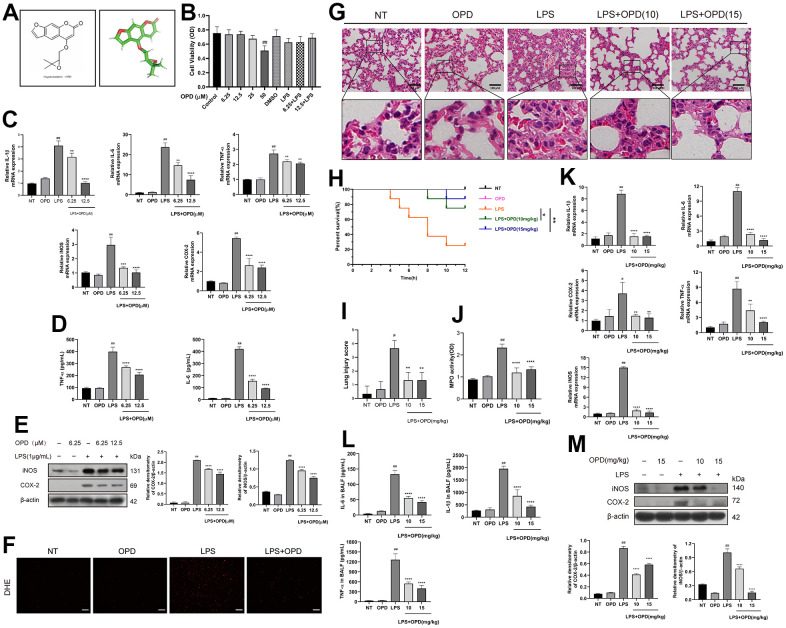
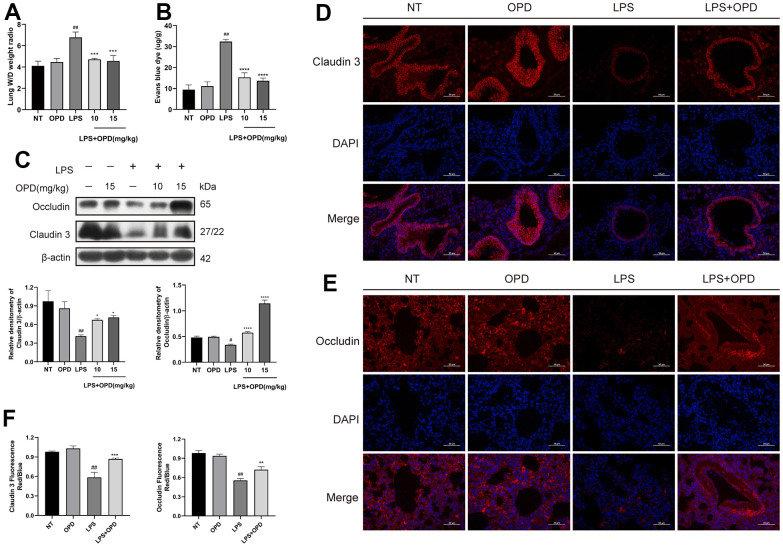
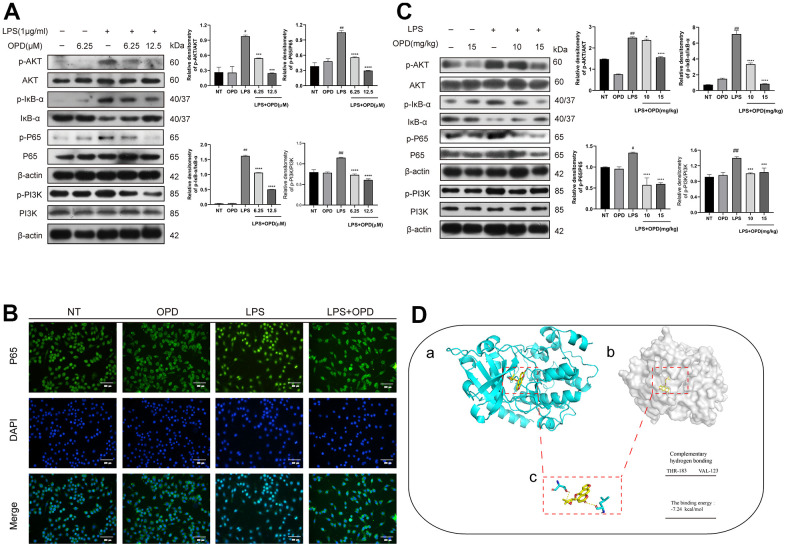
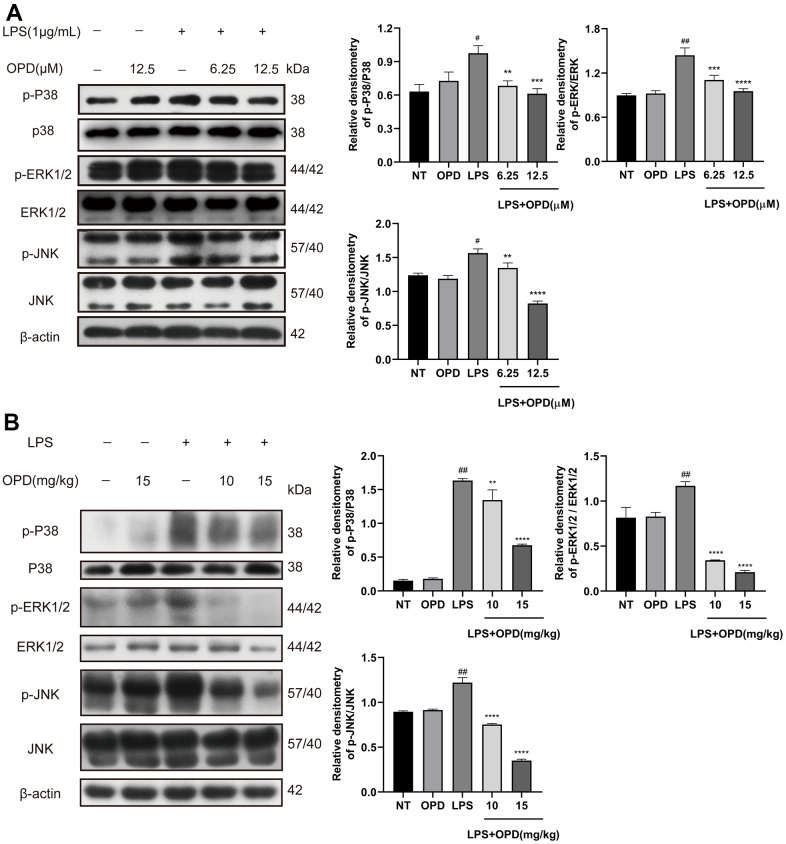
In this study, the following experiments were performed based on LPS-induced models and . Using myeloperoxidase activity measurement, ELISA, qRT-PCR, and Western blotting, we found that oxypeucedanin modulated the activity of myeloperoxidase and decreased the expression levels of inflammatory mediators such as TNF-α, IL-6, IL-1β, MPO, COX-2 and iNOS in LPS-induced inflammation models. Meanwhile, oxypeucedanin inhibited the activation of PI3K/AKT and its downstream NF-κB and MAPK signaling pathways. In addition, oxypeucedanin significantly decreased the pulmonary vascular permeability, which was induced by LPSs, and the enhanced expression of tight junction proteins (Occludin and Claudin 3).
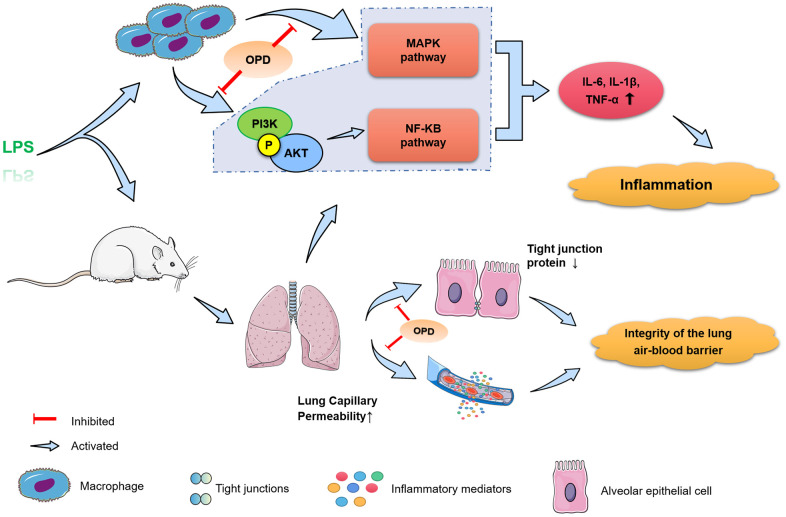
In conclusion, this study demonstrated that the anti-inflammatory mechanism of oxypeucedanin is associated with the inhibition of the activation of PI3K/AKT/NF-κB and MAPK signaling pathways and the maintenance of the integrity of the lung air-blood barrier.
急性肺损伤(ALI)通常伴随着严重的炎症反应过程,有效管理炎症反应是缓解 ALI 的重要治疗方法。巨噬细胞在炎症反应中发挥重要作用,其作用在炎症早期呈促炎,在晚期呈抗炎。川芎嗪是一种具有广泛药理作用的天然产物。本研究旨在确定川芎嗪对脂多糖(LPS)诱导的 ALI 的影响。
在这项研究中,我们基于 LPS 诱导的模型进行了以下实验。通过髓过氧化物酶活性测定、ELISA、qRT-PCR 和 Western blot,我们发现川芎嗪调节髓过氧化物酶的活性,并降低 LPS 诱导的炎症模型中 TNF-α、IL-6、IL-1β、MPO、COX-2 和 iNOS 等炎症介质的表达水平。同时,川芎嗪抑制了 PI3K/AKT 及其下游 NF-κB 和 MAPK 信号通路的激活。此外,川芎嗪显著降低了 LPS 诱导的肺血管通透性,并增强了紧密连接蛋白(Occludin 和 Claudin 3)的表达。
综上所述,本研究表明,川芎嗪的抗炎机制与抑制 PI3K/AKT/NF-κB 和 MAPK 信号通路的激活以及维持肺气血屏障的完整性有关。