Asim Syed, Hussain Anwar, Murad Waheed, Hamayun Muhammad, Iqbal Amjad, Rehman Hazir, Tawab Abdul, Irshad Muhammad, Alataway Abed, Dewidar Ahmed Z, Elansary Hosam O, Lee In-Jung
Department of Botany, Abdul Wali Khan University Mardan, Khyber Pakhtunkhwa, Pakistan.
Department of Food Science and Technology, Abdul Wali Khan University Mardan, Khyber Pakhtunkhwa, Pakistan.
Front Plant Sci. 2022 Aug 5;13:922343. doi: 10.3389/fpls.2022.922343. eCollection 2022.
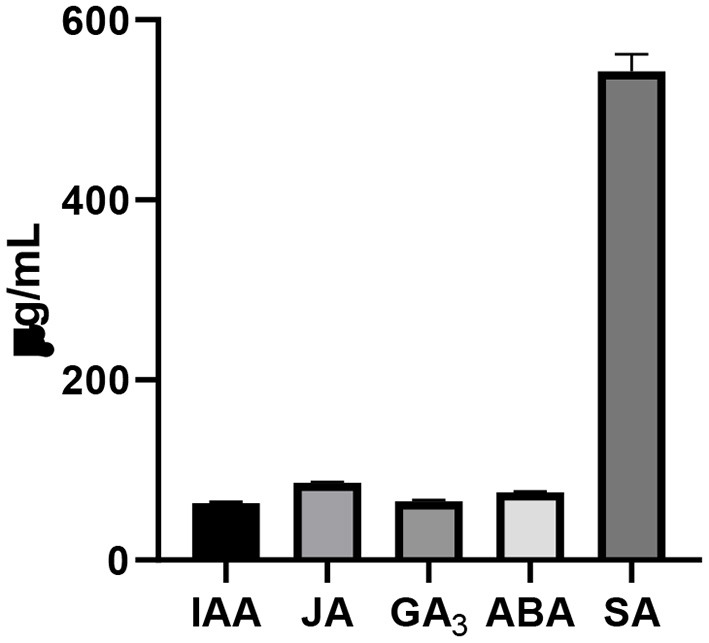
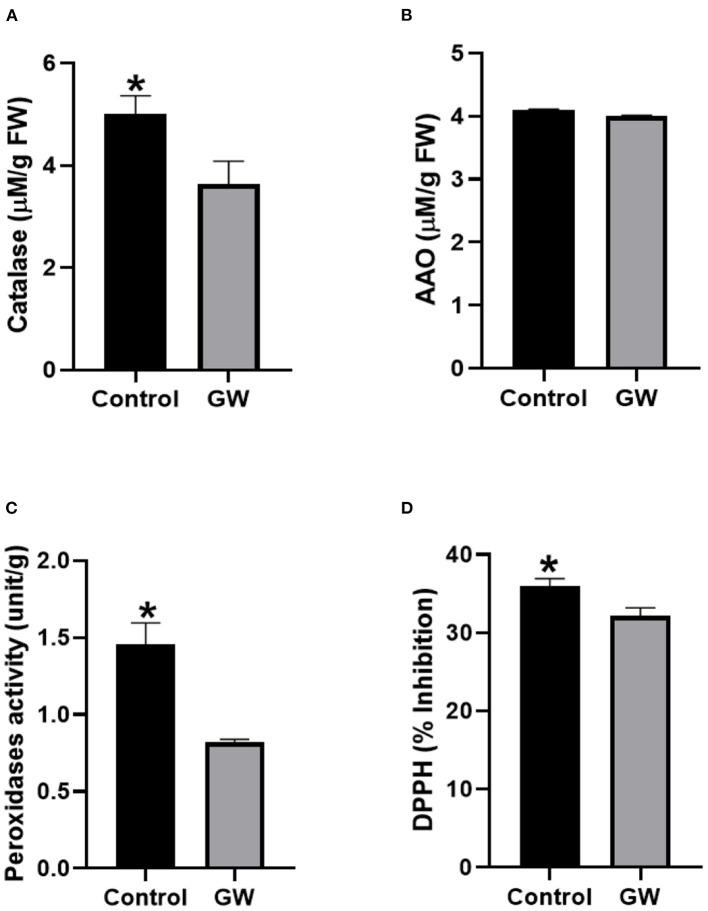
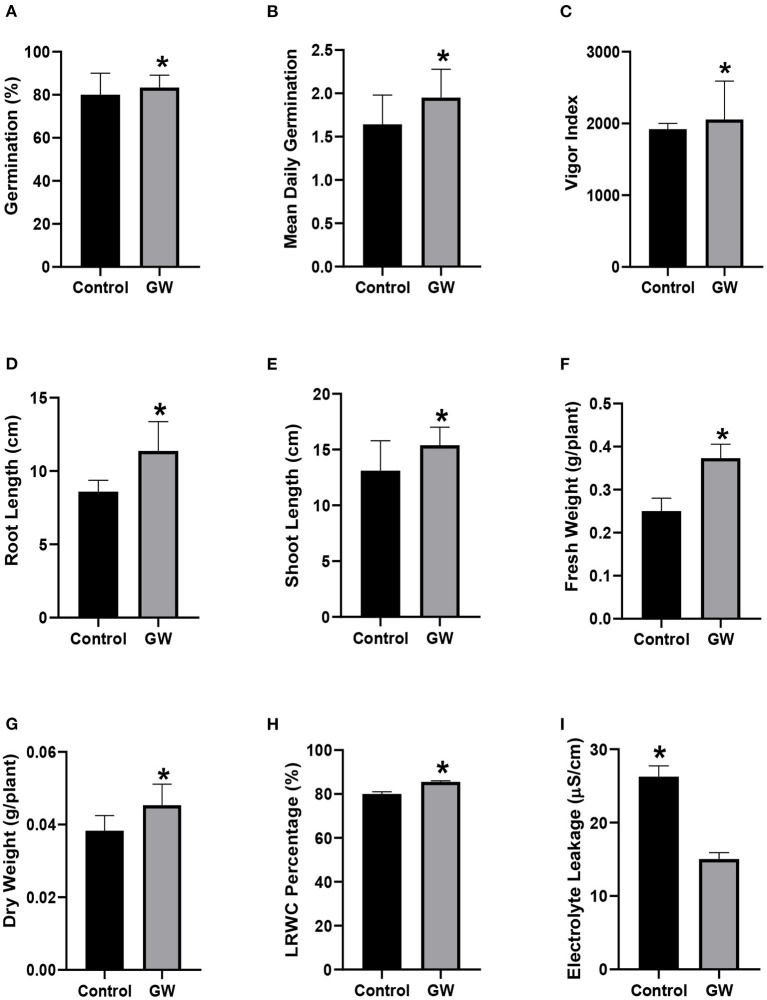
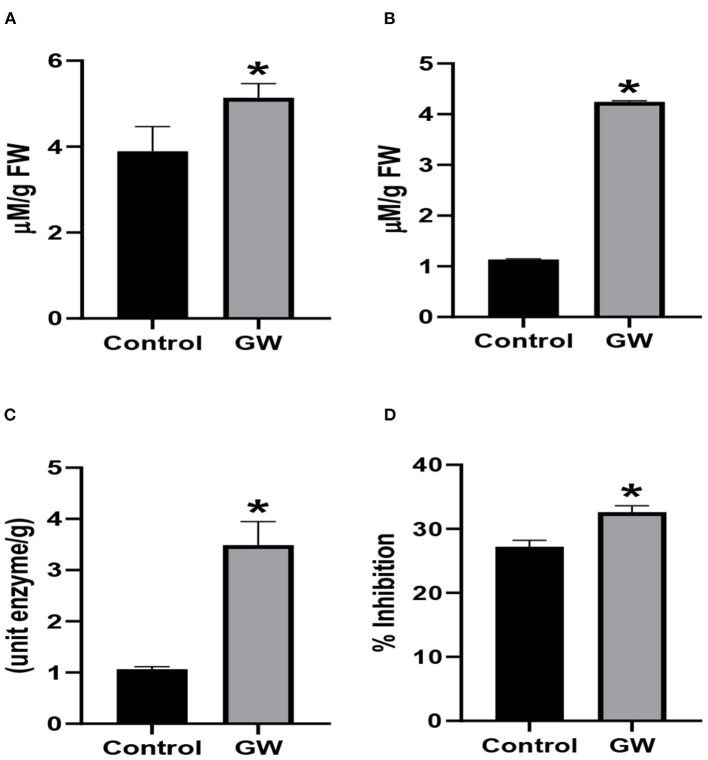
Wheat crop has to compete with several weeds including , a noxious weed that alone is responsible for 30-70% losses in the yield annually. Because of the environmental concerns associated with conventional methods, researchers are on a continuous hunt to find clean alternatives in order to manage weeds. Fungi have shown promising weedicide potential in lab studies. The current study aimed to isolate endophytic fungi from wheat plants which can promote wheat growth and inhibit the growth of common weed, . Of several isolates, GW (grayish white) was selected for its promising features, and the strain was identified as through ITS sequencing technique. This fungus released a number of compounds including Isovitexin, Calycosin, quercetagetin, and dihydroxy-dimethoxyisoflavone that inhibited the growth of but did not influence the growth of wheat seedlings. Biomass of this fungus in the soil also reduced growth parameters of the weed and promoted the growth of wheat. For instance, the vigor index of seedlings was reduced to only 6% of the control by this endophyte. In contrast, endophyte-associated wheat seedlings showed a higher vigor index than the control. Behind this differential response of the two plants were their contrasting physiological and biochemical status. Lower growth phenotypes of seedlings had reduced levels of IAA, GAs, and SA and higher the levels of JA and ABA. Besides, their ROS scavenging ability was also compromised as evident from relatively lower activities of catalase, peroxidase, and ascorbic acid oxidase, as well as higher accumulation of ROS in their leaves. Wheat seedlings response to GW was opposite to the . It may be concluded that GW has the ability to differentially modulate physiology and biochemistry of the two hosts leading to contrasting phenotypic responses.
小麦作物必须与多种杂草竞争,其中包括一种有害杂草,仅这种杂草每年就导致30%-70%的产量损失。由于传统方法存在环境问题,研究人员一直在不断寻找清洁的替代方法来管理杂草。在实验室研究中,真菌已显示出有前景的除草潜力。当前的研究旨在从小麦植株中分离出能够促进小麦生长并抑制常见杂草生长的内生真菌。在多个分离株中,GW(灰白色)因其有前景的特性被选中,并通过ITS测序技术将该菌株鉴定为[具体菌种名称未给出]。这种真菌释放出多种化合物,包括异荭草苷、毛蕊异黄酮、槲皮万寿菊素和二羟基二甲氧基异黄酮,这些化合物抑制了[杂草名称未给出]的生长,但不影响小麦幼苗的生长。这种真菌在土壤中的生物量也降低了杂草的生长参数并促进了小麦的生长。例如,这种内生真菌使[杂草名称未给出]幼苗的活力指数降低到对照的仅6%。相比之下,与内生真菌相关的小麦幼苗表现出比对照更高的活力指数。这两种植物的这种差异反应背后是它们截然不同的生理和生化状态。[杂草名称未给出]幼苗较低的生长表型具有较低水平的生长素、赤霉素和水杨酸,以及较高水平的茉莉酸和脱落酸。此外,它们的活性氧清除能力也受到损害,这从过氧化氢酶、过氧化物酶和抗坏血酸氧化酶的相对较低活性以及它们叶片中活性氧的较高积累可以明显看出。小麦幼苗对GW的反应与[杂草名称未给出]相反。可以得出结论,GW能够差异调节两种宿主的生理和生化过程,导致截然不同的表型反应。