Department of Cardiology, University Medical Centre Groningen, University of Groningen, PO Box 30.001, Hanzeplein 1, 9700 RB, Groningen, The Netherlands.
Institute of Cardiovascular and Medical Sciences, University of Glasgow, 126 University Place, Glasgow G12 8TA, United Kingdom.
Cardiovasc Res. 2023 Feb 3;118(18):3451-3466. doi: 10.1093/cvr/cvac132.
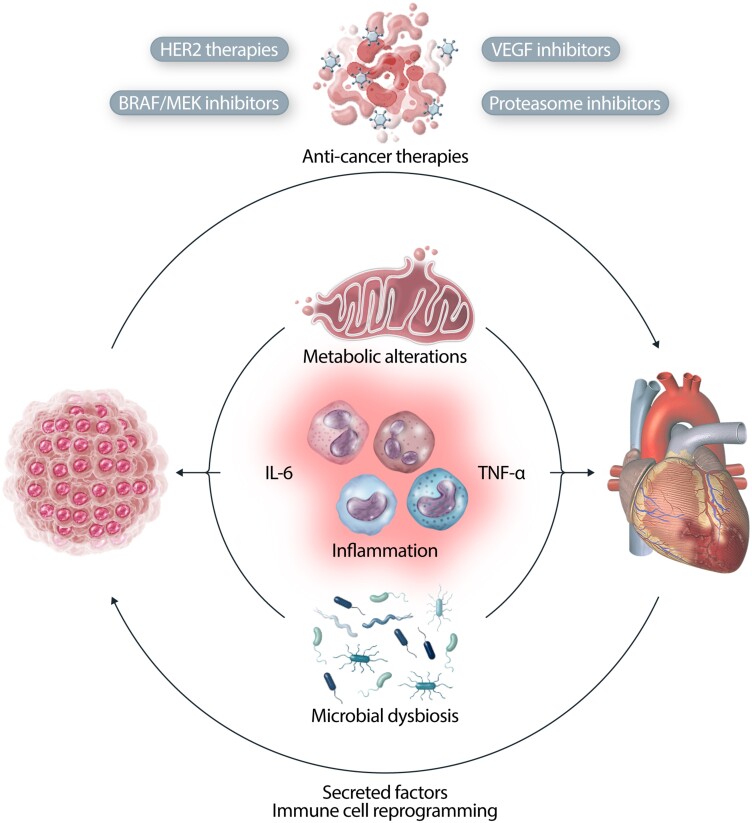
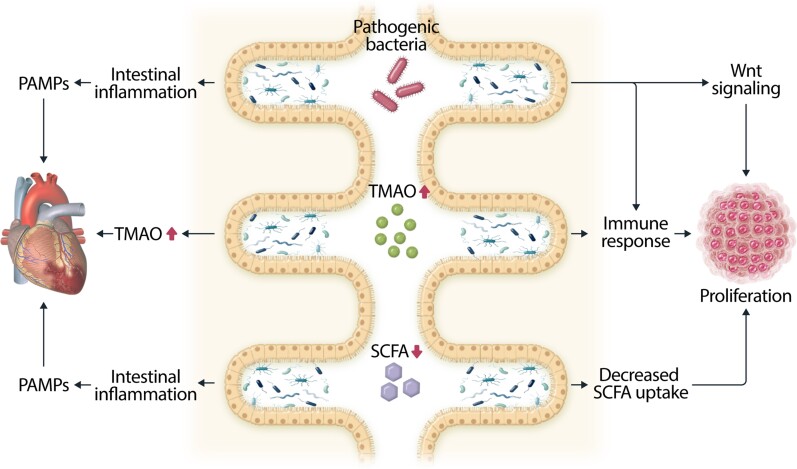
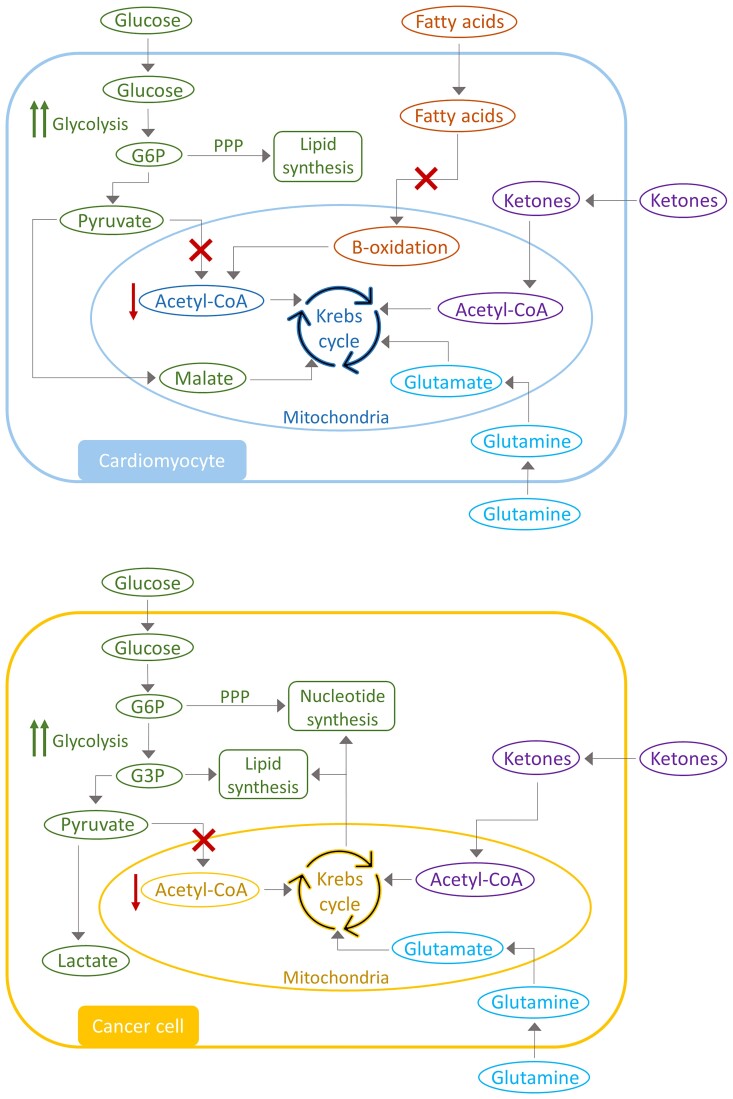
Heart failure (HF) and cancer are the leading causes of death worldwide and accumulating evidence demonstrates that HF and cancer affect one another in a bidirectional way. Patients with HF are at increased risk for developing cancer, and HF is associated with accelerated tumour growth. The presence of malignancy may induce systemic metabolic, inflammatory, and microbial alterations resulting in impaired cardiac function. In addition to pathophysiologic mechanisms that are shared between cancer and HF, overlaps also exist between pathways required for normal cardiac physiology and for tumour growth. Therefore, these overlaps may also explain the increased risk for cardiotoxicity and HF as a result of targeted anti-cancer therapies. This review provides an overview of mechanisms involved in the bidirectional connection between HF and cancer, specifically focusing upon current 'hot-topics' in these shared mechanisms. It subsequently describes targeted anti-cancer therapies with cardiotoxic potential as a result of overlap between their anti-cancer targets and pathways required for normal cardiac function.
心力衰竭 (HF) 和癌症是全球主要的死亡原因,越来越多的证据表明 HF 和癌症以双向方式相互影响。HF 患者发生癌症的风险增加,HF 与肿瘤生长加速有关。恶性肿瘤的存在可能导致全身代谢、炎症和微生物改变,从而导致心脏功能受损。除了癌症和 HF 之间共有的病理生理机制外,正常心脏生理学和肿瘤生长所需的途径之间也存在重叠。因此,这些重叠也可能解释由于靶向抗癌治疗而导致的心脏毒性和 HF 风险增加。本综述提供了 HF 和癌症之间双向联系中涉及的机制概述,特别侧重于这些共享机制中的当前“热点”。随后描述了具有心脏毒性潜力的靶向抗癌疗法,因为它们的抗癌靶点与正常心脏功能所需的途径之间存在重叠。