Xu Jiesi, Huang Xun
State Key Laboratory of Molecular Developmental Biology, Institute of Genetics and Developmental Biology, Innovation Academy for Seed Design, Chinese Academy of Sciences, Beijing, China.
College of Advanced Agricultural Sciences, University of Chinese Academy of Sciences, Beijing, China.
Front Cell Dev Biol. 2020 Dec 23;8:615856. doi: 10.3389/fcell.2020.615856. eCollection 2020.
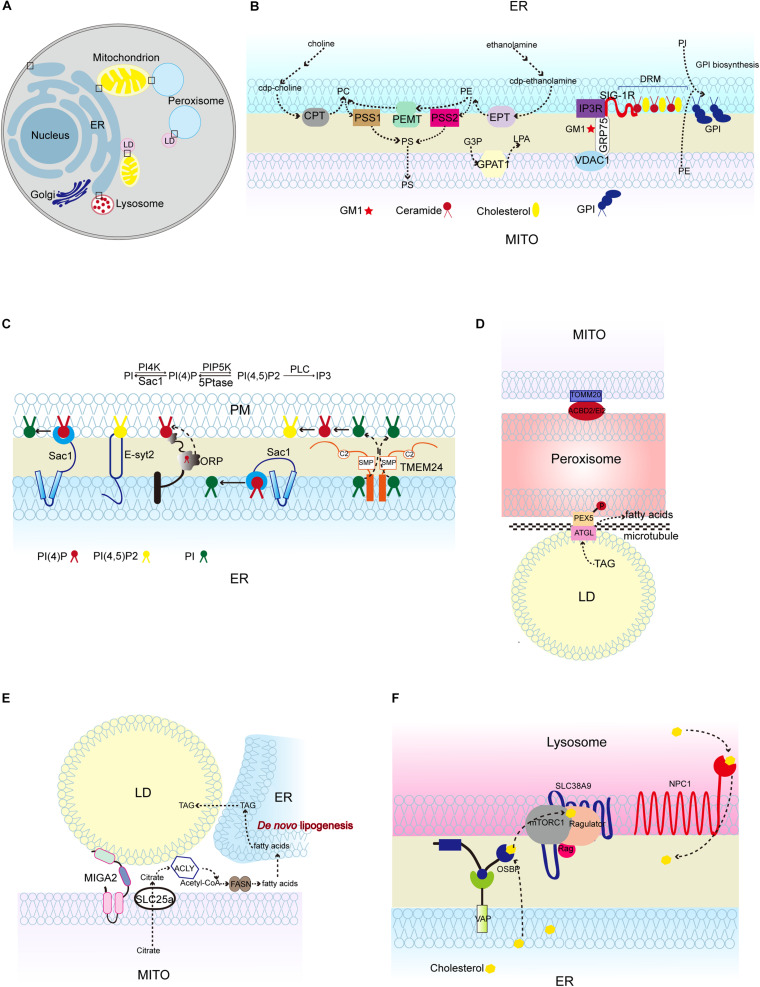
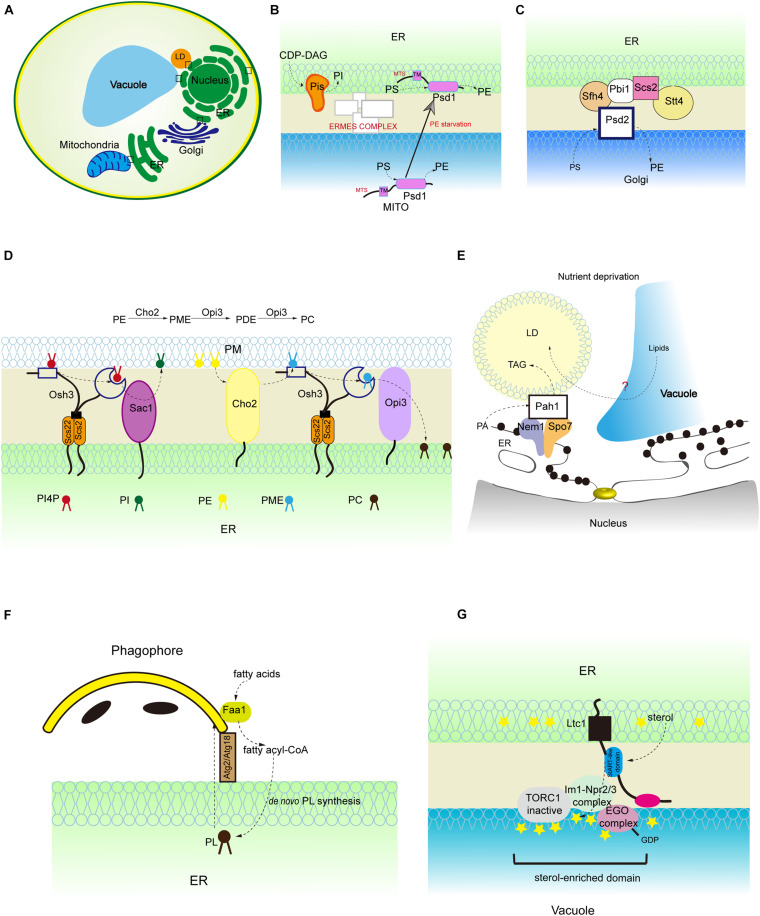
Membrane contact sites (MCSs), regions where the membranes of two organelles are closely apposed, play critical roles in inter-organelle communication, such as lipid trafficking, intracellular signaling, and organelle biogenesis and division. First identified as "fraction X" in the early 90s, MCSs are now widely recognized to facilitate local lipid synthesis and inter-organelle lipid transfer, which are important for maintaining cellular lipid homeostasis. In this review, we discuss lipid metabolism and related cellular and physiological functions in MCSs. We start with the characteristics of lipid synthesis and breakdown at MCSs. Then we focus on proteins involved in lipid synthesis and turnover at these sites. Lastly, we summarize the cellular function of lipid metabolism at MCSs beyond mere lipid homeostasis, including the physiological meaning and relevance of MCSs regarding systemic lipid metabolism. This article is part of an article collection entitled: Coupling and Uncoupling: Dynamic Control of Membrane Contacts.
膜接触位点(MCSs)是两个细胞器的膜紧密并列的区域,在细胞器间通讯中发挥关键作用,如脂质转运、细胞内信号传导以及细胞器的生物发生和分裂。MCSs最早在90年代初被鉴定为“组分X”,现在人们广泛认识到它有助于局部脂质合成和细胞器间脂质转移,这对维持细胞脂质稳态很重要。在这篇综述中,我们讨论了MCSs中的脂质代谢以及相关的细胞和生理功能。我们首先介绍MCSs处脂质合成和分解的特征。然后我们关注参与这些位点脂质合成和周转的蛋白质。最后,我们总结了MCSs处脂质代谢的细胞功能,其作用不仅限于脂质稳态,还包括MCSs在全身脂质代谢方面的生理意义和相关性。本文是名为:耦合与解耦:膜接触的动态控制的文章集的一部分。