Physical Education Office, Yuan Ze University, Taoyuan 32003, Taiwan.
Department of Sports Medicine, Kaohsiung Medical University, Kaohsiung 80708, Taiwan.
Nutrients. 2021 Dec 25;14(1):78. doi: 10.3390/nu14010078.
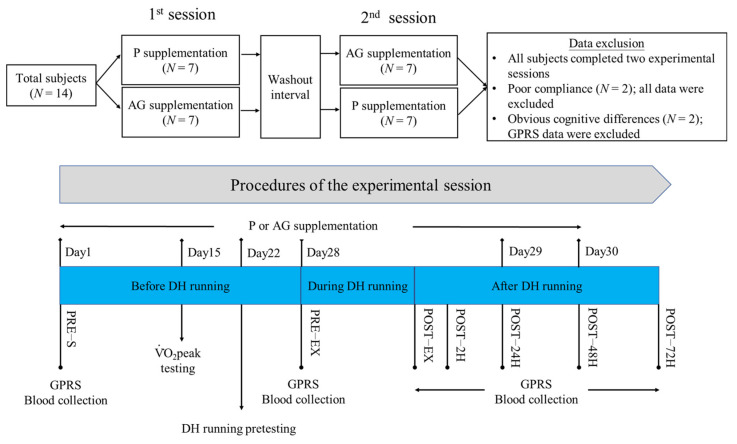
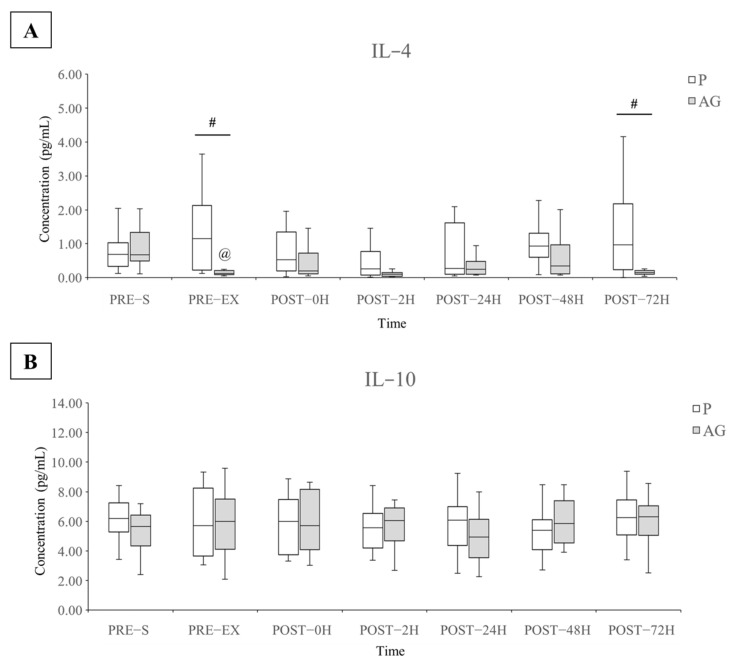
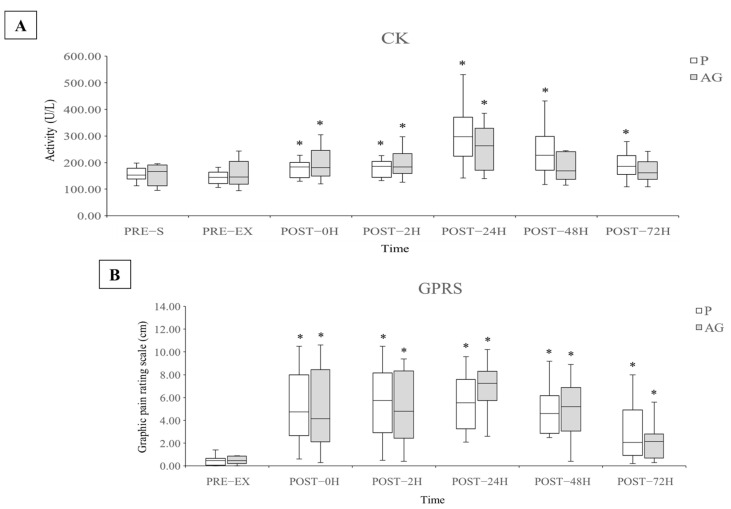
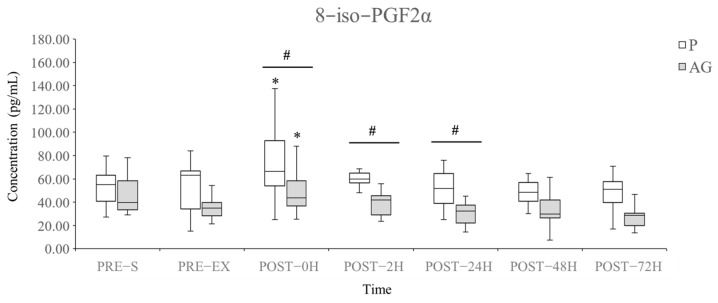
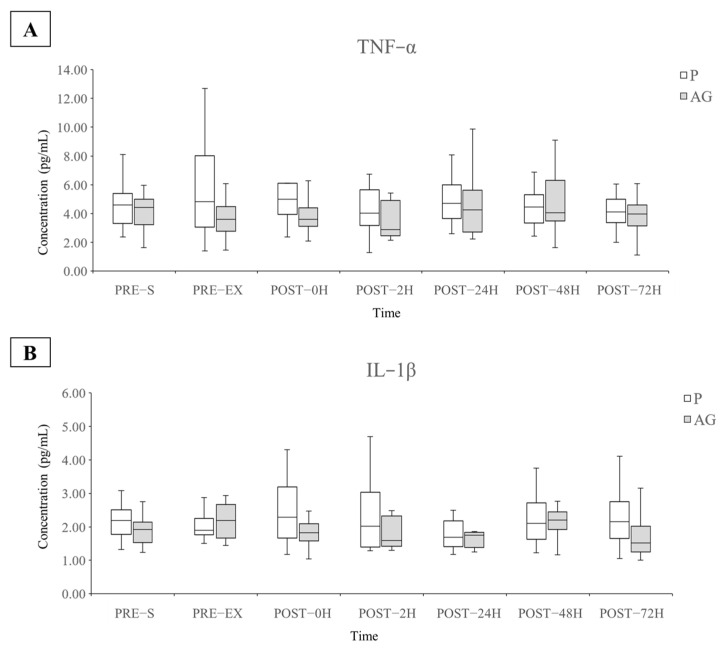
Exercise-induced muscle damage (EIMD) is characterized by a reduction in functional performance, disruption of muscle structure, production of reactive oxygen species, and inflammatory reactions. Ginseng, along with its major bioactive component ginsenosides, has been widely employed in traditional Chinese medicine. The protective potential of American ginseng (AG) for eccentric EIMD remains unclear. Twelve physically active males (age: 22.4 ± 1.7 years; height: 175.1 ± 5.7 cm; weight: 70.8 ± 8.0 kg; peak oxygen consumption [V˙O2peak] 54.1 ± 4.3 mL/kg/min) were administrated by AG extract (1.6 g/day) or placebo (P) for 28 days and subsequently challenged by downhill (DH) running (-10% gradient and 60% V˙O2peak). The levels of circulating 8-iso-prostaglandin F 2α (PGF2α), creatine kinase (CK), interleukin (IL)-1β, IL-4, IL-10, and TNF-α, and the graphic pain rating scale (GPRS) were measured before and after supplementation and DH running. The results showed that the increases in plasma CK activity induced by DH running were eliminated by AG supplementation at 48 and 72 h after DH running. The level of plasma 8-iso-PGF2α was attenuated by AG supplementation immediately ( = 0.01 and = 0.53), 2 h ( = 0.01 and = 0.53) and 24 h ( = 0.028 and = 0.45) after DH running compared with that by P supplementation. Moreover, our results showed an attenuation in the plasma IL-4 levels between AG and P supplementation before ( = 0.011 and = 0.52) and 72 h ( = 0.028 and = 0.45) following DH running. Our findings suggest that short-term supplementation with AG alleviates eccentric EIMD by decreasing lipid peroxidation and promoting inflammatory adaptation.
运动诱导的肌肉损伤(EIMD)的特征是功能表现下降、肌肉结构破坏、活性氧的产生和炎症反应。人参及其主要生物活性成分人参皂苷已广泛应用于传统中药。西洋参(AG)对离心性 EIMD 的保护潜力尚不清楚。12 名身体活跃的男性(年龄:22.4±1.7 岁;身高:175.1±5.7cm;体重:70.8±8.0kg;峰值摄氧量[V˙O2peak]54.1±4.3mL/kg/min)接受 AG 提取物(1.6g/天)或安慰剂(P)治疗 28 天,随后进行下坡(DH)跑步(-10%坡度和 60%V˙O2peak)。补充前后和 DH 跑步后测量循环 8-异前列腺素 F2α(PGF2α)、肌酸激酶(CK)、白细胞介素(IL)-1β、IL-4、IL-10 和 TNF-α以及图形疼痛评分量表(GPRS)的水平。结果表明,DH 跑步引起的血浆 CK 活性增加在 DH 跑步后 48 和 72 小时被 AG 补充消除。AG 补充可立即(=0.01 和=0.53)、2 小时(=0.01 和=0.53)和 24 小时(=0.028 和=0.45)减弱 DH 跑步后血浆 8-异-PGF2α水平。此外,与 P 补充相比,我们的结果表明,AG 和 P 补充前后(=0.011 和=0.52)和 72 小时(=0.028 和=0.45)血浆 IL-4 水平降低。我们的研究结果表明,AG 的短期补充通过降低脂质过氧化和促进炎症适应来减轻离心性 EIMD。