Szylberg Mateusz, Sokal Paweł, Śledzińska Paulina, Bebyn Marek, Krajewski Stanisław, Szylberg Łukasz, Szylberg Aneta, Szylberg Tadeusz, Krystkiewicz Kamil, Birski Marcin, Harat Marek, Włodarski Robert, Furtak Jacek
Department of Neurosurgery and Neurology, Jan Biziel University Hospital Nr 2, Collegium Medicum, Nicolaus Copernicus University, 85-168 Bydgoszcz, Poland.
Department of Neurosurgery, 10th Military Research Hospital and Polyclinic, 85-681 Bydgoszcz, Poland.
Biomedicines. 2022 Aug 20;10(8):2030. doi: 10.3390/biomedicines10082030.
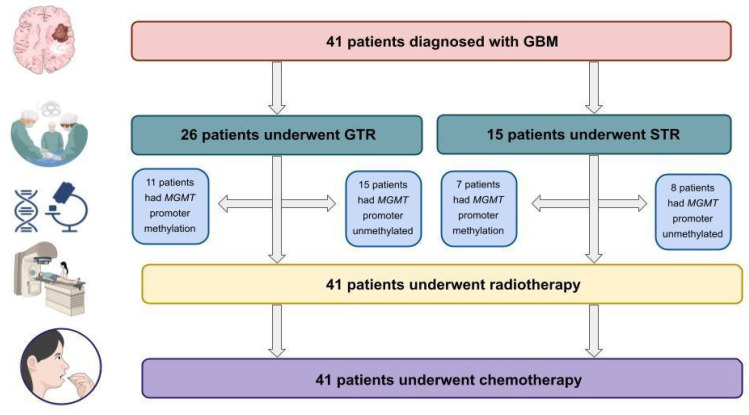
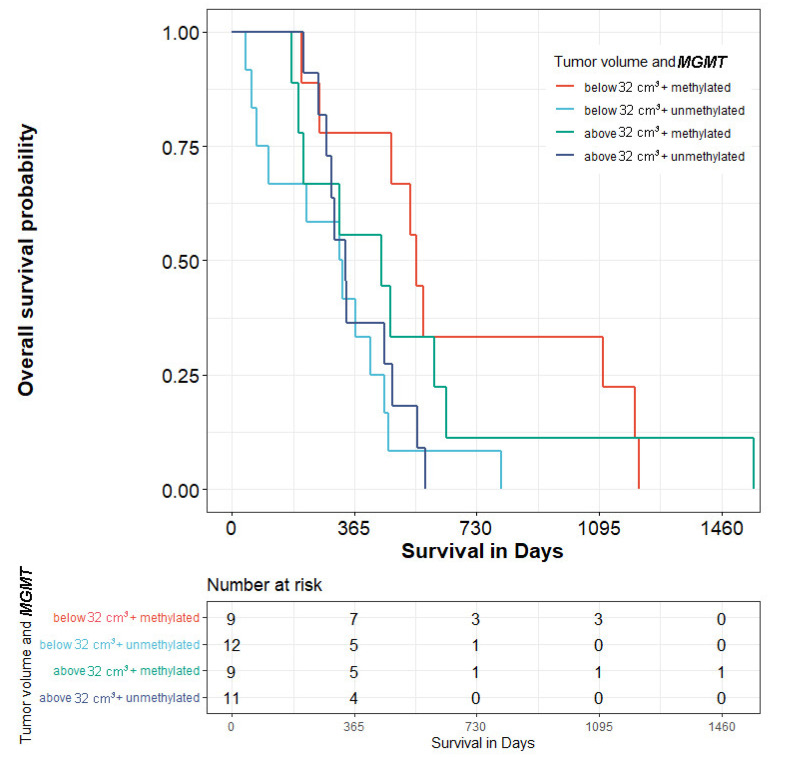
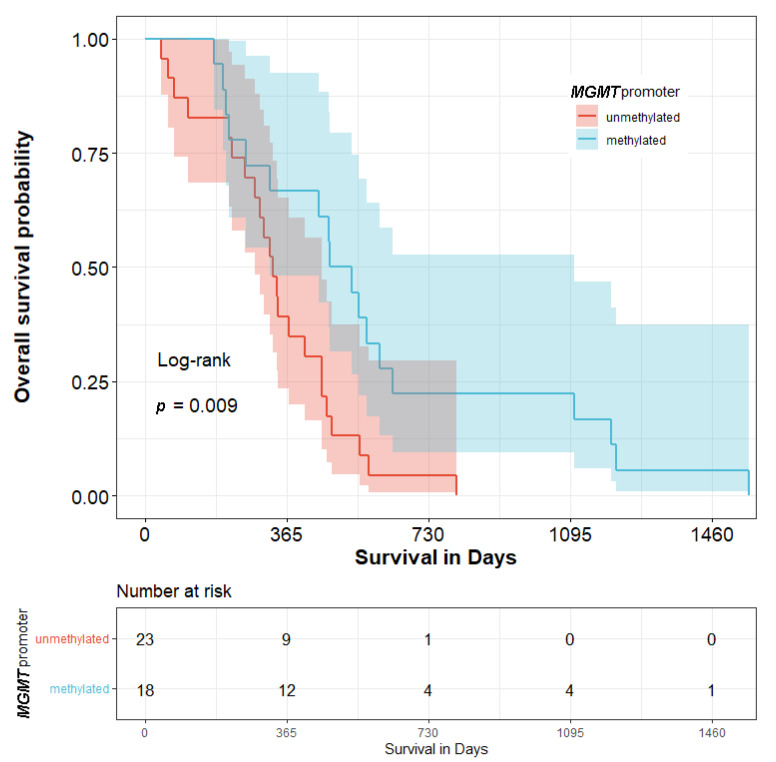
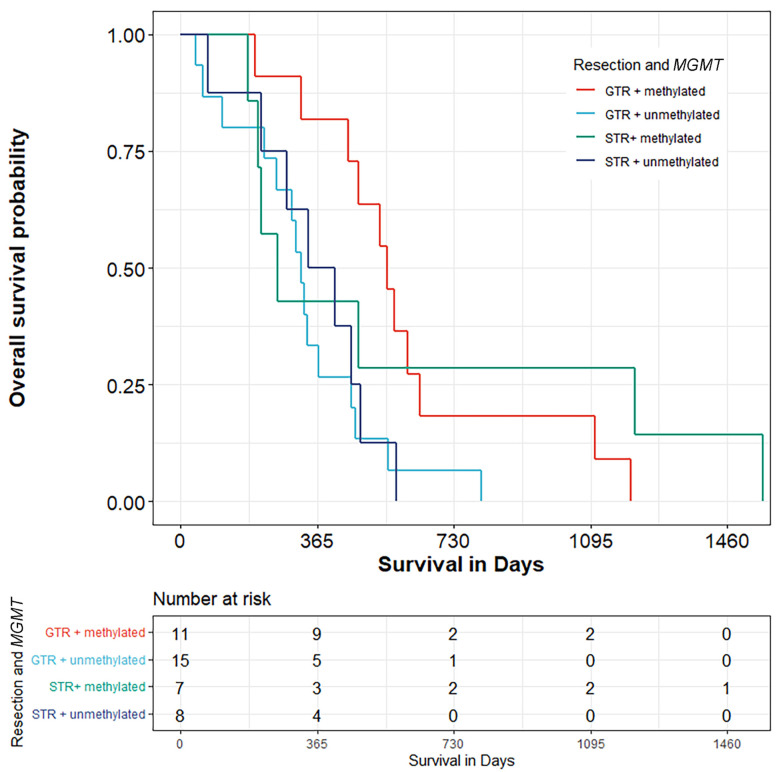
Glioblastoma is the most malignant central nervous system tumor, which represents 50% of all glial tumors. The understanding of glioma genesis, prognostic evaluation, and treatment planning has been significantly enhanced by the discovery of molecular genetic biomarkers. This study aimed to evaluate survival in patients with primary glioblastoma concerning O6-methylguanine-DNA methyltransferase () promoter methylation and other clinical factors. The study included 41 newly diagnosed glioblastoma patients treated from 2011 to 2014 in the 10th Military Research Hospital and Polyclinic, Poland. All patients underwent surgical resection followed by radiation and chemotherapy with alkylating agents. The promoter methylation was evaluated in all patients, and 43% were found to be methylated. In 26 and 15 cases, gross total resection and subtotal resection were conducted, respectively. Patients with a methylated promoter had a median survival of 504 days, while those without methylation had a median survival of 329 days. The group that was examined had a median age of 53. In a patient group younger than 53 years, those with methylation had significantly longer overall survival (639 days), compared to 433.5 days for patients without methylation. The most prolonged survival (551 days) was in patients with promoter methylation after gross total resection. The value of promoter methylation as a predictive biomarker is widely acknowledged. However, its prognostic significance remains unclear. Our findings proved that promoter methylation is also an essential positive prognostic biomarker.
胶质母细胞瘤是最恶性的中枢神经系统肿瘤,占所有胶质瘤的50%。分子遗传生物标志物的发现显著增强了对胶质瘤发生、预后评估和治疗规划的理解。本研究旨在评估原发性胶质母细胞瘤患者中O6-甲基鸟嘌呤-DNA甲基转移酶()启动子甲基化及其他临床因素与生存情况的关系。该研究纳入了2011年至2014年在波兰第10军事研究医院和综合诊所接受治疗的41例新诊断的胶质母细胞瘤患者。所有患者均接受手术切除,随后进行放疗和烷化剂化疗。对所有患者评估了启动子甲基化情况,发现43%的患者存在甲基化。分别有26例和15例患者进行了全切除和次全切除。启动子甲基化的患者中位生存期为504天,而未甲基化的患者中位生存期为329天。所研究的患者组中位年龄为53岁。在年龄小于53岁的患者组中,甲基化患者的总生存期明显更长(639天),而未甲基化患者为433.5天。全切除后启动子甲基化的患者生存期最长(551天)。启动子甲基化作为一种预测生物标志物的价值已得到广泛认可。然而,其预后意义仍不明确。我们的研究结果证明,启动子甲基化也是一种重要的阳性预后生物标志物。