Buonsenso Danilo, Martino Laura, Morello Rosa, De Rose Cristina, Valentini Piero
Department of Woman and Child Health and Public Health, Fondazione Policlinico Universitario A. Gemelli IRCCS, Rome 00168, Italy.
Global Health Research Institute, Istituto di Igiene, Università Cattolica del Sacro Cuore, Rome 00168, Italy.
Children (Basel). 2022 Aug 19;9(8):1251. doi: 10.3390/children9081251.
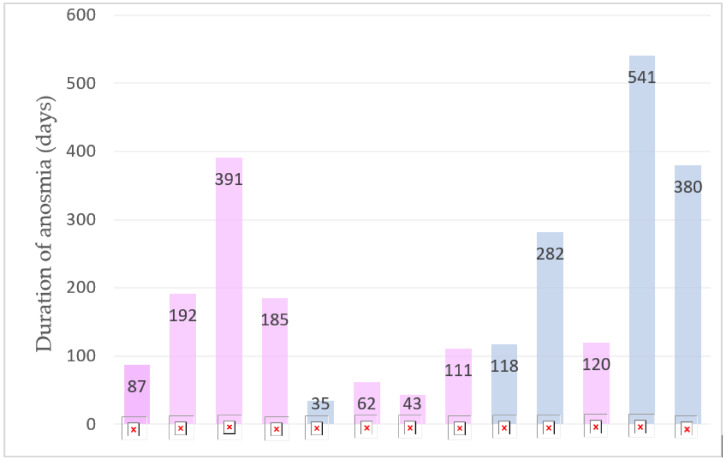
Olfactory dysfunction is one of the long-term consequences of acute SARS-CoV-2 infection in adults. This study aims to analyze the prevalence of chronic anosmia among COVID-19 children and to bring to light its impact on their families' quality of life and wellbeing. Children younger than 18 years old, who were detected as being COVID-19-positive by RT-PCR and were assessed in a pediatric post-COVID outpatient clinic at least 28 days after the onset of the acute infection, were included in the study. The patients suffering from persisting smell disorders were asked to answer a questionnaire about their symptoms and how they influence their daily life. Out of the 784 children evaluated, 13 (1.7%) presented olfactory impairment at a mean follow-up since the acute infection of more than three months. Parents' answers showed that they were worried about their children's health, in particular they wanted to know if and when they would recover and if these disorders would have long-term consequences. They also wanted to share their experiences, in order to help other people who are experiencing the same disorders in everyday life. Our study highlights that smell disorders can significantly upset children's eating habits and everyday activities. Furthermore, these findings suggest that future research should try to better understand the mechanisms causing loss of smell in COVID-19 patients and find the most appropriate treatment.
嗅觉功能障碍是成人急性SARS-CoV-2感染的长期后果之一。本研究旨在分析新冠病毒感染儿童中慢性嗅觉丧失的患病率,并揭示其对家庭生活质量和幸福感的影响。本研究纳入了18岁以下、经逆转录聚合酶链反应(RT-PCR)检测为新冠病毒阳性且在急性感染发病至少28天后在儿科新冠门诊接受评估的儿童。患有持续性嗅觉障碍的患者被要求回答一份关于其症状以及这些症状如何影响日常生活的问卷。在评估的784名儿童中,13名(1.7%)在急性感染后平均随访三个多月时出现嗅觉障碍。家长们的回答表明,他们担心孩子的健康,尤其想知道孩子是否以及何时会康复,这些障碍是否会产生长期影响。他们还希望分享自己的经历,以帮助其他在日常生活中经历同样障碍的人。我们的研究强调,嗅觉障碍会显著扰乱儿童的饮食习惯和日常活动。此外,这些研究结果表明,未来的研究应努力更好地理解新冠病毒感染患者嗅觉丧失的机制,并找到最合适的治疗方法。