Centro de Investigación en Red de Enfermedades Raras (CIBERER), 28029 Madrid, Spain.
Institut d'Investigacions Biomèdiques August Pi i Sunyer (IDIBAPS), 08036 Barcelona, Spain.
Int J Mol Sci. 2022 Aug 19;23(16):9328. doi: 10.3390/ijms23169328.
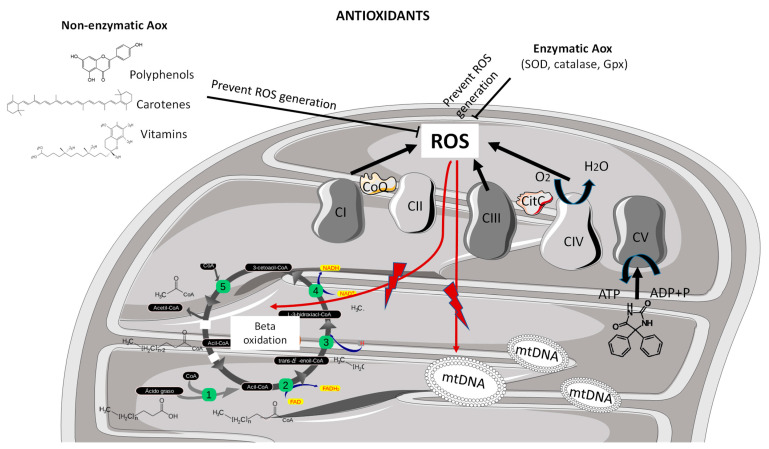
The distinguishing pathogenic features of neurodegenerative diseases include mitochondrial dysfunction and derived reactive oxygen species generation. The neural tissue is highly sensitive to oxidative stress and this is a prominent factor in both chronic and acute neurodegeneration. Based on this, therapeutic strategies using antioxidant molecules towards redox equilibrium have been widely used for the treatment of several brain pathologies. Globally, polyphenols, carotenes and vitamins are among the most typical exogenous antioxidant agents that have been tested in neurodegeneration as adjunctive therapies. However, other types of antioxidants, including hormones, such as the widely used melatonin, are also considered neuroprotective agents and have been used in different neurodegenerative contexts. This review highlights the most relevant mitochondrial antioxidant targets in the main neurodegenerative disorders including Alzheimer's disease, Parkinson's disease, and Huntington's disease and also in the less represented amyotrophic lateral sclerosis, as well as traumatic brain injury, while summarizing the latest randomized placebo-controlled trials.
神经退行性疾病的致病特征包括线粒体功能障碍和由此产生的活性氧生成。神经组织对氧化应激高度敏感,这是慢性和急性神经退行性变的一个突出因素。基于此,使用抗氧化分子来实现氧化还原平衡的治疗策略已被广泛用于治疗多种脑部疾病。在全球范围内,多酚、类胡萝卜素和维生素是最典型的已在神经退行性变中作为辅助治疗进行测试的外源性抗氧化剂。然而,其他类型的抗氧化剂,包括激素,如广泛使用的褪黑素,也被认为是神经保护剂,并已在不同的神经退行性变情况下使用。本综述重点介绍了主要神经退行性疾病(包括阿尔茨海默病、帕金森病和亨廷顿病)以及代表性较低的肌萎缩侧索硬化症以及创伤性脑损伤中最相关的线粒体抗氧化靶标,并总结了最新的随机安慰剂对照试验。