Zeldovich Marina, Bockhop Fabian, Covic Amra, Cunitz Katrin, Polinder Suzanne, Haagsma Juanita A, von Steinbuechel Nicole
Institute of Medical Psychology and Medical Sociology, University Medical Center Göttingen, Waldweg 37A, 37073 Göttingen, Germany.
Department of Public Health, Erasmus MC, University Medical Center Rotterdam, 3000 CA Rotterdam, The Netherlands.
J Clin Med. 2022 Aug 9;11(16):4658. doi: 10.3390/jcm11164658.
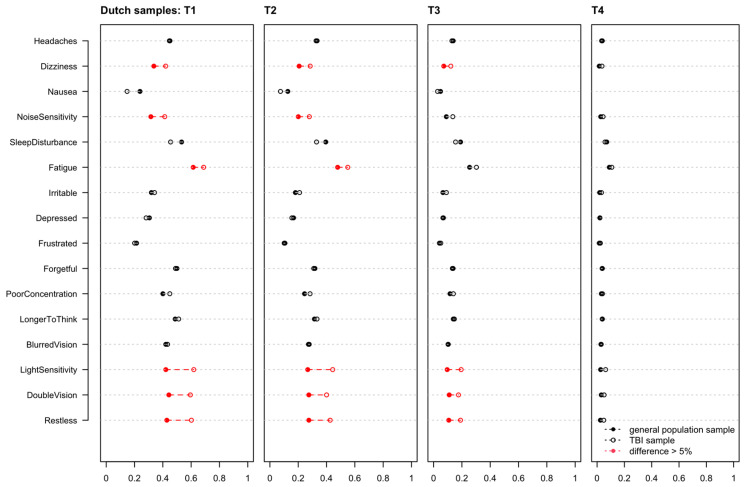
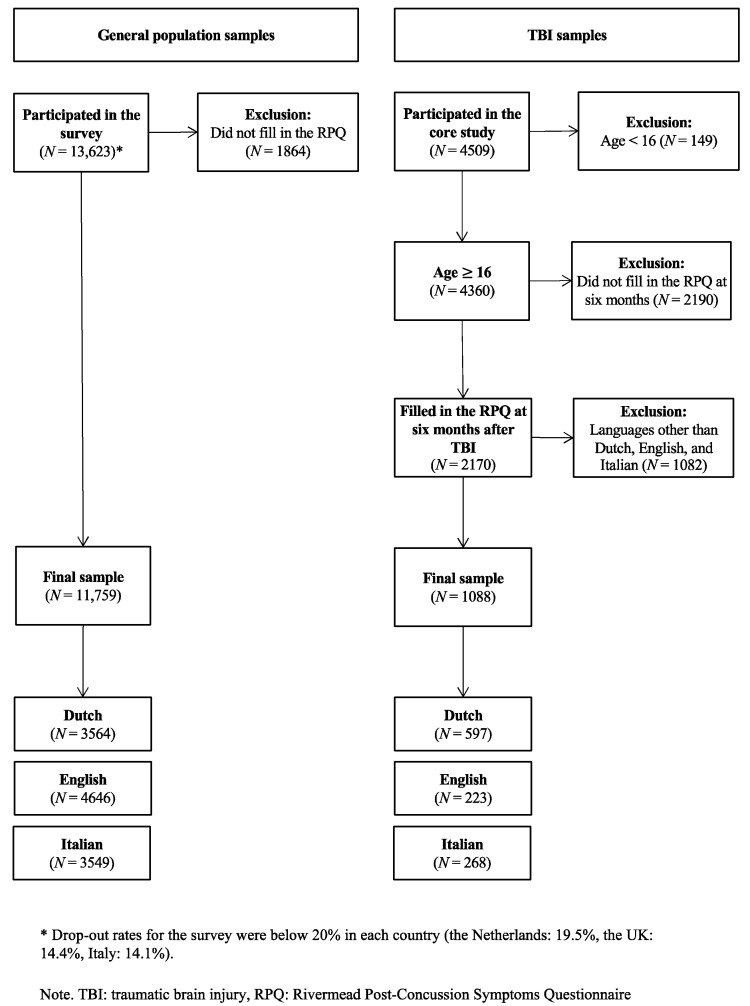
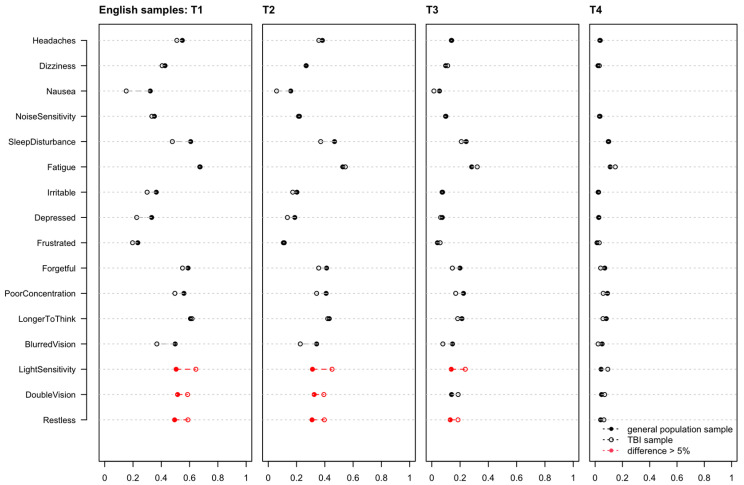
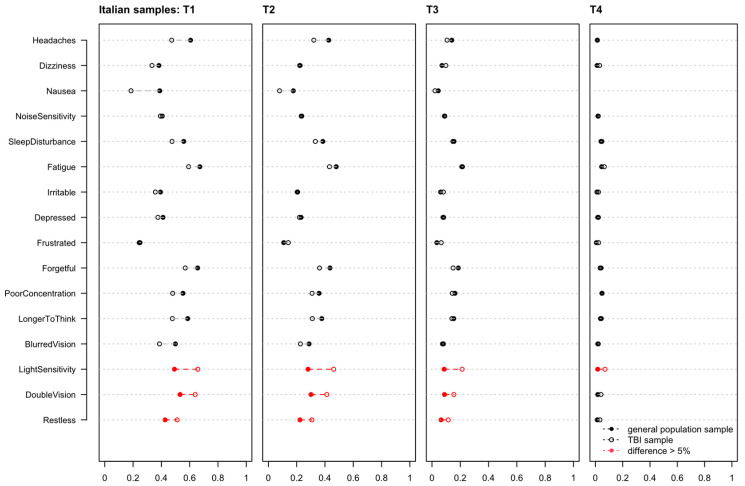
After traumatic brain injury (TBI), individuals may experience short- or long-term health burdens, often referred to as post-concussion symptoms (PCS). The Rivermead Post-Concussion Symptoms Questionnaire (RPQ) is one of the commonly used instruments to assess self-reported PCS. To date, no reference values for RPQ have been provided, although they are crucial for clinical practice when evaluating a patient's health status relative to a comparable healthy population. Therefore, the aim of this study is to provide reference values for the United Kingdom, the Netherlands, and Italy. A total of 11,759 individuals (50.3% women) from representative general population samples participated in an online survey (4646 individuals from the UK, 3564 from the Netherlands, and 3549 from Italy). The factorial structure of the RPQ was examined using confirmatory factor analysis (CFA), and results from the general population samples were compared with those from respective TBI samples recruited within the international CENTER-TBI study using multigroup CFA. Reference values were stratified by sex, health status, age, and education using percentiles. The three-factorial model outperformed the one-factorial structure. The general population samples were largely comparable to the corresponding TBI samples, except for items such as dizziness, vision, and sensory sensitivity, which can be considered more TBI-specific. Because of the significant differences between the general population samples, we provided reference values for the total score and for the somatic, emotional, and cognitive scales for each country separately. The reference values provided can now be used in clinical practice and research. Future studies should obtain stratified reference values for other countries and languages to improve accuracy in the diagnosis and treatment of symptom burden after TBI.
创伤性脑损伤(TBI)后,个体可能会经历短期或长期的健康负担,通常称为脑震荡后症状(PCS)。Rivermead脑震荡后症状问卷(RPQ)是常用的自我报告PCS评估工具之一。迄今为止,尚未提供RPQ的参考值,尽管在评估患者相对于可比健康人群的健康状况时,这些参考值对临床实践至关重要。因此,本研究的目的是提供英国、荷兰和意大利的参考值。共有11759名来自代表性普通人群样本的个体(50.3%为女性)参与了一项在线调查(4646名来自英国,3564名来自荷兰,3549名来自意大利)。使用验证性因子分析(CFA)检查RPQ的因子结构,并使用多组CFA将普通人群样本的结果与国际CENTER-TBI研究中招募的各自TBI样本的结果进行比较。参考值按性别、健康状况、年龄和教育程度用百分位数分层。三因子模型优于单因子结构。普通人群样本在很大程度上与相应的TBI样本可比,但头晕、视力和感觉敏感等项目除外,这些项目可被视为更具TBI特异性。由于普通人群样本之间存在显著差异,我们分别为每个国家提供了总分以及躯体、情绪和认知量表的参考值。所提供的参考值现在可用于临床实践和研究。未来的研究应获取其他国家和语言的分层参考值,以提高TBI后症状负担诊断和治疗的准确性。