Mammarella Nicola, Gatti Matteo, Ceccato Irene, Di Crosta Adolfo, Di Domenico Alberto, Palumbo Rocco
Department of Psychological Sciences, Health and Territory, University G. d'Annunzio of Chieti-Pescara, 66100 Chieti, Italy.
Department of Neuroscience, Imaging and Clinical Sciences, University G. d'Annunzio of Chieti-Pescara, 66100 Chieti, Italy.
Life (Basel). 2022 Aug 2;12(8):1176. doi: 10.3390/life12081176.
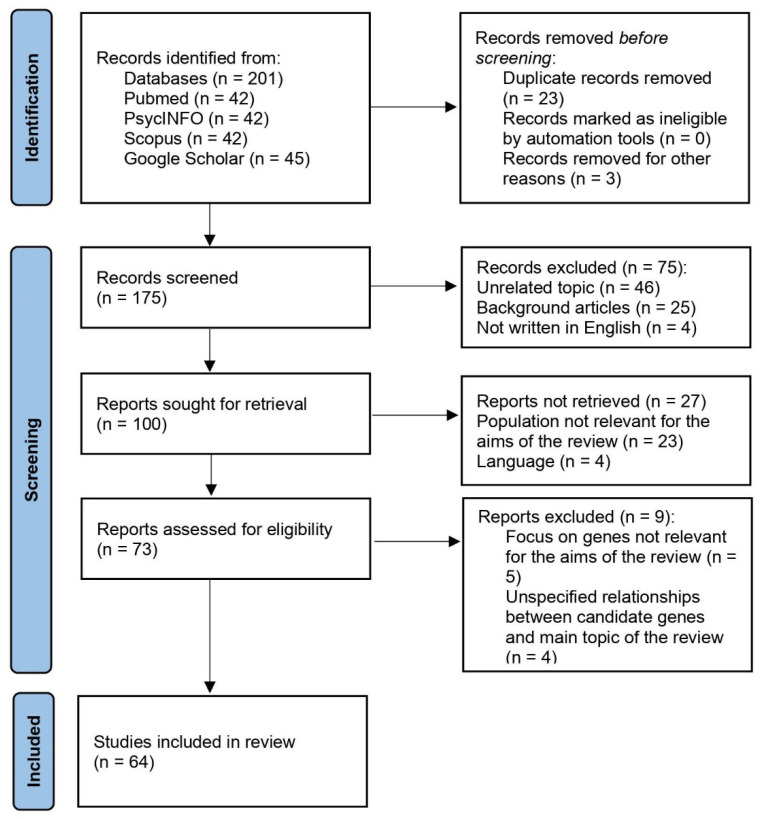
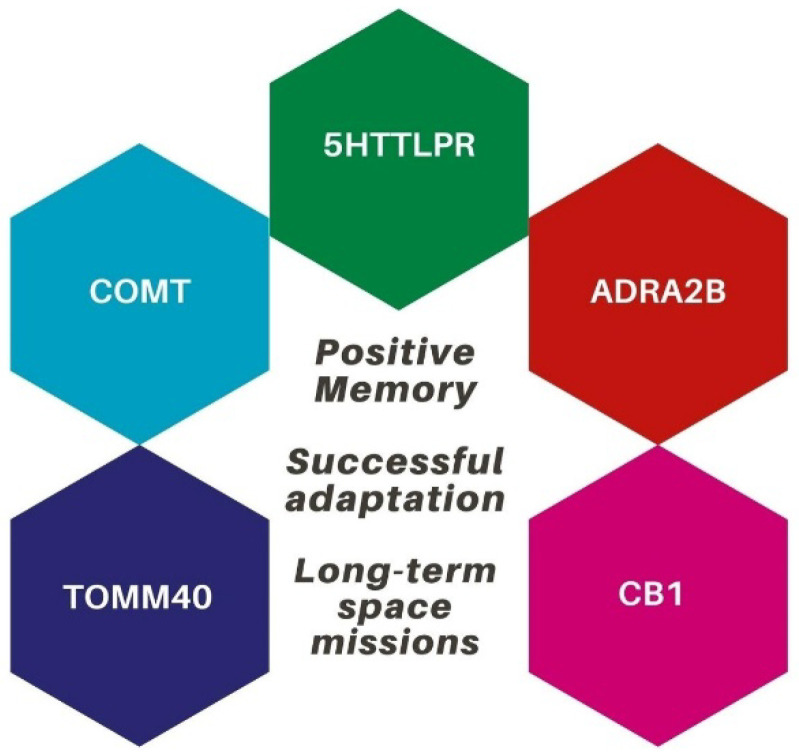
Fighting stress-related effects during spaceflight is crucial for a successful mission. Emotional, motivational, and cognitive mechanisms have already been shown to be involved in the decrease of negative emotions. However, emerging evidence is pointing to a neurogenetic profile that may render some individuals more prone than others to focusing on positive information in memory and increasing affective health. The relevance for adaptation to the space environment and the interaction with other stressors such as ionizing radiations is discussed. In particular, to clarify this approach better, we will draw from the psychology and aging literature data. Subsequently, we report on studies on candidate genes for sensitivity to positive memories. We review work on the following candidate genes that may be crucial in adaptation mechanisms: ADRA2B, COMT, 5HTTLPR, CB1, and TOMM40. The final aim is to show how the study of genetics and cell biology of positive memory can help us to reveal the underlying bottom-up pathways to also increasing positive effects during a space mission.
对抗太空飞行期间与压力相关的影响对于任务的成功至关重要。情绪、动机和认知机制已被证明与负面情绪的减少有关。然而,新出现的证据表明,一种神经遗传学特征可能使一些人比其他人更容易关注记忆中的积极信息并增进情感健康。本文讨论了其与适应太空环境以及与其他应激源(如电离辐射)相互作用的相关性。特别是,为了更好地阐明这种方法,我们将借鉴心理学和衰老文献数据。随后,我们报告了关于对积极记忆敏感的候选基因的研究。我们综述了以下可能在适应机制中起关键作用的候选基因的相关研究:ADRA2B、COMT、5HTTLPR、CB1和TOMM40。最终目的是展示对积极记忆的遗传学和细胞生物学研究如何帮助我们揭示潜在的自下而上的途径,从而在太空任务中增强积极影响。