Suliman Rasha Saad, Alghamdi Sahar Saleh, Ali Rizwan, Aljatli Dimah, Aljammaz Norah Abdulaziz, Huwaizi Sarah, Suliman Rania, Kahtani Khawla Mohammed, Albadrani Ghadeer M, Barhoumi Tlili, Altolayyan Abdulelah, Rahman Ishrat
Department of Pharmacy, Fatima College of Health Sciences, Abu Dhabi 3798, United Arab Emirates.
College of Pharmacy, King Saud Bin Abdulaziz University for Health Sciences, Riyadh 11461, Saudi Arabia.
Pharmaceuticals (Basel). 2022 Jul 29;15(8):944. doi: 10.3390/ph15080944.
Myrrh extract is a well-known medicinal plant with significant therapeutic benefits attributed to the activity of its diverse metabolites. It has promising activity against cancer and inflammatory diseases, and could serve as a potential therapeutic alternative since most therapeutic agents have severe side effects that impair quality of life.
The current study identified the active metabolites from the myrrh resin methanolic extract. Then, the extracts were tested for in vitro anti-inflammatory and anti-cancer activity using cancer cell lines and Tamm-Horsfall Protein 1 (Thp-1)-like macrophage cell lines. Furthermore, using an in vivo rat model, the extracts' anti-inflammatory and wound-healing activity was investigated. In addition, in silico predictions of the myrrh constituents highlighted the pharmacokinetic properties, molecular targets, and safety profile, including cytochrome P 450 (CYP) inhibition and organ toxicity.
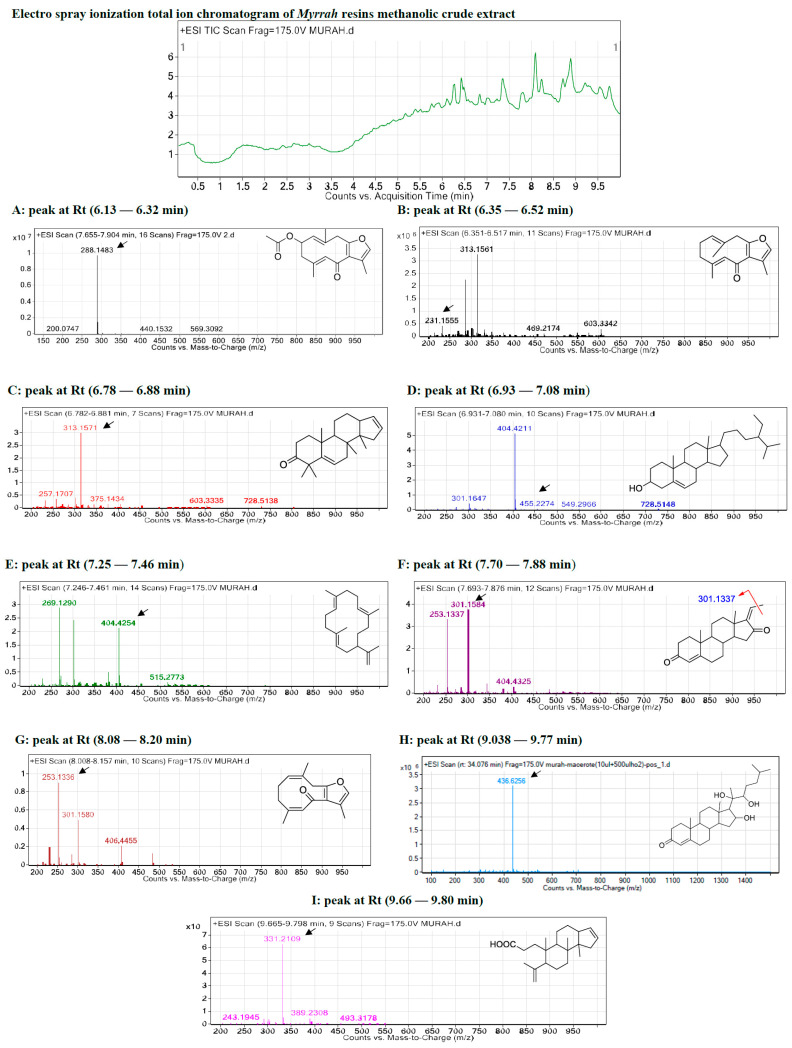
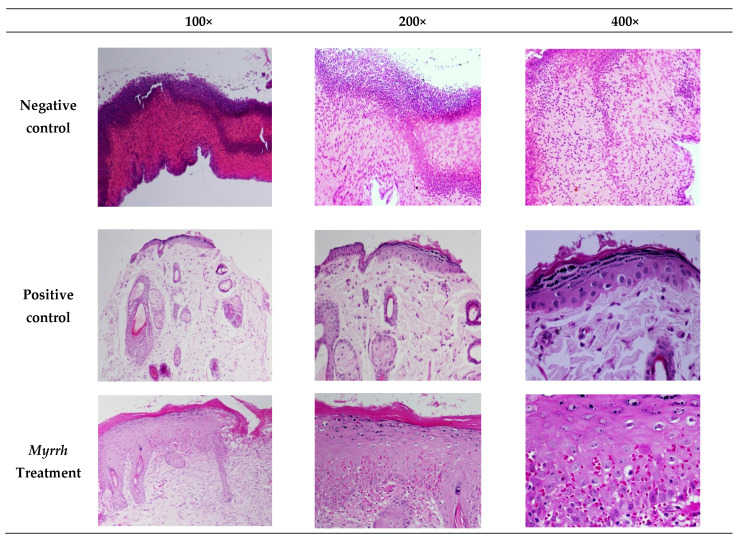
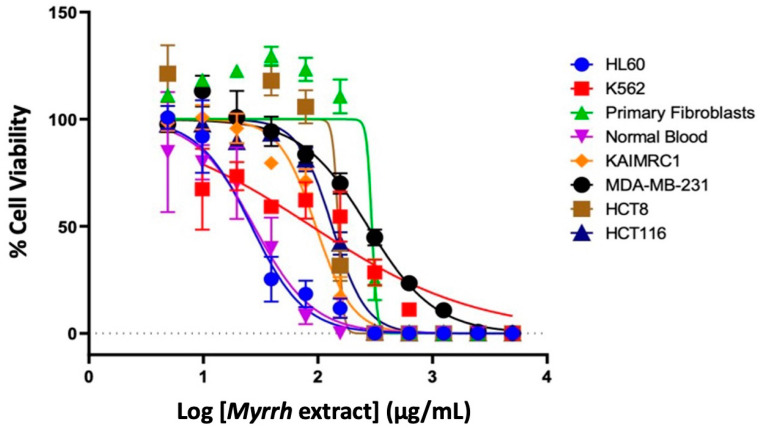
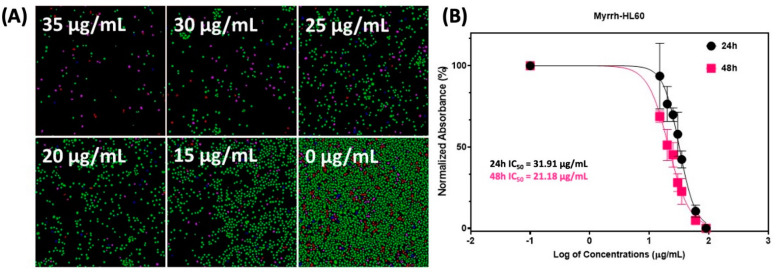
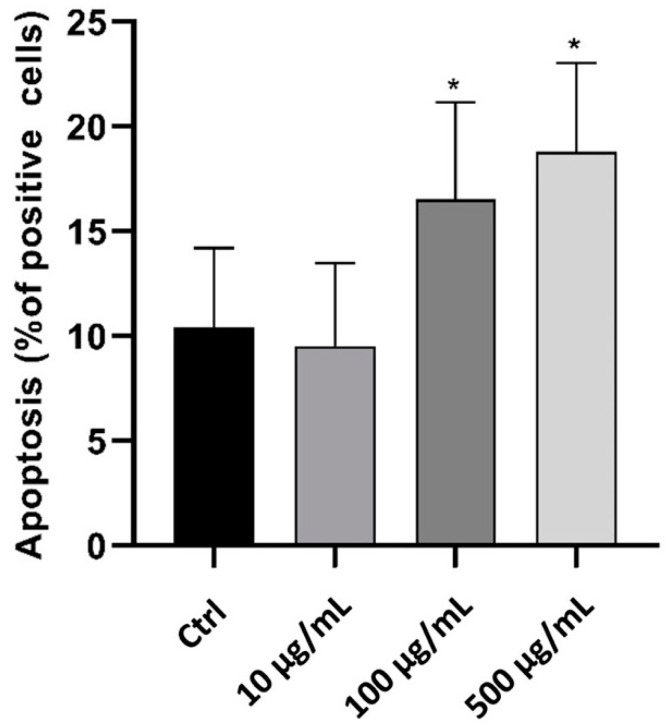
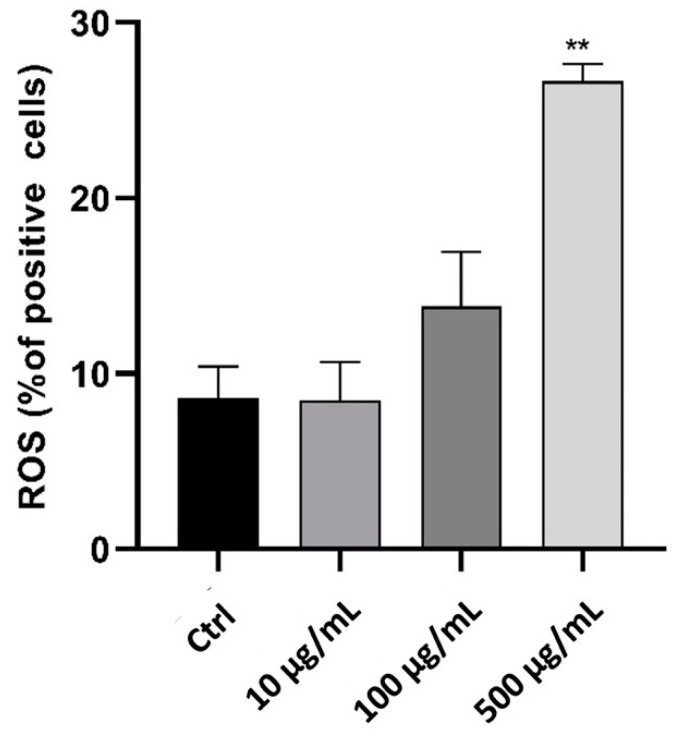
Nine secondary metabolites were identified, and computational predictions suggested a good absorption profile, anticancer, anti-inflammatory, and wound-healing effects. The myrrh extract had moderate cytotoxic activity against both HL60 and K562 leukemia cell lines and the KAIMRC1 breast cancer cell line. Myrrh caused a dose-dependent effect on macrophages to increase the reactive oxygen species (ROS) levels, promote their polarization to classically activated macrophages (M1) and alternatively activated macrophages (M2) phenotypes, and consequently induce apoptosis, highlighting its ability to modulate macrophage function, which could potentially aid in several desired therapeutic processes, including the resolution of inflammation, and autophagy which is an important aspect to consider in cancer treatment. The topical application of myrrh improved wound healing, with no delayed inflammatory response, and promoted complete re-epithelization of the skin, similar to the positive control. In conclusion, we provide evidence for the methanolic extract of myrrh having cytotoxic activity against cancer cells and anti-inflammatory wound-healing properties, which may be attributed to its role in modulating macrophage function. Furthermore, we suggest the active constituents responsible for these properties, which warrants further studies focusing on the precise roles of the active metabolites.
没药提取物是一种著名的药用植物,其多种代谢产物的活性具有显著的治疗益处。它对癌症和炎症性疾病具有有前景的活性,并且由于大多数治疗药物都有严重的副作用会损害生活质量,因此没药提取物可作为一种潜在的治疗选择。
本研究鉴定了没药树脂甲醇提取物中的活性代谢产物。然后,使用癌细胞系和Tamm-Horsfall蛋白1(Thp-1)样巨噬细胞系对提取物进行体外抗炎和抗癌活性测试。此外,使用体内大鼠模型研究了提取物的抗炎和伤口愈合活性。另外,对没药成分的计算机模拟预测突出了其药代动力学特性、分子靶点和安全性概况,包括细胞色素P 450(CYP)抑制和器官毒性。
鉴定出九种次生代谢产物,计算机模拟预测表明其具有良好的吸收特性、抗癌、抗炎和伤口愈合作用。没药提取物对HL60和K562白血病细胞系以及KAIMRC1乳腺癌细胞系具有中等细胞毒性活性。没药对巨噬细胞产生剂量依赖性作用,以增加活性氧(ROS)水平,促进其向经典活化巨噬细胞(M1)和交替活化巨噬细胞(M2)表型极化,从而诱导细胞凋亡,突出了其调节巨噬细胞功能的能力,这可能有助于多种期望的治疗过程,包括炎症的消退,以及自噬,这是癌症治疗中需要考虑的一个重要方面。没药的局部应用改善了伤口愈合,没有延迟的炎症反应,并促进了皮肤的完全重新上皮化,类似于阳性对照。总之,我们提供了证据表明没药甲醇提取物对癌细胞具有细胞毒性活性以及抗炎伤口愈合特性,这可能归因于其在调节巨噬细胞功能中的作用。此外,我们提出了负责这些特性的活性成分,这值得进一步研究以关注活性代谢产物的精确作用。