Laboratory of Virology, Department of Plant Sciences, Wageningen University & Research, Droevendaalsesteeg 1, 6708 PB Wageningen, The Netherlands.
Key Laboratory of Integrated Management of Crop Diseases and Pests, Ministry of Education, Department of Plant Pathology, Nanjing Agricultural University, Nanjing 210095, China.
Viruses. 2022 Jul 29;14(8):1679. doi: 10.3390/v14081679.
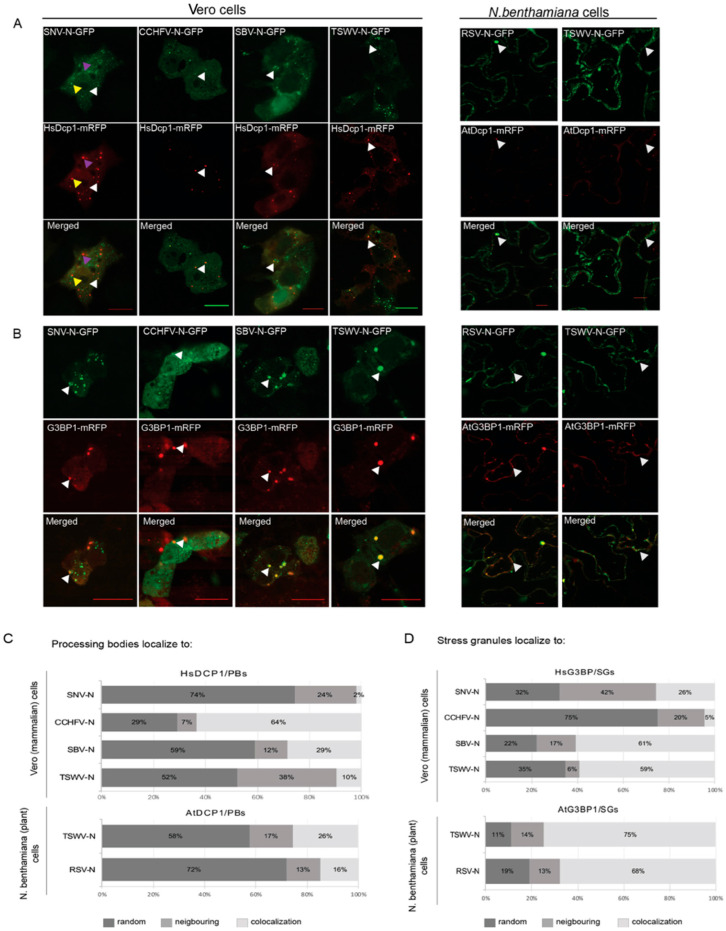
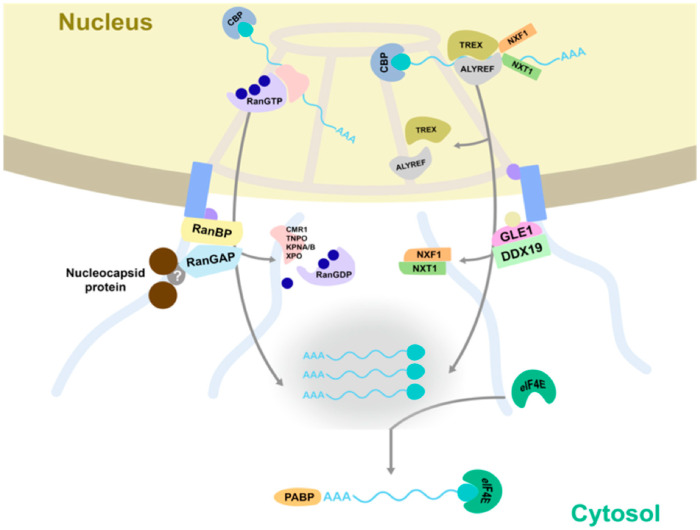
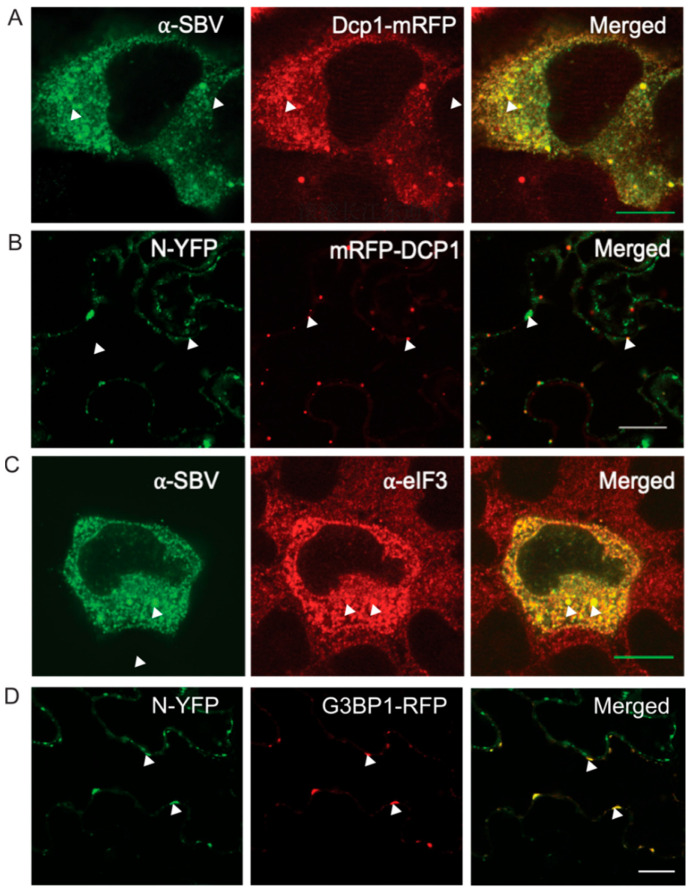
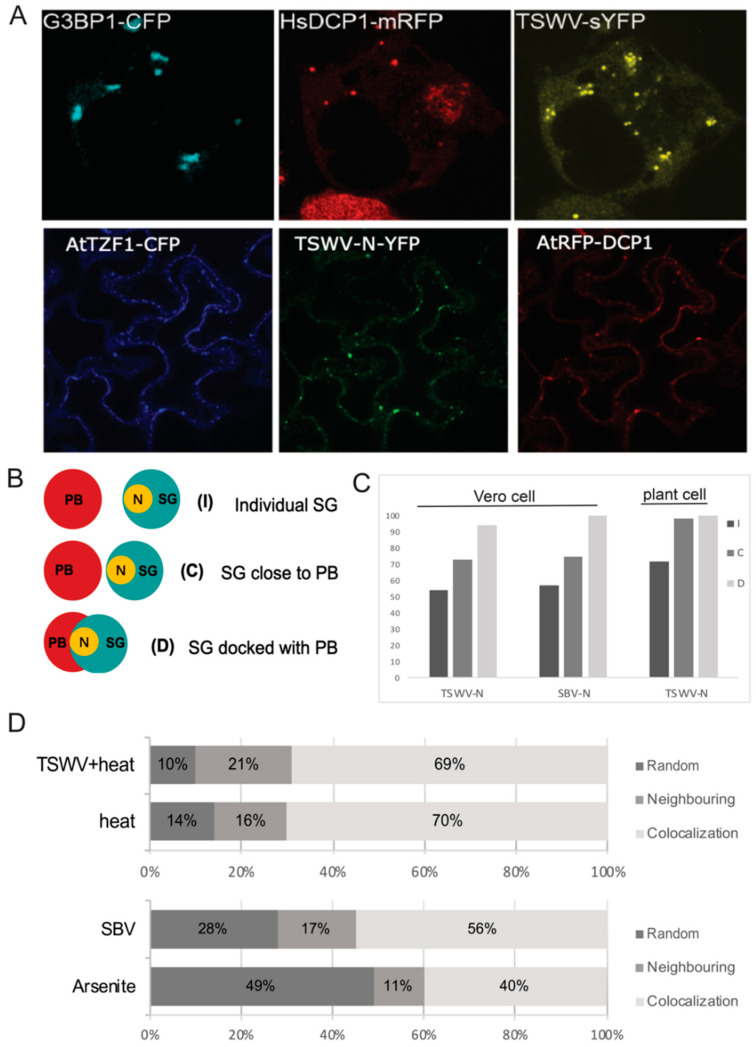
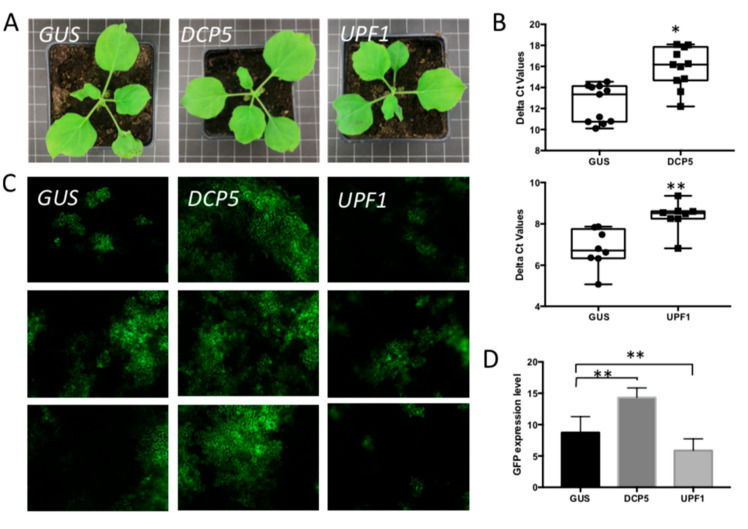
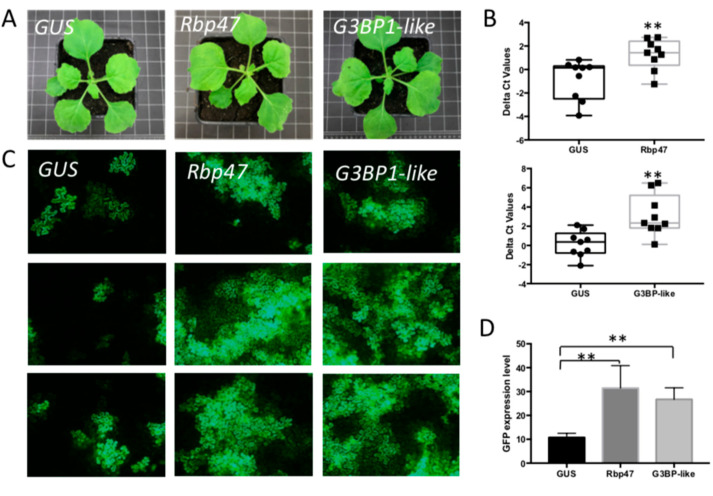
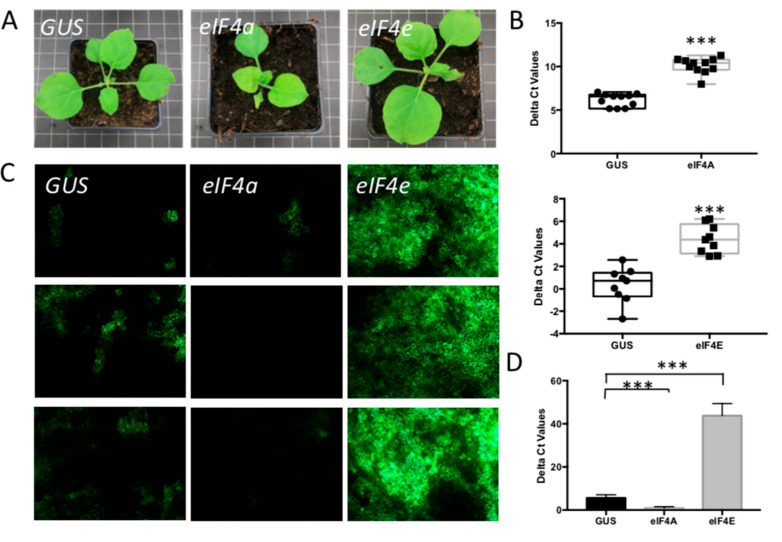
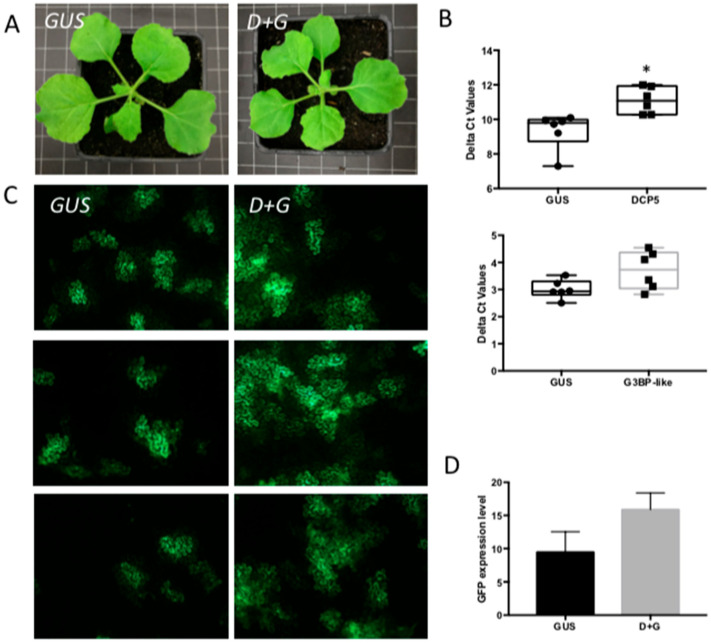
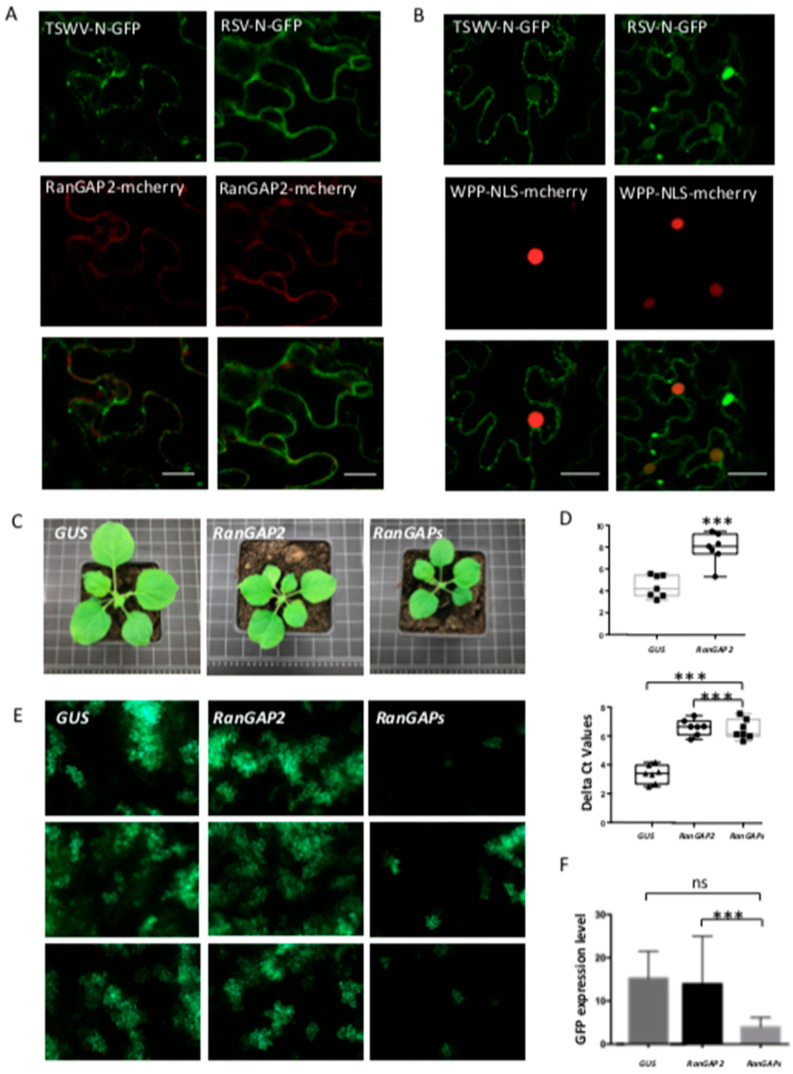
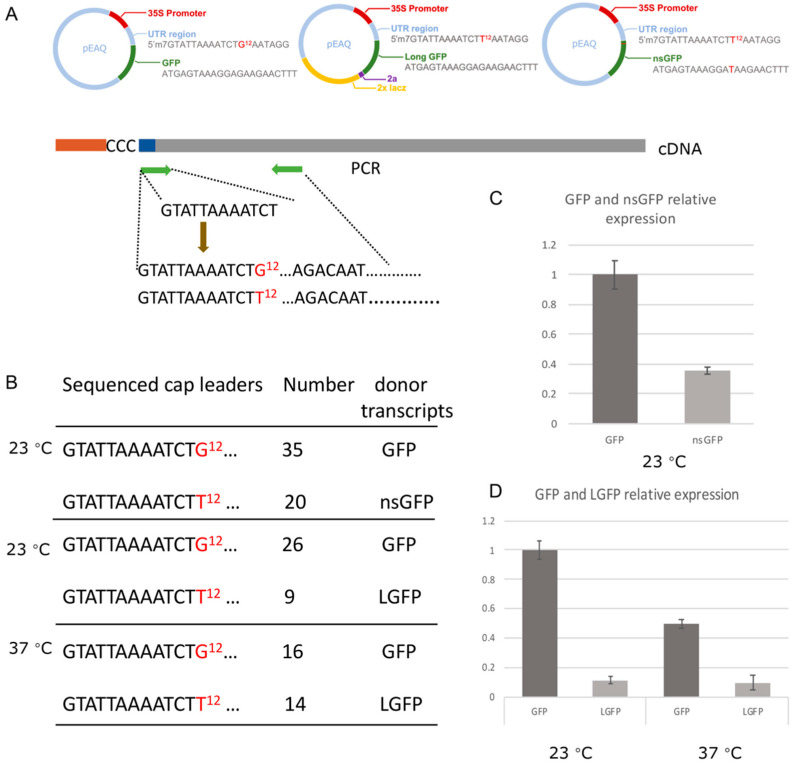
Most cytoplasmic-replicating negative-strand RNA viruses (NSVs) initiate genome transcription by cap snatching. The source of host mRNAs from which the cytoplasmic NSVs snatch capped-RNA leader sequences has remained elusive. Earlier reports have pointed towards cytoplasmic-RNA processing bodies (P body, PB), although several questions have remained unsolved. Here, the nucleocapsid (N) protein of plant- and animal-infecting members of the order , in casu Tomato spotted wilt virus (TSWV), Rice stripe virus (RSV), Sin nombre virus (SNV), Crimean-Congo hemorrhagic fever virus (CCHFV) and Schmallenberg virus (SBV) have been expressed and localized in cells of their respective plant and animal hosts. All N proteins localized to PBs as well as stress granules (SGs), but extensively to docking stages of PB and SG. TSWV and RSV N proteins also co-localized with Ran GTPase-activating protein 2 (RanGAP2), a nucleo-cytoplasmic shuttling factor, in the perinuclear region, and partly in the nucleus when co-expressed with its WPP domain containing a nuclear-localization signal. Upon silencing of PB and SG components individually or concomitantly, replication levels of a TSWV minireplicon, as measured by the expression of a GFP reporter gene, ranged from a 30% reduction to a four-fold increase. Upon the silencing of RanGAP homologs , replication of the TSWV minireplicon was reduced by 75%. During in vivo cap-donor competition experiments, TSWV used transcripts destined to PB and SG, but also functional transcripts engaged in translation. Altogether, the results implicate a more complex situation in which, besides PB, additional cytoplasmic sources are used during transcription/cap snatching of cytoplasmic-replicating and segmented NSVs.
大多数细胞质复制负链 RNA 病毒 (NSV) 通过帽抢夺启动基因组转录。细胞质 NSV 抢夺帽 RNA 前导序列的宿主 mRNA 来源一直难以捉摸。早期的报告指向细胞质 RNA 处理体 (P 体,PB),尽管仍有几个问题尚未解决。在这里,植物和动物感染成员的核衣壳 (N) 蛋白,即番茄斑萎病毒 (TSWV)、水稻条纹病毒 (RSV)、Sin nombre 病毒 (SNV)、克里米亚-刚果出血热病毒 (CCHFV) 和 Schmallenberg 病毒 (SBV),在各自的植物和动物宿主的细胞中表达和定位。所有 N 蛋白都定位于 PB 和应激颗粒 (SG),但主要定位于 PB 和 SG 的对接阶段。TSWV 和 RSV N 蛋白也与 Ran GTPase 激活蛋白 2 (RanGAP2) 共定位,RanGAP2 是一种核质穿梭因子,在核周区域,当与含有核定位信号的 WPP 结构域共表达时,部分在核内共定位。单独或同时沉默 PB 和 SG 成分后,用 GFP 报告基因测量的 TSWV 小复制子的复制水平从减少 30%到增加四倍不等。沉默 RanGAP 同源物后,TSWV 小复制子的复制减少了 75%。在体内帽供体竞争实验中,TSWV 使用定位于 PB 和 SG 的转录本,但也使用参与翻译的功能转录本。总之,结果表明,除了 PB 之外,在转录/帽抢夺细胞质复制和分段 NSV 时,还使用了其他细胞质来源,情况更为复杂。