Asadi Mohammad Reza, Talebi Mahnaz, Gharesouran Jalal, Sabaie Hani, Jalaiei Abbas, Arsang-Jang Shahram, Taheri Mohammad, Sayad Arezou, Rezazadeh Maryam
Molecular Medicine Research Center, Tabriz University of Medical Sciences, Tabriz, Iran.
Clinical Research Development Unit of Tabriz Valiasr Hospital, Tabriz University of Medical Sciences, Tabriz, Iran.
Front Aging Neurosci. 2022 Aug 9;14:933019. doi: 10.3389/fnagi.2022.933019. eCollection 2022.
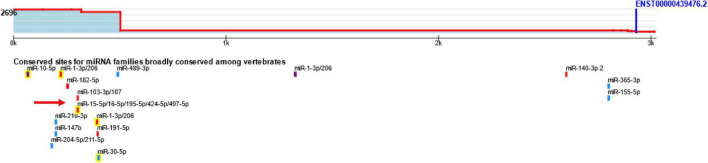
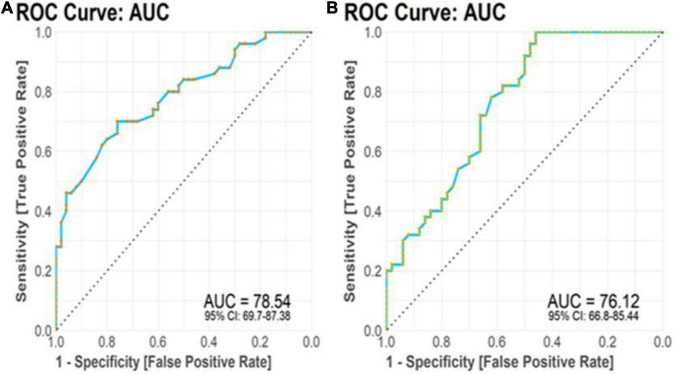
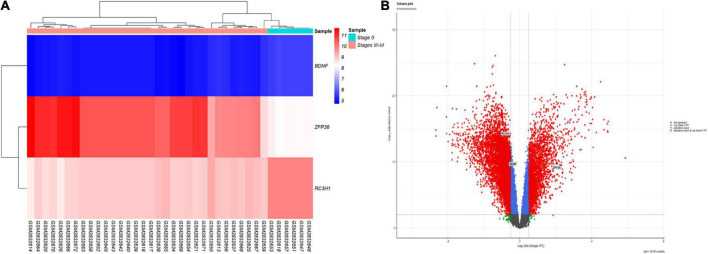
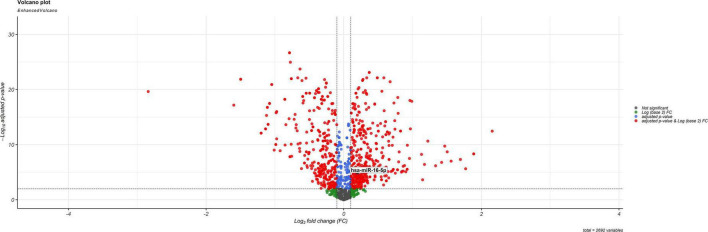
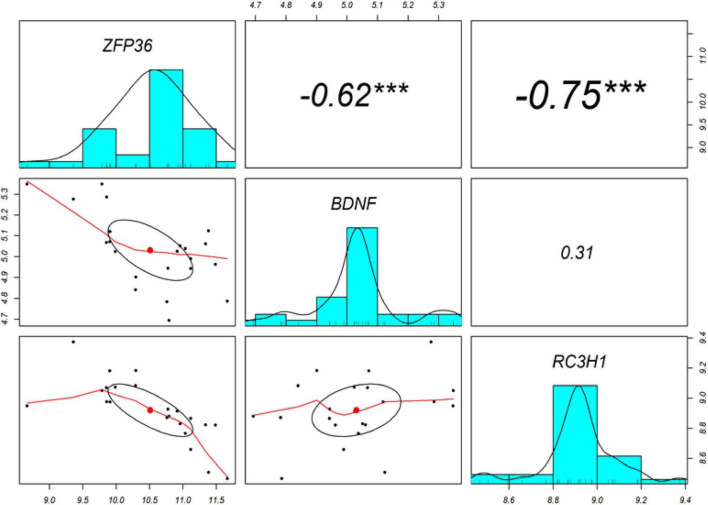
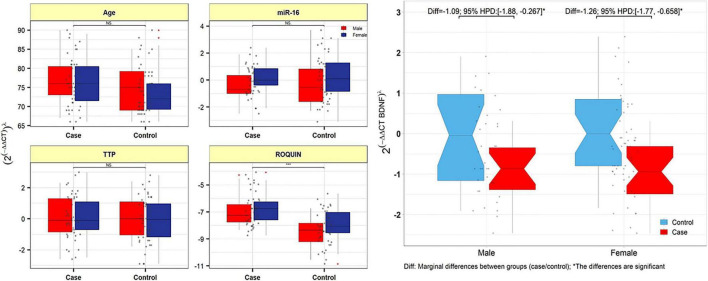
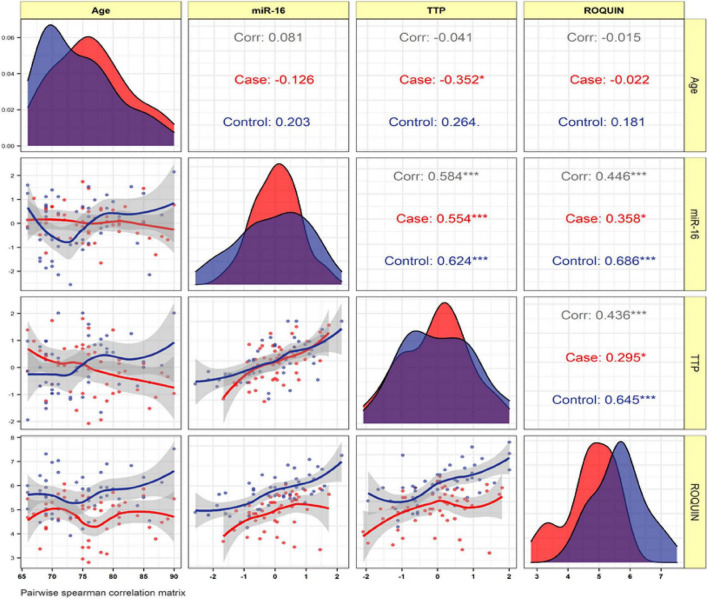
Alzheimer's disease (AD) is a heterogeneous degenerative disorder of the brain that is on the rise worldwide. One of the critical processes that might be disturbed in AD is gene expression regulation. Tristetraprolin (TTP) and RC3H1 gene (ROQUIN) are two RNA-binding proteins (RBPs) that target AU-rich elements (AREs) and constitutive decay elements (CDEs), respectively. TTP and ROQUIN, members of the CCCH zinc-finger protein family, have been demonstrated to fine-tune numerous inflammatory factors. In addition, miR-16 has distinct characteristics and may influence the target mRNA through the ARE site. Interestingly, BDNF mRNA has ARE sites in the 3' untranslated region (UTR) and can be targeted by regulatory factors, such as TTP and miR-16 on MRE sequences, forming BDNF/miR-16/TTP regulatory axis. A number of two microarray datasets were downloaded, including information on mRNAs (GSE106241) and miRNAs (GSE157239) from individuals with AD and corresponding controls. R software was used to identify BDNF, TTP, ROQUIN, and miR-16 expression levels in temporal cortex (TC) tissue datasets. Q-PCR was also used to evaluate the expression of these regulatory factors and the expression of BDNF in the blood of 50 patients with AD and 50 controls. Bioinformatic evaluation showed that TTP and miR-16 overexpression might act as post-transcriptional regulatory factors to control BDNF expression in AD in TC samples. Instead, this expression pattern was not found in peripheral blood samples from patients with AD compared to normal controls. ROQUIN expression was increased in the peripheral blood of patients with AD. Hsa-miR-16-5p levels did not show significant differences in peripheral blood samples. Finally, it was shown that TTP and BDNF, based on evaluating the receiver operating characteristic (ROC), effectively identify patients with AD from healthy controls. This study could provide a new perspective on the molecular regulatory processes associated with AD pathogenic mechanisms linked to the BDNF growth factor, although further research is needed on the possible roles of these factors in AD.
阿尔茨海默病(AD)是一种异质性脑部退行性疾病,在全球范围内呈上升趋势。AD中可能受到干扰的关键过程之一是基因表达调控。锌指蛋白Tristetraprolin(TTP)和RC3H1基因(ROQUIN)是两种RNA结合蛋白(RBP),分别靶向富含AU元件(ARE)和组成型衰变元件(CDE)。TTP和ROQUIN是CCCH锌指蛋白家族的成员,已被证明可微调多种炎症因子。此外,miR-16具有独特的特征,可能通过ARE位点影响靶mRNA。有趣的是,脑源性神经营养因子(BDNF)mRNA在3'非翻译区(UTR)有ARE位点,可被调节因子如TTP和miR-16在微小RNA应答元件(MRE)序列上靶向,形成BDNF/miR-16/TTP调节轴。下载了两个微阵列数据集,包括来自AD患者和相应对照的mRNA(GSE106241)和miRNA(GSE157239)信息。使用R软件确定颞叶皮质(TC)组织数据集中BDNF、TTP、ROQUIN和miR-16的表达水平。还使用定量聚合酶链反应(Q-PCR)评估50例AD患者和50例对照血液中这些调节因子的表达以及BDNF的表达。生物信息学评估表明,TTP和miR-16的过表达可能作为转录后调节因子来控制AD患者TC样本中BDNF的表达。相反,与正常对照相比,在AD患者的外周血样本中未发现这种表达模式。AD患者外周血中ROQUIN表达增加。Hsa-miR-16-5p水平在外周血样本中未显示出显著差异。最后,基于评估受试者工作特征(ROC)曲线表明,TTP和BDNF能够有效地区分AD患者与健康对照。本研究可为与BDNF生长因子相关的AD致病机制的分子调节过程提供新的视角,尽管还需要进一步研究这些因子在AD中的可能作用。