Department Experimental Immunology, Helmholtz Centre for Infection Research, Braunschweig, Germany.
Immunology Program, The Babraham Institute, Cambridge, United Kingdom.
Front Immunol. 2022 Aug 9;13:940705. doi: 10.3389/fimmu.2022.940705. eCollection 2022.
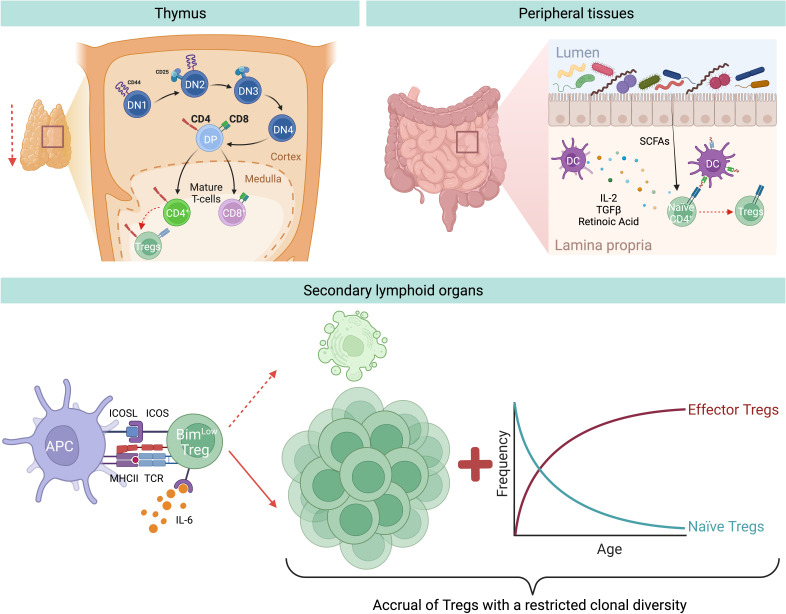
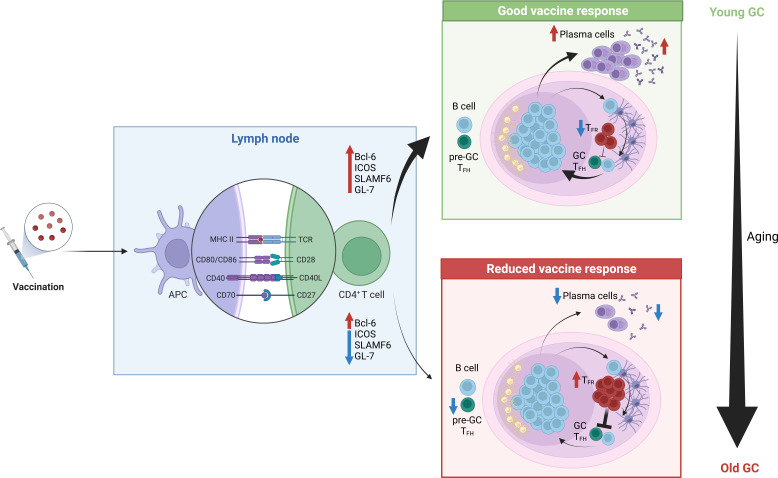
In the last century, we have seen a dramatic rise in the number of older persons globally, a trend known as the grey (or silver) tsunami. People live markedly longer than their predecessors worldwide, due to remarkable changes in their lifestyle and in progresses made by modern medicine. However, the older we become, the more susceptible we are to a series of age-related pathologies, including infections, cancers, autoimmune diseases, and multi-morbidities. Therefore, a key challenge for our modern societies is how to cope with this fragile portion of the population, so that everybody could have the opportunity to live a long and healthy life. From a holistic point of view, aging results from the progressive decline of various systems. Among them, the distinctive age-dependent changes in the immune system contribute to the enhanced frailty of the elderly. One of these affects a population of lymphocytes, known as regulatory T cells (Tregs), as accumulating evidence suggest that there is a significant increase in the frequency of these cells in secondary lymphoid organs (SLOs) of aged animals. Although there are still discrepancies in the literature about modifications to their functional properties during aging, mounting evidence suggests a detrimental role for Tregs in the elderly in the context of bacterial and viral infections by suppressing immune responses against non-self-antigens. Interestingly, Tregs seem to also contribute to the reduced effectiveness of immunizations against many pathogens by limiting the production of vaccine-induced protective antibodies. In this review, we will analyze the current state of understandings about the role of Tregs in acute and chronic infections as well as in vaccination response in both humans and mice. Lastly, we provide an overview of current strategies for Treg modulation with potential future applications to improve the effectiveness of vaccines in older individuals.
在上个世纪,我们看到全球老年人口数量急剧增加,这种趋势被称为“灰色(或银色)海啸”。由于生活方式的显著变化和现代医学的进步,全世界的人们寿命明显延长。然而,我们越老,就越容易受到一系列与年龄相关的疾病的影响,包括感染、癌症、自身免疫性疾病和多种合并症。因此,我们现代社会面临的一个关键挑战是如何应对这部分脆弱的人群,以便每个人都有机会过上长寿和健康的生活。从整体的角度来看,衰老是由于各种系统的逐渐衰退造成的。在这些系统中,免疫系统的独特年龄依赖性变化导致老年人的脆弱性增加。其中一个影响的是一群淋巴细胞,称为调节性 T 细胞(Tregs),越来越多的证据表明,老年动物的次级淋巴器官(SLO)中这些细胞的频率显著增加。尽管文献中关于 Tregs 在衰老过程中功能特性的改变仍存在差异,但越来越多的证据表明,Tregs 在老年人群中对抗细菌和病毒感染的免疫反应具有抑制作用,从而导致有害作用。有趣的是,Tregs 似乎也通过限制疫苗诱导的保护性抗体的产生,对许多病原体的免疫接种效果降低起到了作用。在这篇综述中,我们将分析目前对 Tregs 在人类和小鼠的急性和慢性感染以及疫苗接种反应中的作用的理解现状。最后,我们概述了 Treg 调节的当前策略,以及其在改善老年人疫苗效果方面的潜在未来应用。