Bhatnagar Roshni, Dixit Neal M, Yang Eric H, Sallam Tamer
Department of Medicine, David Geffen School of Medicine, University of California, Los Angeles, Los Angeles, CA, United States.
UCLA Cardio-Oncology Program, Division of Cardiology, Department of Medicine, University of California, Los Angeles, Los Angeles, CA, United States.
Front Cardiovasc Med. 2022 Aug 9;9:925816. doi: 10.3389/fcvm.2022.925816. eCollection 2022.
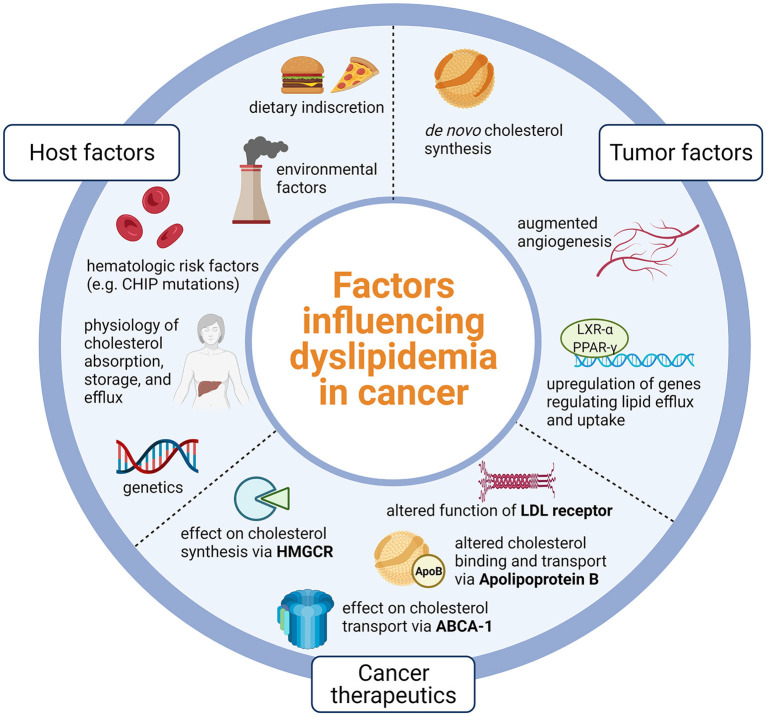
Atherosclerotic cardiovascular disease is a growing threat among cancer patients. Not surprisingly, cancer-targeting therapies have been linked to metabolic dysregulation including changes in local and systemic lipid metabolism. Thus, tumor development and cancer therapeutics are intimately linked to cholesterol metabolism and may be a driver of increased cardiovascular morbidity and mortality in this population. Chemotherapeutic agents affect lipid metabolism through diverse mechanisms. In this review, we highlight the mechanistic and clinical evidence linking commonly used cytotoxic therapies with cholesterol metabolism and potential opportunities to limit atherosclerotic risk in this patient population. Better understanding of the link between atherosclerosis, cancer therapy, and cholesterol metabolism may inform optimal lipid therapy for cancer patients and mitigate cardiovascular disease burden.
动脉粥样硬化性心血管疾病对癌症患者构成的威胁日益增加。不出所料,靶向癌症的疗法与代谢失调有关,包括局部和全身脂质代谢的变化。因此,肿瘤发展和癌症治疗与胆固醇代谢密切相关,可能是该人群心血管发病率和死亡率增加的一个驱动因素。化疗药物通过多种机制影响脂质代谢。在本综述中,我们重点介绍了将常用细胞毒性疗法与胆固醇代谢联系起来的机制和临床证据,以及在该患者群体中降低动脉粥样硬化风险的潜在机会。更好地理解动脉粥样硬化、癌症治疗和胆固醇代谢之间的联系,可能有助于为癌症患者制定最佳脂质治疗方案,并减轻心血管疾病负担。