Chávez-Hernández Elva C, Quiroz Stella, García-Ponce Berenice, Álvarez-Buylla Elena R
Laboratorio de Genética Molecular, Desarrollo y Evolución de Plantas, Departamento de Ecología Funcional, Instituto de Ecología, Universidad Nacional Autónoma de México, Mexico City, Mexico.
Centro de Ciencias de la Complejidad, Universidad Nacional Autónoma de México, Mexico City, Mexico.
Front Plant Sci. 2022 Aug 9;13:852047. doi: 10.3389/fpls.2022.852047. eCollection 2022.
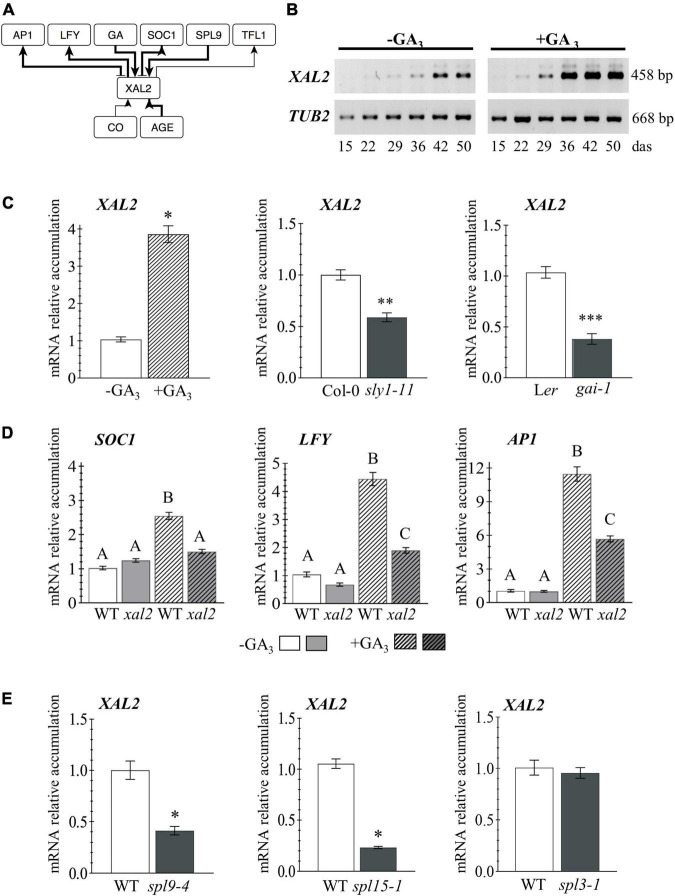
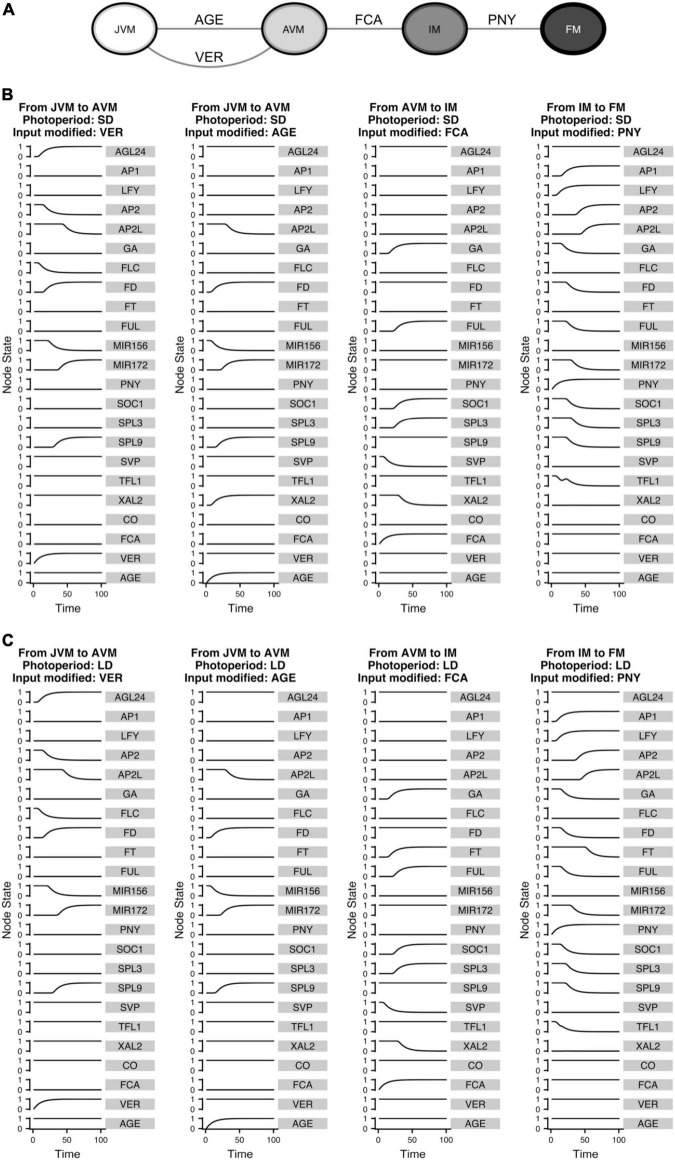
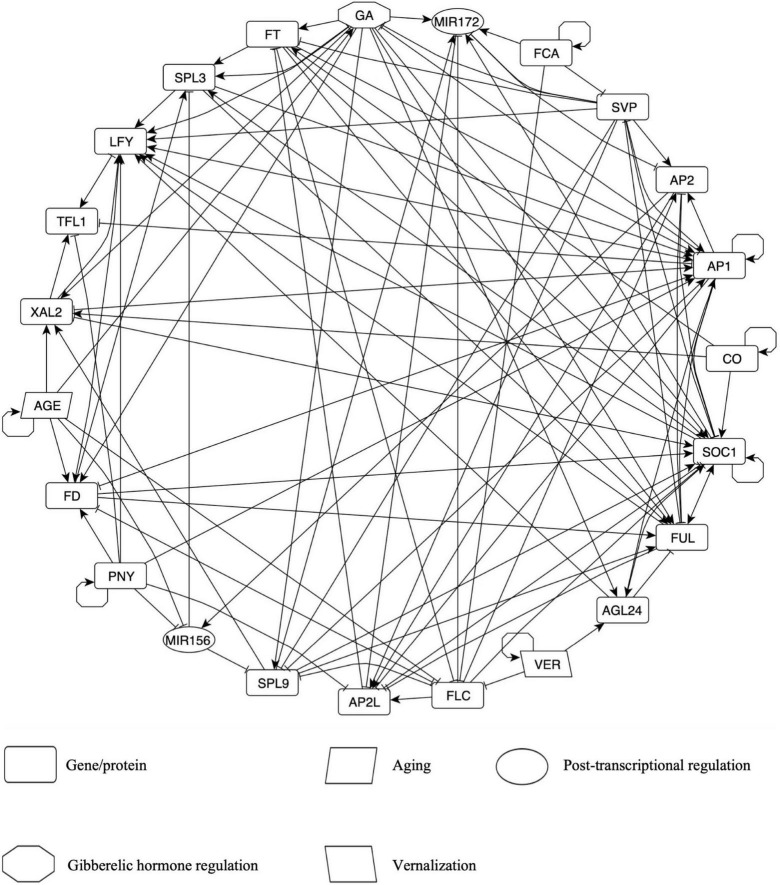
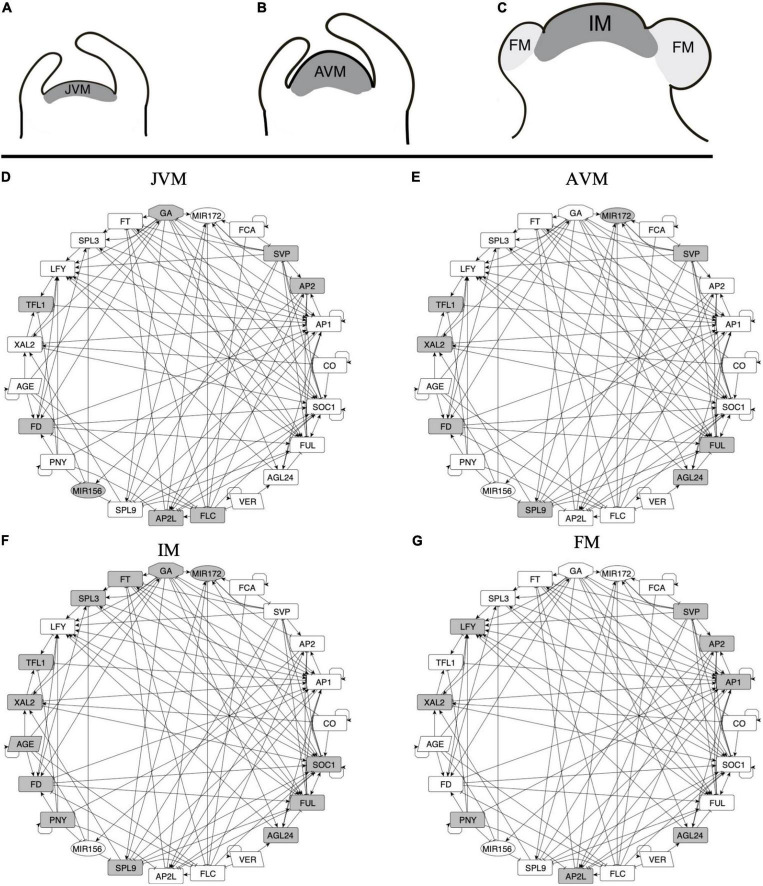
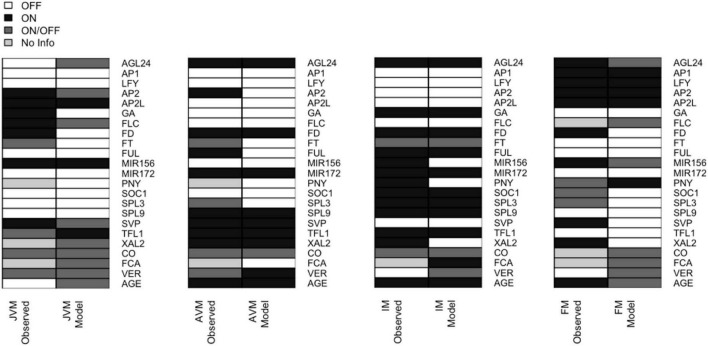
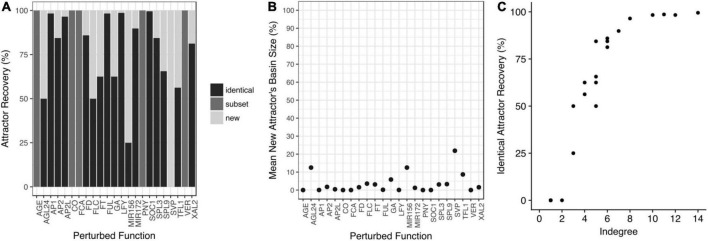
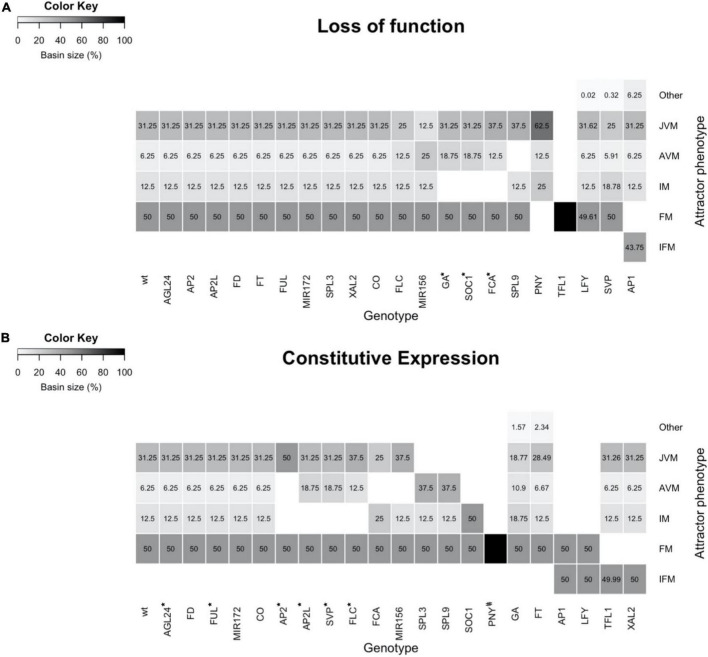
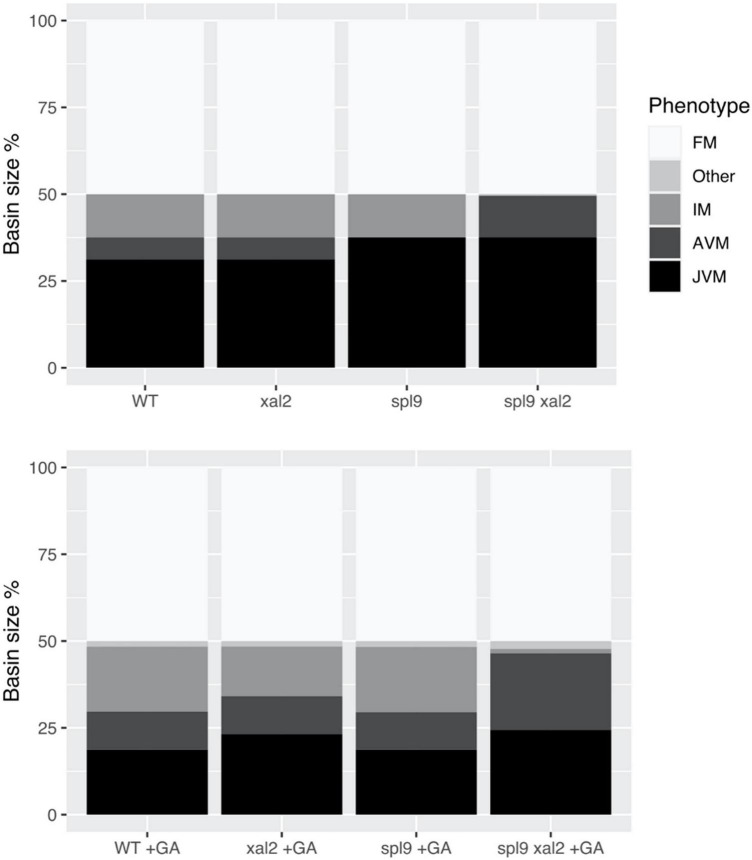
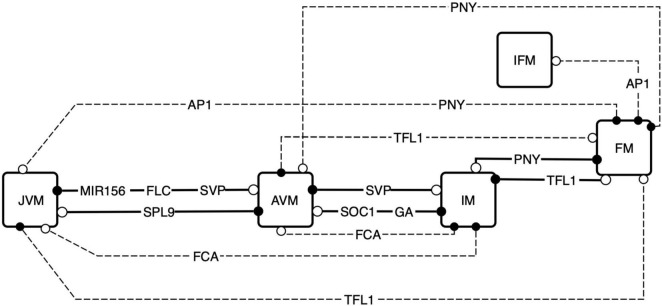
Post-embryonic plant development is characterized by a period of vegetative growth during which a combination of intrinsic and extrinsic signals triggers the transition to the reproductive phase. To understand how different flowering inducing and repressing signals are associated with phase transitions of the Shoot Apical Meristem (SAM), we incorporated available data into a gene regulatory network model for . This Flowering Transition Gene Regulatory Network (FT-GRN) formally constitutes a system-level mechanism based on more than three decades of experimental data on flowering. We provide novel experimental data on the regulatory interactions of one of its twenty-three components: a MADS-box transcription factor XAANTAL2 (XAL2). These data complement the information regarding flowering transition under short days and provides an example of the type of questions that can be addressed by the FT-GRN. The resulting FT-GRN is highly connected and integrates developmental, hormonal, and environmental signals that affect developmental transitions at the SAM. The FT-GRN is a multi-stable Boolean system, with 2 possible initial states, yet it converges into only 32 attractors. The latter are coherent with the expression profiles of the FT-GRN components that have been experimentally described for the developmental stages of the SAM. Furthermore, the attractors are also highly robust to initial states and to simulated perturbations of the interaction functions. The model recovered the meristem phenotypes of previously described single mutants. We also analyzed the attractors landscape that emerges from the postulated FT-GRN, uncovering which set of signals or components are critical for reproductive competence and the time-order transitions observed in the SAM. Finally, in the context of such GRN, the role of XAL2 under short-day conditions could be understood. Therefore, this model constitutes a robust biological module and the first multi-stable, systems biology mechanism that integrates the genetic flowering pathways to explain SAM phase transitions.
胚后植物发育的特点是一段营养生长时期,在此期间,内在和外在信号的组合触发向生殖阶段的转变。为了了解不同的开花诱导和抑制信号如何与茎尖分生组织(SAM)的阶段转变相关联,我们将现有数据纳入了一个基因调控网络模型。这个开花转变基因调控网络(FT-GRN)正式构成了一个基于三十多年开花实验数据的系统水平机制。我们提供了关于其二十三个组成部分之一:MADS盒转录因子XAANTAL2(XAL2)的调控相互作用的新实验数据。这些数据补充了短日条件下开花转变的信息,并提供了FT-GRN可以解决的问题类型的一个例子。由此产生的FT-GRN高度连通,并整合了影响SAM发育转变的发育、激素和环境信号。FT-GRN是一个具有两种可能初始状态的多稳态布尔系统,但它收敛到仅32个吸引子。后者与已针对SAM发育阶段进行实验描述的FT-GRN组件的表达谱一致。此外,吸引子对初始状态和相互作用函数的模拟扰动也具有高度鲁棒性。该模型恢复了先前描述的单突变体的分生组织表型。我们还分析了从假定的FT-GRN中出现的吸引子景观,揭示了哪些信号集或组件对于生殖能力以及在SAM中观察到的时间顺序转变至关重要。最后,在这样的基因调控网络背景下,可以理解XAL2在短日条件下的作用。因此,这个模型构成了一个强大的生物学模块,也是第一个整合遗传开花途径以解释SAM阶段转变的多稳态系统生物学机制。