Department of Gastroenterology, Chongqing Key Laboratory of Digestive Malignancies, Daping Hospital, Army Medical University (Third Military Medical University), Chongqing, China.
Department of Plastic and Cosmetic Surgery, Daping Hospital, Army Medical University (Third Military Medical University), Chongqing, China.
Front Endocrinol (Lausanne). 2022 Aug 11;13:958218. doi: 10.3389/fendo.2022.958218. eCollection 2022.
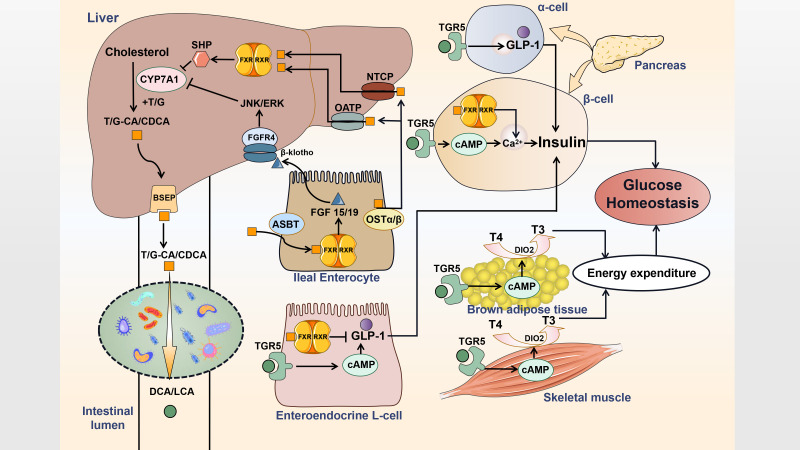
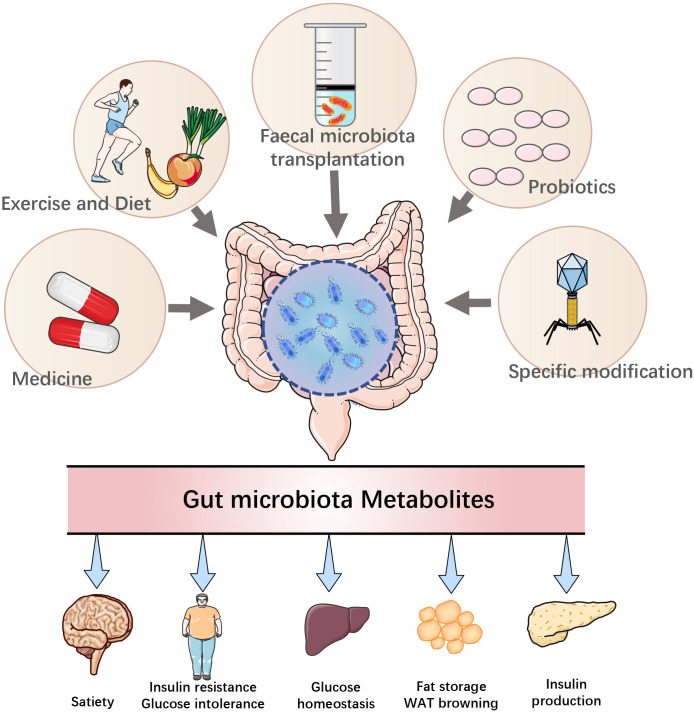
Type 2 diabetes mellitus (T2DM), one of the fastest growing metabolic diseases, has been characterized by metabolic disorders including hyperglycemia, hyperlipidemia and insulin resistance (IR). In recent years, T2DM has become the fastest growing metabolic disease in the world. Studies have indicated that patients with T2DM are often associated with intestinal flora disorders and dysfunction involving multiple organs. Metabolites of the intestinal flora, such as bile acids (BAs), short-chain fatty acids (SCFAs) and amino acids (AAs)may influence to some extent the decreased insulin sensitivity associated with T2DM dysfunction and regulate metabolic as well as immune homeostasis. In this paper, we review the changes in the gut flora in T2DM and the mechanisms by which the gut microbiota modulates metabolites affecting T2DM, which may provide a basis for the early identification of T2DM-susceptible individuals and guide targeted interventions. Finally, we also highlight gut microecological therapeutic strategies focused on shaping the gut flora to inform the improvement of T2DM progression.
2 型糖尿病(T2DM)是增长最快的代谢疾病之一,其特征为代谢紊乱,包括高血糖、高血脂和胰岛素抵抗(IR)。近年来,T2DM 已成为全球增长最快的代谢疾病。研究表明,T2DM 患者常伴有肠道菌群紊乱和涉及多个器官的功能障碍。肠道菌群的代谢产物,如胆汁酸(BAs)、短链脂肪酸(SCFAs)和氨基酸(AAs),可能在一定程度上影响与 T2DM 功能障碍相关的胰岛素敏感性降低,并调节代谢和免疫稳态。本文综述了 T2DM 中肠道菌群的变化,以及肠道微生物群调节影响 T2DM 的代谢产物的机制,这可能为早期识别 T2DM 易感个体和指导针对性干预提供依据。最后,我们还重点介绍了以塑造肠道菌群为重点的肠道微生态治疗策略,以改善 T2DM 的进展。