Fu Shaodong, Deng Yan, Zou Kai, Zhang Shuangfei, Liu Xueduan, Liang Yili
School of Resource Processing and Bioengineering, Central South University, Changsha, China.
Key Laboratory of Biometallurgy, Ministry of Education, Central South University, Changsha, China.
Front Plant Sci. 2022 Aug 11;13:982771. doi: 10.3389/fpls.2022.982771. eCollection 2022.
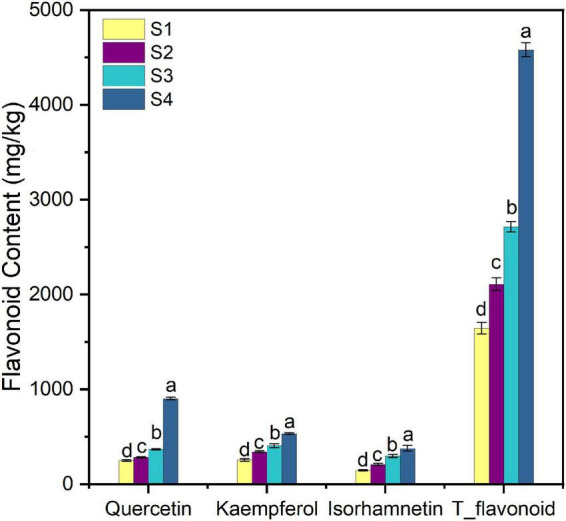
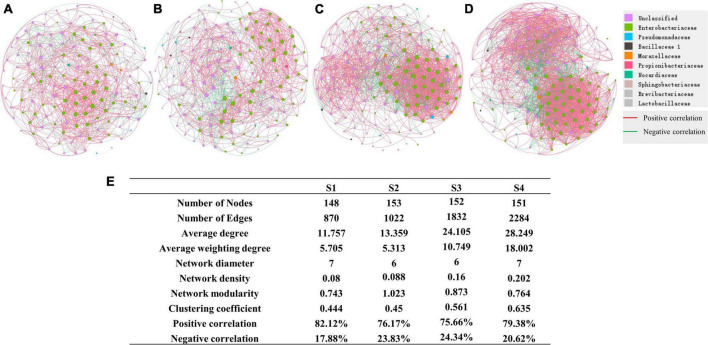
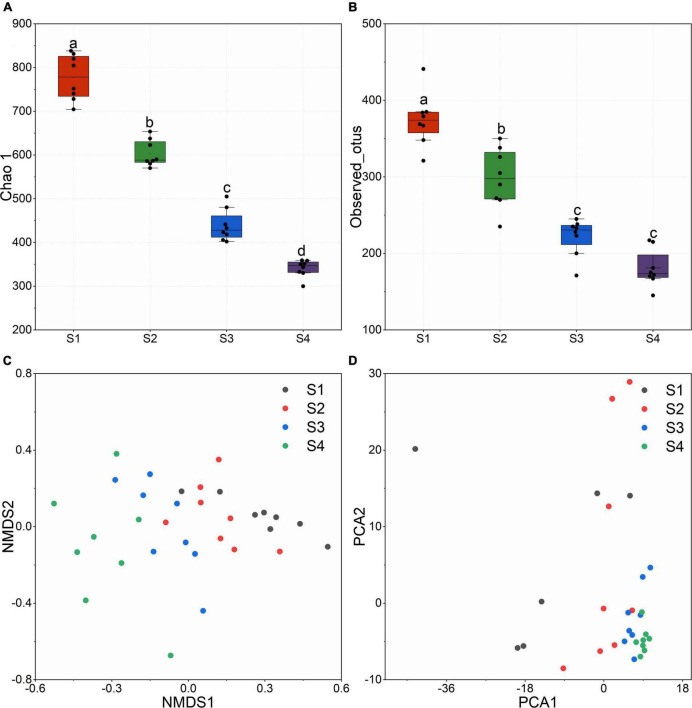
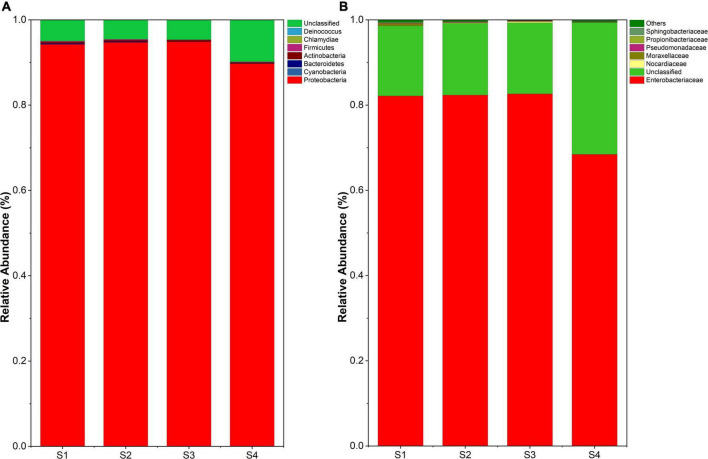
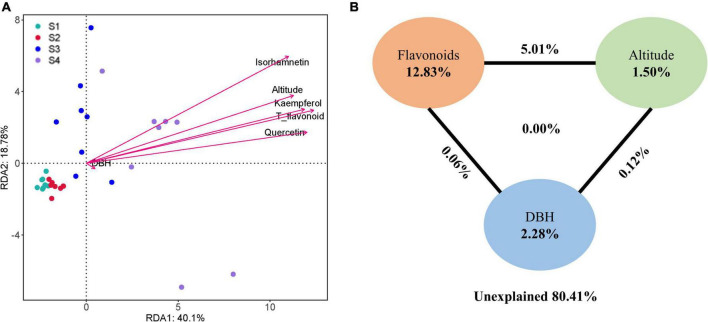
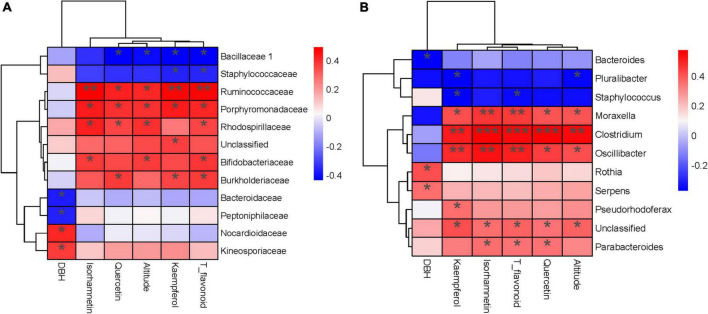
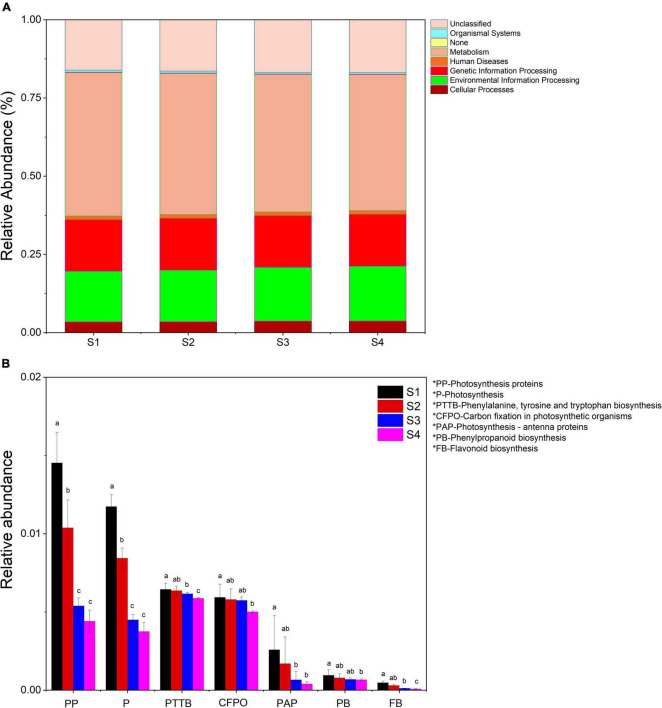
Altitude affects plant growth and metabolism, but the effect of altitude on plant endophytic microorganisms is still unclear. In this study, we selected 16 trees to study the response of leaves' endophytes to flavonoids and altitude (from 530 m to 1,310 m). HPLC results showed that flavonoids in leaves increased by more than 150% with attitude rising from 530 m to 1,310 m, which revealed a positive correlation with altitude. might regulate the increased flavonoids in leaves to resist the increasing light intensity. 16S rDNA sequencing results showed that the endophytic bacterial communities of at different altitudes significantly differed. leaf endophytes' alpha diversity decreased with increasing flavonoids content and altitude. The increased flavonoids might increase the environmental pressure on endophytes and affect the endophytic community in leaves. The bacterial network in leaves became more complex with increasing altitude, which might be one of the strategies of leaf endophytes to cope with increasing flavonoids. Metagenomes results predicted with PICRUSt showed that the abundance of flavonoid biosynthesis and photosynthesis genes were significantly decreased with the increase of flavonoid contents. High flavonoid content in leaves appeared to inhibit microbial flavonoid synthesis. Our findings indicate that altitude can modulate microbial community structure through regulating plant metabolites, which is important to uncovering the interaction of microbes, host and the environment.
海拔高度会影响植物的生长和代谢,但海拔对植物内生微生物的影响仍不清楚。在本研究中,我们选取了16棵树来研究叶片内生菌对黄酮类化合物和海拔高度(从530米到1310米)的响应。高效液相色谱结果表明,随着海拔从530米升高到1310米,叶片中的黄酮类化合物增加了150%以上,这表明其与海拔呈正相关。[此处原文似乎缺失部分内容,推测可能是某种因素]可能调节叶片中黄酮类化合物的增加以抵抗不断增强的光照强度。16S核糖体DNA测序结果表明,不同海拔高度的[此处原文缺失具体植物名称]内生细菌群落存在显著差异。随着黄酮类化合物含量和海拔的增加,[此处原文缺失具体植物名称]叶片内生菌的α多样性降低。黄酮类化合物的增加可能会增加内生菌的环境压力并影响[此处原文缺失具体植物名称]叶片中的内生菌群落。随着海拔的升高,[此处原文缺失具体植物名称]叶片中的细菌网络变得更加复杂,这可能是叶片内生菌应对黄酮类化合物增加的策略之一。利用PICRUSt预测的宏基因组结果表明,随着黄酮类化合物含量的增加,黄酮类生物合成和光合作用基因的丰度显著降低。叶片中高含量的黄酮类化合物似乎抑制了微生物黄酮类化合物的合成。我们的研究结果表明,海拔可以通过调节植物代谢产物来调节微生物群落结构,这对于揭示微生物、宿主和环境之间的相互作用具有重要意义。