• 文献检索
  • 文档翻译
  • 深度研究
  • 学术资讯
  • Suppr Zotero 插件Zotero 插件
  • 邀请有礼
  • 套餐&价格
  • 历史记录
应用&插件
Suppr Zotero 插件Zotero 插件浏览器插件Mac 客户端Windows 客户端微信小程序
定价
高级版会员购买积分包购买API积分包
服务
文献检索文档翻译深度研究API 文档MCP 服务
关于我们
关于 Suppr公司介绍联系我们用户协议隐私条款
关注我们

Suppr 超能文献

核心技术专利:CN118964589B侵权必究
粤ICP备2023148730 号-1Suppr @ 2026

文献检索

告别复杂PubMed语法,用中文像聊天一样搜索,搜遍4000万医学文献。AI智能推荐,让科研检索更轻松。

立即免费搜索

文件翻译

保留排版,准确专业,支持PDF/Word/PPT等文件格式,支持 12+语言互译。

免费翻译文档

深度研究

AI帮你快速写综述,25分钟生成高质量综述,智能提取关键信息,辅助科研写作。

立即免费体验

蜜蜂肠道细菌结构和功能的社区动态对冬季饮食转变的响应。

Community Dynamics in Structure and Function of Honey Bee Gut Bacteria in Response to Winter Dietary Shift.

机构信息

College of Food Science and Nutritional Engineering, China Agricultural Universitygrid.22935.3f, Beijing, People's Republic of China.

Department of Entomology, College of Plant Protection, China Agricultural Universitygrid.22935.3f, Beijing, People's Republic of China.

出版信息

mBio. 2022 Oct 26;13(5):e0113122. doi: 10.1128/mbio.01131-22. Epub 2022 Aug 29.

DOI:10.1128/mbio.01131-22
PMID:36036626
原文链接:https://pmc.ncbi.nlm.nih.gov/articles/PMC9600256/
Abstract

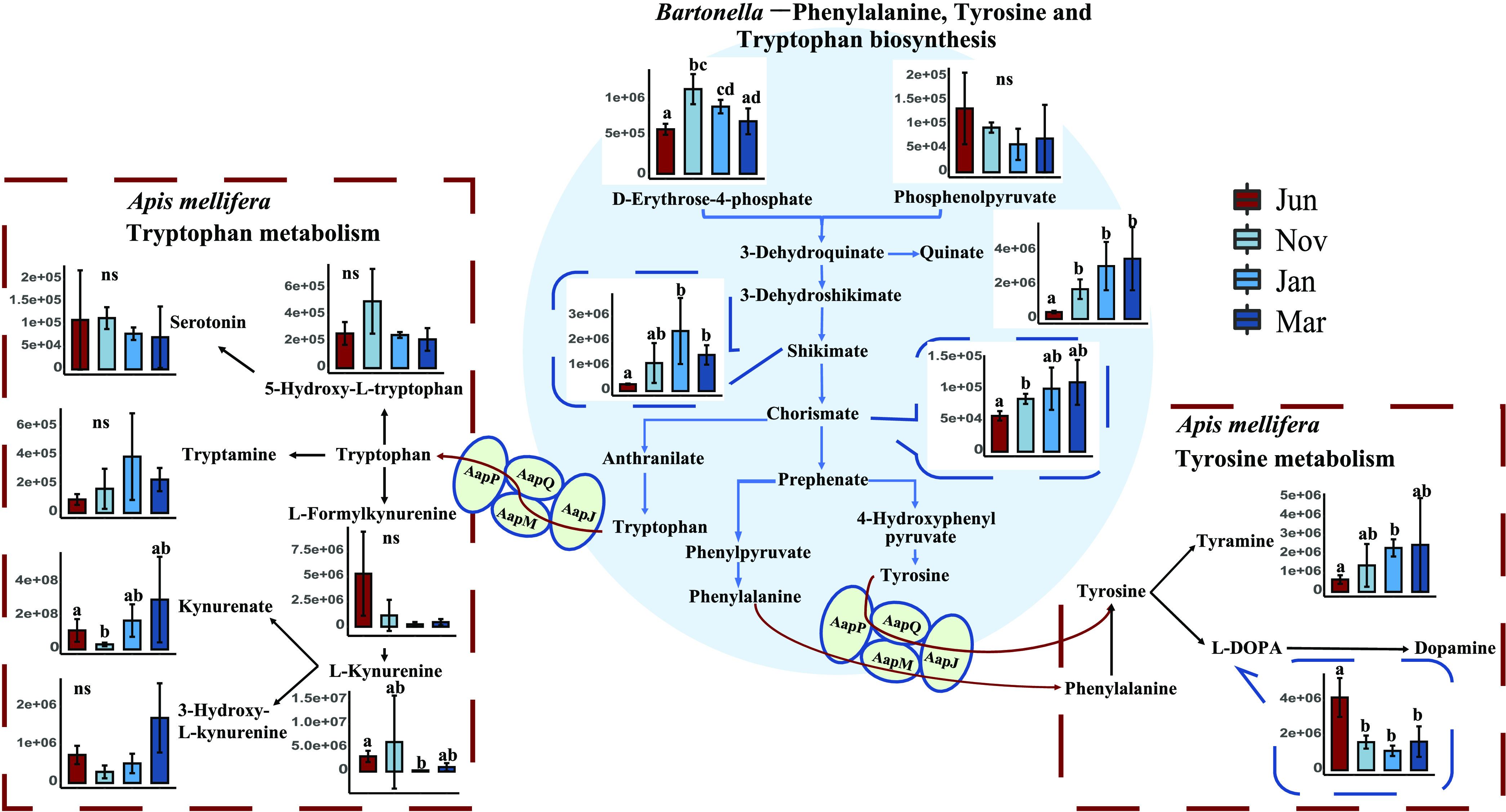
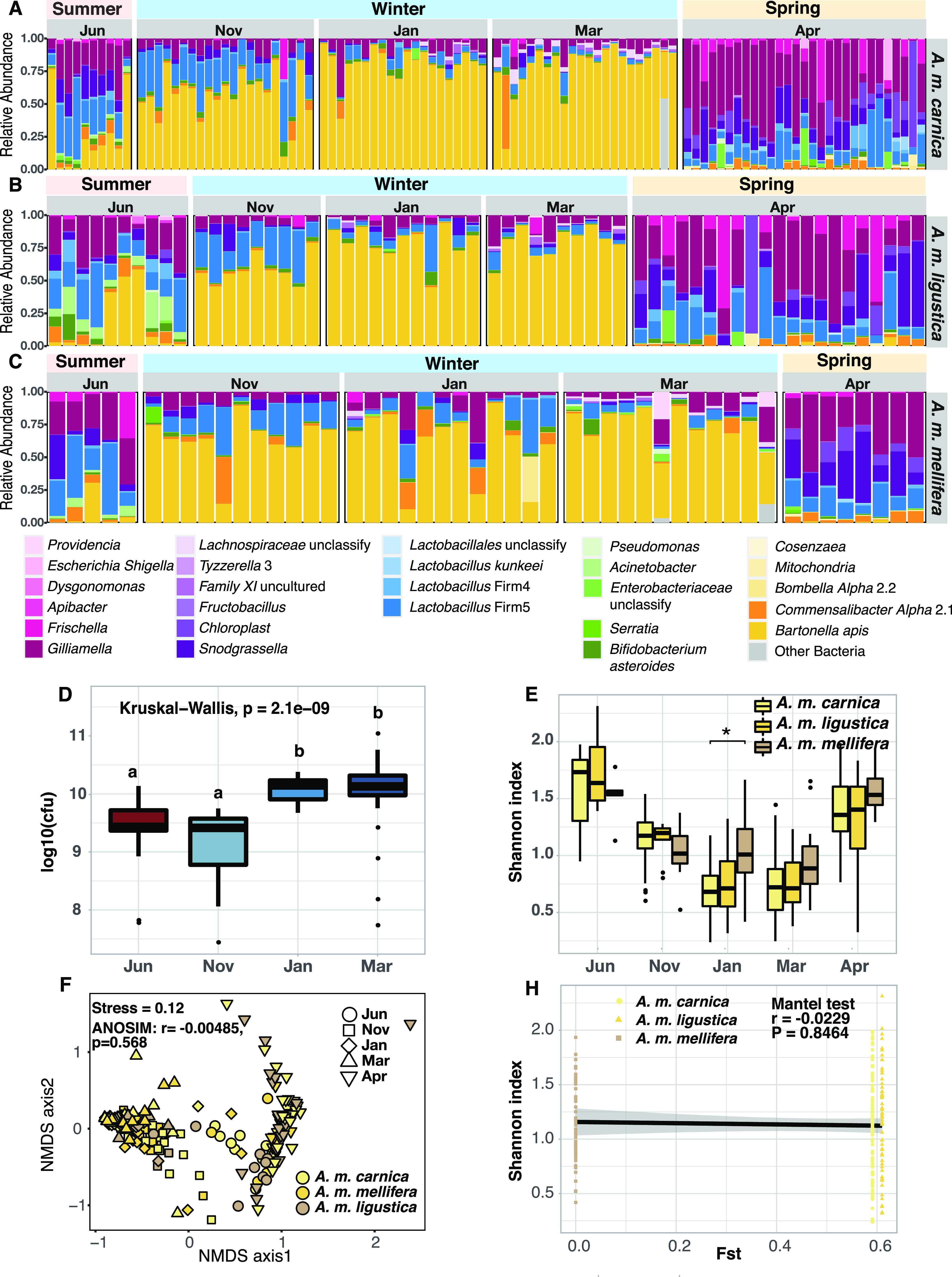
Temperate honey bees (Apis mellifera) are challenged by low temperatures and abrupt dietary shifts associated with behavioral changes during winter. Case studies have revealed drastic turnover in the gut microbiota of winter bees, highlighted by the seasonal dominance of a non-core bacterium . However, neither biological consequence nor underlying mechanism of this microbial turnover is clear. In particular, we ask whether such changes in gut profile are related to winter dietary shift and possibly beneficial to host and associated gut microbiome? Here, we integrated evidences from genomics, metagenomics, and metabolomics in three honey bee subspecies maintained at the same locality of northern China to profile both diversity and functional variations in gut bacteria across seasons. Our results showed that winter dominance of was shared in all tested honey bee lineages. This seasonal change was likely a consequence of winter dietary shifts characterized by greatly reduced pollen consumption and accumulation of metabolic waste due to restricted excretion. showed expanded genomic capacity in utilizing more diverse energy substrates, such as converting metabolic wastes lactate and ethanol into pyruvate, an energy source for self-utilization and possibly also for host and other symbionts. Furthermore, was the only bacterium capable of both producing and secreting tryptophan and phenylalanine, whose metabolic products were detected in bee guts, even though all gut bacteria lacked relevant digestion enzymes. These results thus suggested a possible mechanism where the gut bacteria might benefit the host by supplementing them with essential amino acids lacking in a protein shortage diet. The abilities to survive winter and to adapt to major food changes are key traits that have enabled successful range expansion of the honey bees from the tropic to temperate climate. Our results highlighted a new possibility that gut bacteria may have played an important role in host survival of the severe winter condition. The non-core bacterium is not only more adaptive to the winter diet but is also equipped with the capacity to provide the host with essential nutrients and important metabolic substrates. This overall host-bacterium profile is probably favored by natural selection, resulting in a consistent winter gut strategy across varied honey bee lineages. Conversely, when the hosts start to forage again, core bacteria maintained at low abundance during winter returned to their typical dominant status, thus completing the annual gut turnover. Our study suggests a new hypothesis where seasonal gut variations may improve the fitness of the honey bee, allowing them to explore more diverse climates.

摘要

温带蜜蜂(Apis mellifera)在冬季会面临低温和饮食变化带来的挑战,这些变化会导致它们的行为发生改变。案例研究表明,冬季蜜蜂的肠道微生物群落会发生剧烈变化,其中一种非核心细菌会在季节中占据优势地位。然而,这种微生物更替的生物学后果和潜在机制尚不清楚。特别是,我们想知道肠道特征的这种变化是否与冬季饮食变化有关,并且可能对宿主和相关的肠道微生物组有益?在这里,我们整合了来自基因组学、宏基因组学和代谢组学的证据,以研究在中国北方同一地区饲养的三个蜜蜂亚种的肠道细菌在不同季节的多样性和功能变化。我们的结果表明,在所测试的所有蜜蜂谱系中,均存在冬季优势菌 。这种季节性变化可能是由于冬季饮食变化导致的,花粉摄入量大大减少,代谢废物积累,导致排泄受限。 显示出在利用更多样化的能量底物方面扩展了基因组能力,例如将代谢废物乳酸和乙醇转化为丙酮酸,丙酮酸是自我利用的能量来源,也可能是宿主和其他共生体的能量来源。此外, 是唯一能够同时产生和分泌色氨酸和苯丙氨酸的细菌,尽管所有肠道细菌都缺乏相关的消化酶,但在蜜蜂肠道中检测到了它们的代谢产物。这些结果表明,肠道细菌可能通过为宿主提供缺乏蛋白质的饮食中缺乏的必需氨基酸来为宿主提供益处。 能够在冬季生存和适应主要食物变化是使蜜蜂从热带成功扩展到温带气候的关键特征。我们的结果强调了一个新的可能性,即肠道细菌可能在宿主对严冬条件的生存中发挥了重要作用。非核心菌 不仅更适应冬季饮食,而且还具有为宿主提供必需营养物质和重要代谢底物的能力。这种总体的宿主-细菌特征可能是自然选择的结果,导致不同蜜蜂谱系在整个冬季都保持一致的肠道策略。相反,当宿主开始再次觅食时,冬季维持低丰度的核心细菌会恢复到它们典型的优势地位,从而完成年度肠道更替。我们的研究提出了一个新的假设,即季节性肠道变化可能会提高蜜蜂的适应性,使它们能够探索更多样化的气候。
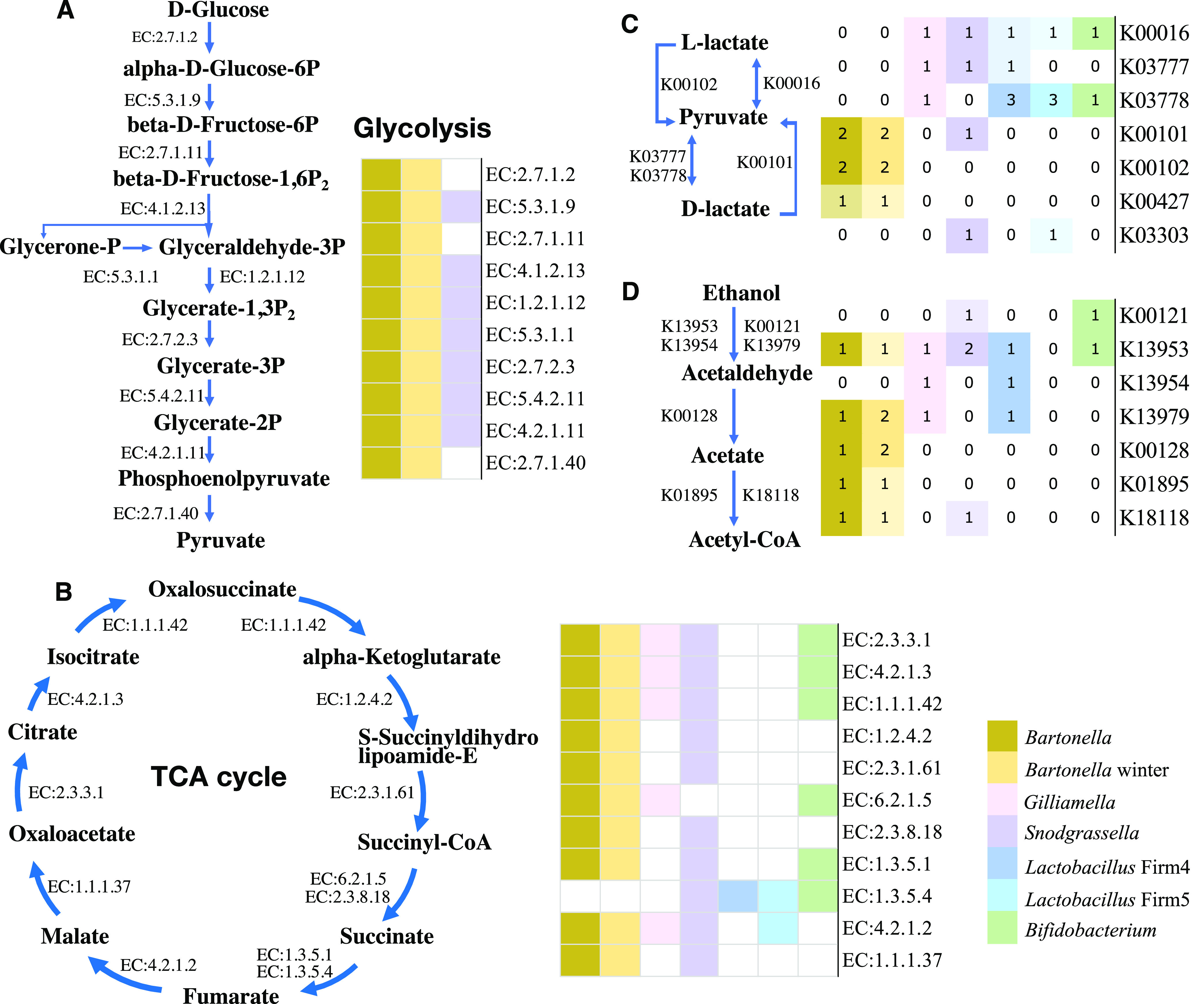
https://cdn.ncbi.nlm.nih.gov/pmc/blobs/ac1b/9600256/303870001e12/mbio.01131-22-f006.jpg
https://cdn.ncbi.nlm.nih.gov/pmc/blobs/ac1b/9600256/f70ac5b15d9c/mbio.01131-22-f001.jpg
https://cdn.ncbi.nlm.nih.gov/pmc/blobs/ac1b/9600256/9ed56bd7d24b/mbio.01131-22-f002.jpg
https://cdn.ncbi.nlm.nih.gov/pmc/blobs/ac1b/9600256/83467050dd87/mbio.01131-22-f003.jpg
https://cdn.ncbi.nlm.nih.gov/pmc/blobs/ac1b/9600256/09621d31cc6b/mbio.01131-22-f004.jpg
https://cdn.ncbi.nlm.nih.gov/pmc/blobs/ac1b/9600256/6a7d868c4c24/mbio.01131-22-f005.jpg
https://cdn.ncbi.nlm.nih.gov/pmc/blobs/ac1b/9600256/303870001e12/mbio.01131-22-f006.jpg
https://cdn.ncbi.nlm.nih.gov/pmc/blobs/ac1b/9600256/f70ac5b15d9c/mbio.01131-22-f001.jpg
https://cdn.ncbi.nlm.nih.gov/pmc/blobs/ac1b/9600256/9ed56bd7d24b/mbio.01131-22-f002.jpg
https://cdn.ncbi.nlm.nih.gov/pmc/blobs/ac1b/9600256/83467050dd87/mbio.01131-22-f003.jpg
https://cdn.ncbi.nlm.nih.gov/pmc/blobs/ac1b/9600256/09621d31cc6b/mbio.01131-22-f004.jpg
https://cdn.ncbi.nlm.nih.gov/pmc/blobs/ac1b/9600256/6a7d868c4c24/mbio.01131-22-f005.jpg
https://cdn.ncbi.nlm.nih.gov/pmc/blobs/ac1b/9600256/303870001e12/mbio.01131-22-f006.jpg

相似文献

1
Community Dynamics in Structure and Function of Honey Bee Gut Bacteria in Response to Winter Dietary Shift.蜜蜂肠道细菌结构和功能的社区动态对冬季饮食转变的响应。
mBio. 2022 Oct 26;13(5):e0113122. doi: 10.1128/mbio.01131-22. Epub 2022 Aug 29.
2
Seasonal Dynamics of the Honey Bee Gut Microbiota in Colonies Under Subtropical Climate : Seasonal Dynamics of Honey Bee Gut Microbiota.亚热带气候条件下蜂群肠道微生物组的季节性动态: 蜜蜂肠道微生物组的季节性动态。
Microb Ecol. 2022 Feb;83(2):492-500. doi: 10.1007/s00248-021-01756-1. Epub 2021 May 11.
3
Genetic divergence and functional convergence of gut bacteria between the Eastern honey bee and the Western honey bee .东方蜜蜂和西方蜜蜂肠道细菌的遗传分化和功能趋同。
J Adv Res. 2021 Aug 10;37:19-31. doi: 10.1016/j.jare.2021.08.002. eCollection 2022 Mar.
4
Niche partitioning facilitates coexistence of closely related honey bee gut bacteria.小生境分隔促进了密切相关的蜜蜂肠道细菌的共存。
Elife. 2021 Jul 19;10:e68583. doi: 10.7554/eLife.68583.
5
Longitudinal Effects of Supplemental Forage on the Honey Bee (Apis mellifera) Microbiota and Inter- and Intra-Colony Variability.补充饲料对蜜蜂(Apis mellifera)微生物群及其种内和种间变异性的纵向影响。
Microb Ecol. 2018 Oct;76(3):814-824. doi: 10.1007/s00248-018-1151-y. Epub 2018 Feb 3.
6
Quantitative microbiome profiling of honey bee (Apis mellifera) guts is predictive of winter colony loss in northern Virginia (USA).对蜜蜂(Apis mellifera)肠道的定量微生物组分析可预测美国弗吉尼亚州北部冬季蜂群的损失。
Sci Rep. 2024 May 14;14(1):11021. doi: 10.1038/s41598-024-61199-9.
7
High temperatures augment inhibition of parasites by a honey bee gut symbiont.高温增强了蜜蜂肠道共生菌对寄生虫的抑制作用。
Appl Environ Microbiol. 2023 Oct 31;89(10):e0102323. doi: 10.1128/aem.01023-23. Epub 2023 Oct 4.
8
Genomic changes underlying host specialization in the bee gut symbiont Lactobacillus Firm5.蜂肠道共生菌乳杆菌 Firm5 宿主专化的基因组变化。
Mol Ecol. 2019 May;28(9):2224-2237. doi: 10.1111/mec.15075. Epub 2019 May 29.
9
Microbial ensemble in the hives: deciphering the intricate gut ecosystem of hive and forager bees of Apis mellifera.蜂群中的微生物群落:解析蜜蜂蜜蜂和采集蜂肠道生态系统的复杂性。
Mol Biol Rep. 2024 Feb 1;51(1):262. doi: 10.1007/s11033-024-09239-5.
10
Honey bee genetics shape the strain-level structure of gut microbiota in social transmission.蜜蜂遗传学塑造了社会传播中肠道微生物组的菌株水平结构。
Microbiome. 2021 Nov 17;9(1):225. doi: 10.1186/s40168-021-01174-y.

引用本文的文献

1
Honeybee-Gilliamella synergy in carbohydrate metabolism enhances host thermogenesis in cold acclimation.蜜蜂与吉利亚梅拉菌在碳水化合物代谢中的协同作用增强了宿主在冷驯化中的产热能力。
NPJ Biofilms Microbiomes. 2025 Aug 25;11(1):172. doi: 10.1038/s41522-025-00798-4.
2
Dynamics of bacterial communities across developmental stages of the litchi stink bug, Tessaratoma javanica.荔枝蝽(Tessaratoma javanica)发育阶段细菌群落的动态变化
Sci Rep. 2025 Aug 8;15(1):29106. doi: 10.1038/s41598-025-00598-y.
3
Microbial Community Dynamics in Natural Drosophila melanogaster Populations Across Seasons.

本文引用的文献

1
Natural diversity of the honey bee (Apis mellifera) gut bacteriome in various climatic and seasonal states.在不同的气候和季节条件下,蜜蜂(Apis mellifera)肠道细菌组的自然多样性。
PLoS One. 2022 Sep 9;17(9):e0273844. doi: 10.1371/journal.pone.0273844. eCollection 2022.
2
Nitrogen recycling via gut symbionts increases in ground squirrels over the hibernation season.通过肠道共生体进行氮循环在冬眠季节会在地松鼠中增加。
Science. 2022 Jan 28;375(6579):460-463. doi: 10.1126/science.abh2950. Epub 2022 Jan 27.
3
Honey bee genetics shape the strain-level structure of gut microbiota in social transmission.
不同季节天然黑腹果蝇种群中的微生物群落动态
Environ Microbiol. 2025 Jun;27(6):e70104. doi: 10.1111/1462-2920.70104.
4
A Review of Diet and Foraged Pollen Interactions with the Honeybee Gut Microbiome.饮食与采集花粉与蜜蜂肠道微生物群相互作用的综述
Microb Ecol. 2025 May 27;88(1):54. doi: 10.1007/s00248-025-02551-y.
5
Characterization of gut microbiota in Apis cerana Across different altitudes in the Peninsular India.印度半岛不同海拔地区中华蜜蜂肠道微生物群的特征分析。
BMC Ecol Evol. 2025 Apr 29;25(1):39. doi: 10.1186/s12862-025-02349-z.
6
High abundance of lactobacilli in the gut microbiome of honey bees during winter.冬季蜜蜂肠道微生物群中乳酸杆菌的高丰度。
Sci Rep. 2025 Mar 3;15(1):7409. doi: 10.1038/s41598-025-90763-0.
7
Life history strategies complement niche partitioning to support the coexistence of closely related Gilliamella species in the bee gut.生活史策略补充了生态位分化,以支持密切相关的吉利亚氏菌物种在蜜蜂肠道中共存。
ISME J. 2025 Jan 2;19(1). doi: 10.1093/ismejo/wraf016.
8
Seasonal Changes in the Gut Microbiota of Halyomorpha halys.绿盲蝽肠道微生物群的季节性变化
Microb Ecol. 2024 Dec 28;87(1):164. doi: 10.1007/s00248-024-02481-1.
9
Changes in bumblebee queen gut microbiotas during and after overwintering diapause.越冬滞育期间及之后熊蜂蜂王肠道微生物群的变化
Insect Mol Biol. 2025 Feb;34(1):136-150. doi: 10.1111/imb.12957. Epub 2024 Aug 22.
10
Influence of Age of Infection on the Gut Microbiota in Worker Honey Bees () Experimentally Infected with .感染龄对实验感染的工蜂肠道微生物群的影响
Microorganisms. 2024 Mar 22;12(4):635. doi: 10.3390/microorganisms12040635.
蜜蜂遗传学塑造了社会传播中肠道微生物组的菌株水平结构。
Microbiome. 2021 Nov 17;9(1):225. doi: 10.1186/s40168-021-01174-y.
4
Overwintering honeybees maintained dynamic and stable intestinal bacteria.越冬蜜蜂保持动态且稳定的肠道细菌。
Sci Rep. 2021 Nov 15;11(1):22233. doi: 10.1038/s41598-021-01204-7.
5
Honey Bee Nutrition.蜜蜂的营养。
Vet Clin North Am Food Anim Pract. 2021 Nov;37(3):505-519. doi: 10.1016/j.cvfa.2021.06.006.
6
Seasonal Dynamics of the Honey Bee Gut Microbiota in Colonies Under Subtropical Climate : Seasonal Dynamics of Honey Bee Gut Microbiota.亚热带气候条件下蜂群肠道微生物组的季节性动态: 蜜蜂肠道微生物组的季节性动态。
Microb Ecol. 2022 Feb;83(2):492-500. doi: 10.1007/s00248-021-01756-1. Epub 2021 May 11.
7
Seasonal dynamics of diet-gut microbiota interaction in adaptation of yaks to life at high altitude.季节性饮食-肠道微生物群相互作用的动态变化与牦牛适应高海拔生活的关系。
NPJ Biofilms Microbiomes. 2021 Apr 20;7(1):38. doi: 10.1038/s41522-021-00207-6.
8
Overwintering Honey Bee Colonies: Effect of Worker Age and Climate on the Hindgut Microbiota.越冬蜂群:工蜂年龄和气候对后肠微生物群的影响
Insects. 2021 Mar 5;12(3):224. doi: 10.3390/insects12030224.
9
Contribution of honeybees towards the net environmental benefits of food.蜜蜂对食物的净环境效益的贡献。
Sci Total Environ. 2021 Feb 20;756:143880. doi: 10.1016/j.scitotenv.2020.143880. Epub 2020 Dec 3.
10
Mitochondrial pyruvate carrier is required for optimal brown fat thermogenesis.线粒体丙酮酸载体对于最佳棕色脂肪产热是必需的。
Elife. 2020 Aug 14;9:e52558. doi: 10.7554/eLife.52558.