Program of Tropical and Infectious Diseases, Aklilu Lemma Institute of Pathobiology, Addis Ababa University, Addis Ababa, Ethiopia.
Ethiopian Public Health Institute, Addis Ababa, Ethiopia.
BMC Womens Health. 2022 Sep 1;22(1):360. doi: 10.1186/s12905-022-01944-2.
In order to meet the WHO 2030 cervical cancer elimination program, evaluation and utilization of sensitive testing method, and feasible sampling technique is a paradigm for enhancing cervical cancer screening coverage. Self-sampling for screening of HPV DNA testing is one of the easiest and sensitive techniques, though the evidence was limited in the Ethiopian context. This study aimed to compare the performance of self-collected vaginal specimen versus clinician collected cervical specimen for detection of HPV among HIV positive women in Ethiopia.
We conducted a comparative cross-sectional study design to collect cervicovaginal specimens among HIV positive women of age older than 24 years. Data were collected from six government hospitals from January to October 2021. A total of 994 cervicovaginal specimens was collected by clinicians and HIV positive women themselves in the cervical cancer screening unit using Abbott Cervi-Collect Specimen Collection Kit, and molecular HPV testing was conducted. Data were entered into an Excel spreadsheet and analyzed using SPSS version 25. Sensitivity, specificity and kappa were reported with p < 0.05 considered as statistically significant.
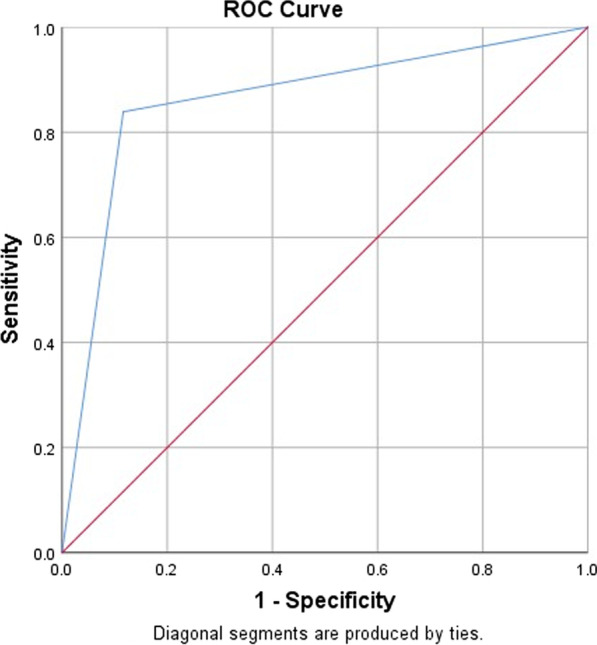
The prevalence of high-risk HPV was 29.4% among self-sampled specimen and 23.9% among clinician collected specimens. The overall concordance of the test result was 87.3%. Oncogenic HPV types, other than HPV16&18 were predominant in both sampling techniques, 19.9% from vaginal self-collected specimen and 16.7% of clinician collected cervical specimens. The sensitivity and specificity of self-sampled HPV test was 84.0% and 88.4%, respectively. The level of agreement was good (k = 0.68) and statistically significant (p < 0.001). The discriminatory power of the test as true positive and negative was excellent with an area under the curve of 0.86.
The magnitude of oncogenic HPV was higher in self-collected samples than the clinician collected specimen with good agreement between the two sampling methods. Thus, we recommend the Ministry of Health in Ethiopia to expand utilization of the self-sampled technique and enhance the coverage of screening in the country.
为了实现世界卫生组织 2030 年消除宫颈癌计划,评估和利用敏感检测方法以及可行的采样技术是提高宫颈癌筛查覆盖率的范例。HPV DNA 检测的自我采样是最简单和最敏感的技术之一,尽管在埃塞俄比亚的背景下证据有限。本研究旨在比较自我采集的阴道标本与临床医生采集的宫颈标本在检测埃塞俄比亚 HIV 阳性女性 HPV 中的性能。
我们进行了一项比较性的横断面研究设计,以收集年龄大于 24 岁的 HIV 阳性女性的宫颈阴道标本。数据于 2021 年 1 月至 10 月从六家政府医院采集。共有 994 名宫颈阴道标本由临床医生和 HIV 阳性妇女自己在宫颈癌筛查单位使用 Abbott Cervi-Collect 标本采集试剂盒采集,进行分子 HPV 检测。数据录入 Excel 电子表格,使用 SPSS 版本 25 进行分析。报告了敏感性、特异性和kappa,p<0.05 被认为具有统计学意义。
高危 HPV 在自我采样标本中的流行率为 29.4%,在临床医生采集标本中的流行率为 23.9%。两种采样技术的检测结果总一致性为 87.3%。两种采样技术中,除 HPV16&18 以外的致癌 HPV 类型均占主导地位,阴道自我采集标本中为 19.9%,临床医生采集的宫颈标本中为 16.7%。自我采样 HPV 检测的敏感性和特异性分别为 84.0%和 88.4%。一致性水平良好(k=0.68),具有统计学意义(p<0.001)。该检测作为真阳性和阴性的判别能力极好,曲线下面积为 0.86。
自我采集样本中的致癌 HPV 数量高于临床医生采集的样本,两种采样方法之间具有良好的一致性。因此,我们建议埃塞俄比亚卫生部扩大自我采样技术的应用,并提高该国的筛查覆盖率。