Abdulkareem Musa, Kenawy Asmaa A, Rauseo Elisa, Lee Aaron M, Sojoudi Alireza, Amir-Khalili Alborz, Lekadir Karim, Young Alistair A, Barnes Michael R, Barckow Philipp, Khanji Mohammed Y, Aung Nay, Petersen Steffen E
Barts Heart Centre, Barts Health National Health Service (NHS) Trust, London, United Kingdom.
National Institute for Health Research (NIHR) Barts Biomedical Research Centre, William Harvey Research Institute, Queen Mary University of London, London, United Kingdom.
Front Cardiovasc Med. 2022 Jul 27;9:894503. doi: 10.3389/fcvm.2022.894503. eCollection 2022.
Currently, administering contrast agents is necessary for accurately visualizing and quantifying presence, location, and extent of myocardial infarction (MI) with cardiac magnetic resonance (CMR). In this study, our objective is to investigate and analyze pre- and post-contrast CMR images with the goal of predicting post-contrast information using pre-contrast information only. We propose methods and identify challenges.
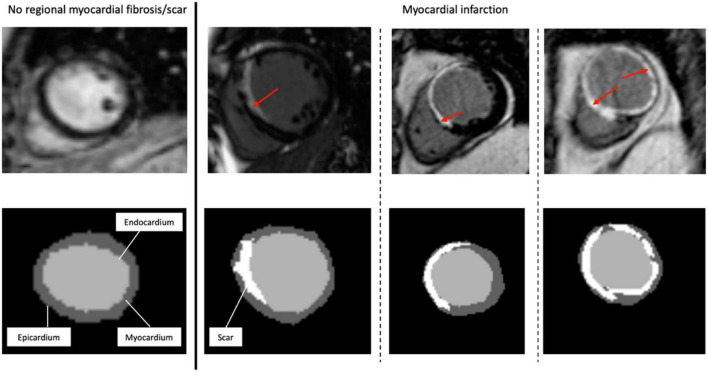
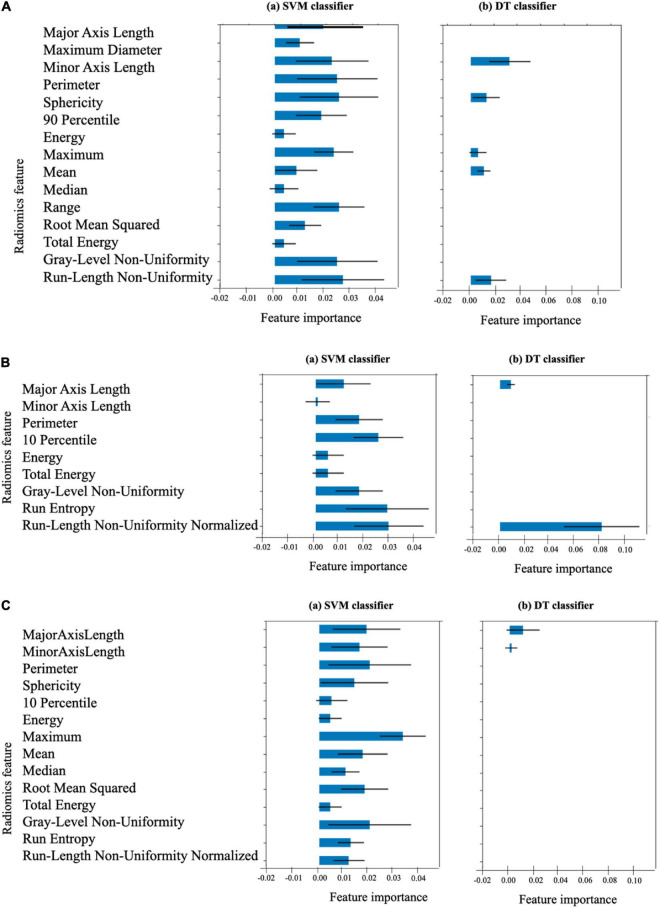
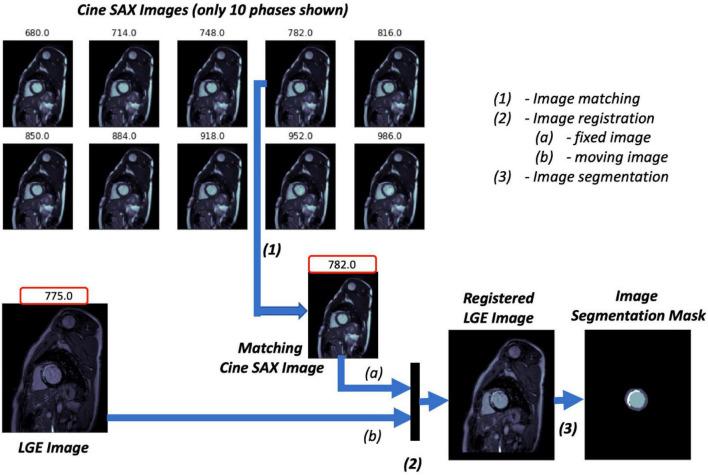
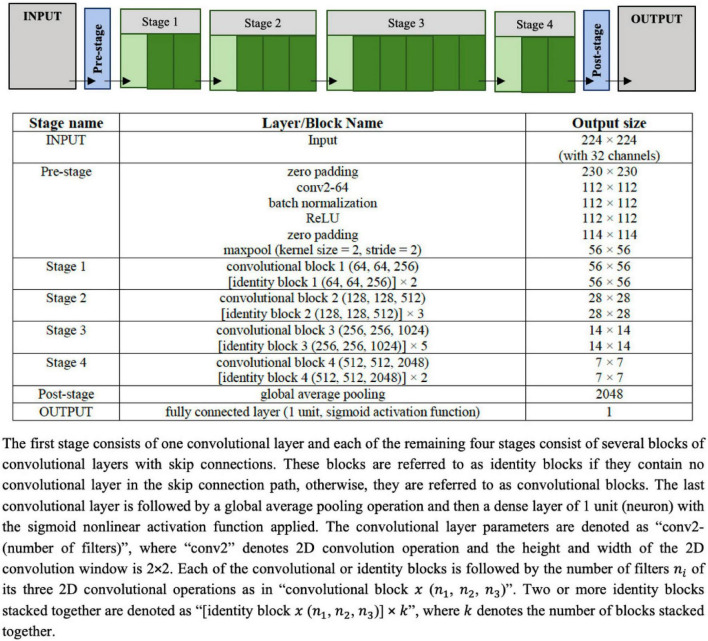
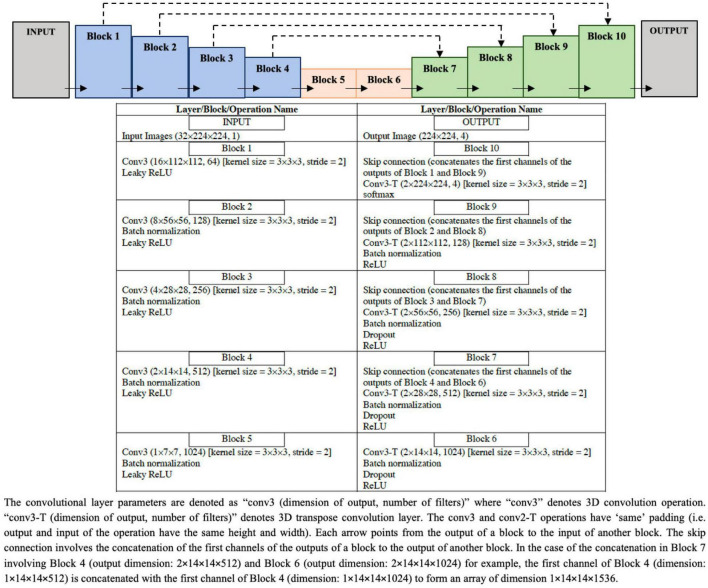
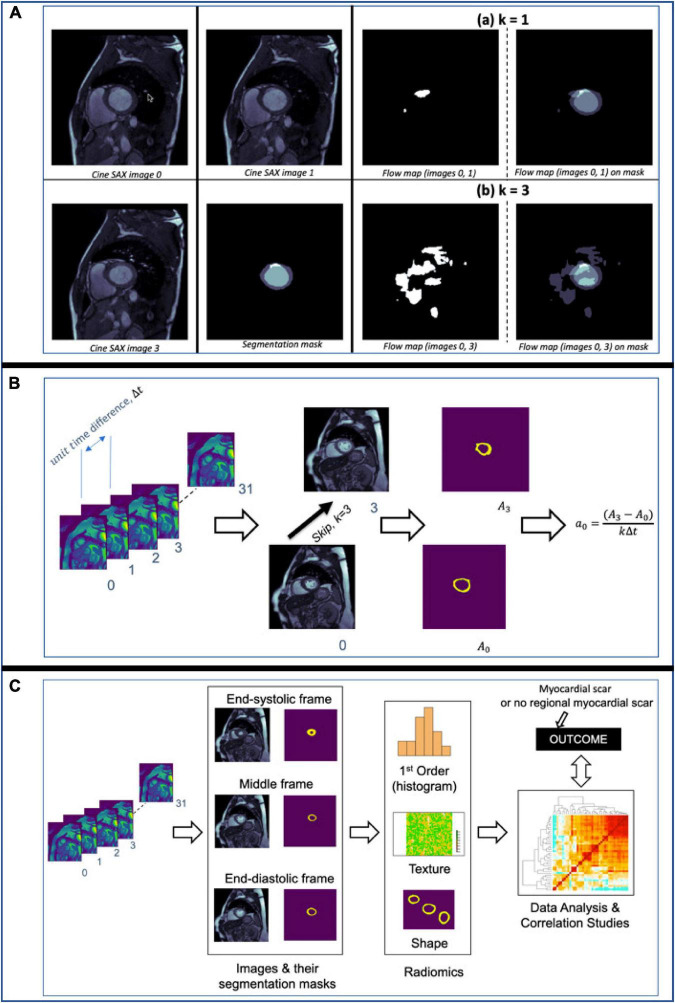
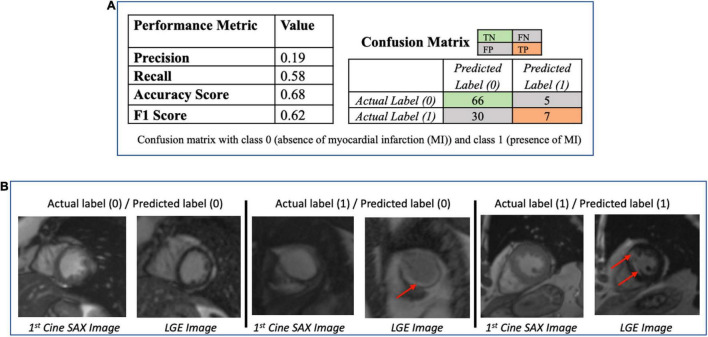
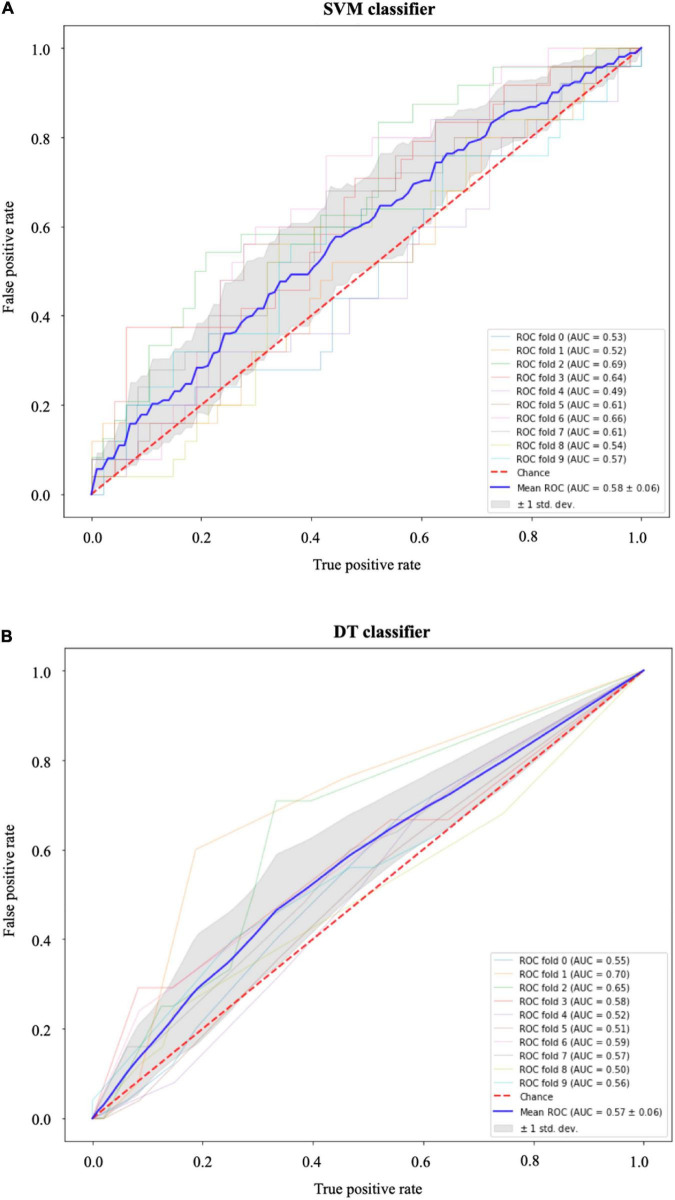
The study population consists of 272 retrospectively selected CMR studies with diagnoses of MI ( = 108) and healthy controls ( = 164). We describe a pipeline for pre-processing this dataset for analysis. After data feature engineering, 722 cine short-axis (SAX) images and segmentation mask pairs were used for experimentation. This constitutes 506, 108, and 108 pairs for the training, validation, and testing sets, respectively. We use deep learning (DL) segmentation (UNet) and classification (ResNet50) models to discover the extent and location of the scar and classify between the ischemic cases and healthy cases (i.e., cases with no regional myocardial scar) from the pre-contrast cine SAX image frames, respectively. We then capture complex data patterns that represent subtle signal and functional changes in the cine SAX images due to MI using optical flow, rate of change of myocardial area, and radiomics data. We apply this dataset to explore two supervised learning methods, namely, the support vector machines (SVM) and the decision tree (DT) methods, to develop predictive models for classifying pre-contrast cine SAX images as being a case of MI or healthy.
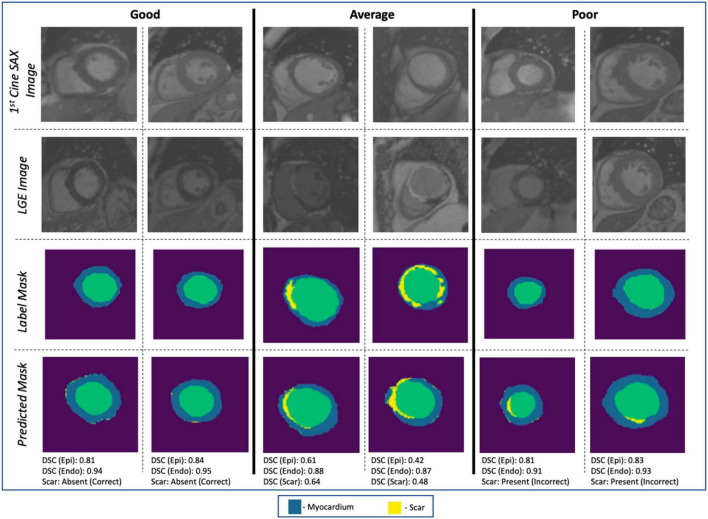
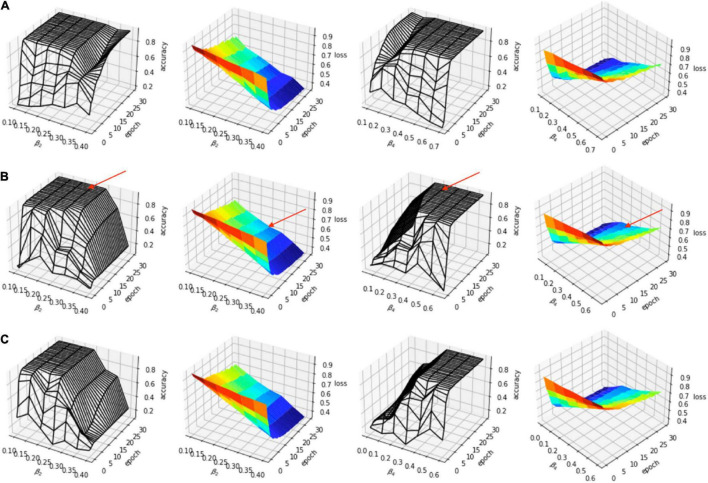
Overall, for the UNet segmentation model, the performance based on the mean Dice score for the test set ( = 108) is 0.75 (±0.20) for the endocardium, 0.51 (±0.21) for the epicardium and 0.20 (±0.17) for the scar. For the classification task, the accuracy, F1 and precision scores of 0.68, 0.69, and 0.64, respectively, were achieved with the SVM model, and of 0.62, 0.63, and 0.72, respectively, with the DT model.
We have presented some promising approaches involving DL, SVM, and DT methods in an attempt to accurately predict contrast information from non-contrast images. While our initial results are modest for this challenging task, this area of research still poses several open problems.
目前,使用心脏磁共振成像(CMR)准确显示和量化心肌梗死(MI)的存在、位置及范围时,注射造影剂是必要的。在本研究中,我们的目的是研究和分析注射造影剂前后的CMR图像,目标是仅使用注射造影剂前的信息来预测注射造影剂后的信息。我们提出了方法并识别了挑战。
研究人群包括272例经回顾性选择的CMR研究,其中诊断为MI的有108例,健康对照有164例。我们描述了一个用于预处理此数据集以进行分析的流程。经过数据特征工程后,722对电影短轴(SAX)图像和分割掩码对用于实验。这分别构成了训练集、验证集和测试集的506对、108对和108对。我们使用深度学习(DL)分割(UNet)和分类(ResNet50)模型分别从注射造影剂前的电影SAX图像帧中发现瘢痕的范围和位置,并对缺血病例和健康病例(即无局部心肌瘢痕的病例)进行分类。然后,我们使用光流、心肌面积变化率和放射组学数据来捕捉代表由于MI导致的电影SAX图像中细微信号和功能变化的复杂数据模式。我们应用此数据集探索两种监督学习方法,即支持向量机(SVM)和决策树(DT)方法,以开发用于将注射造影剂前的电影SAX图像分类为MI病例或健康病例的预测模型。
总体而言,对于UNet分割模型,测试集(n = 108)的基于平均Dice分数的性能,心内膜为0.75(±0.20),心外膜为0.51(±0.21),瘢痕为0.20(±0.17)。对于分类任务,SVM模型的准确率、F1分数和精确率分别为0.68、0.69和0.64,DT模型的分别为0.62、0.63和0.72。
我们提出了一些涉及DL、SVM和DT方法的有前景的方法,试图从非对比图像中准确预测对比信息。虽然我们针对这项具有挑战性的任务的初步结果并不理想,但该研究领域仍然存在几个未解决的问题。