Liu Anqi, Yang Gang, Liu Yuehua, Liu Tingjiao
Department of Orthodontics, Shanghai Stomatological Hospital and School of Stomatology, Fudan University, Shanghai, China.
Shanghai Key Laboratory of Craniomaxillofacial Development and Diseases, Fudan University, Shanghai, China.
Front Bioeng Biotechnol. 2022 Aug 16;10:939441. doi: 10.3389/fbioe.2022.939441. eCollection 2022.
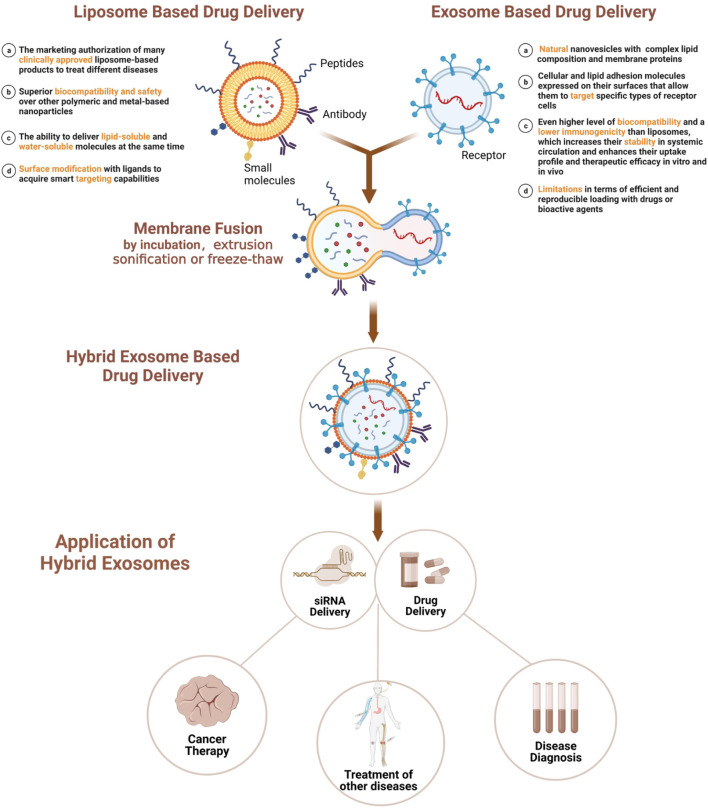
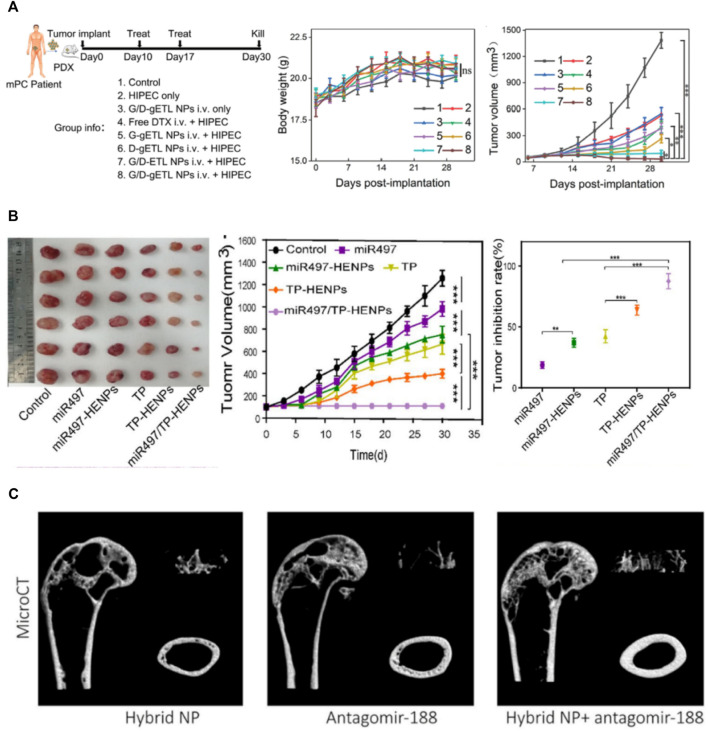
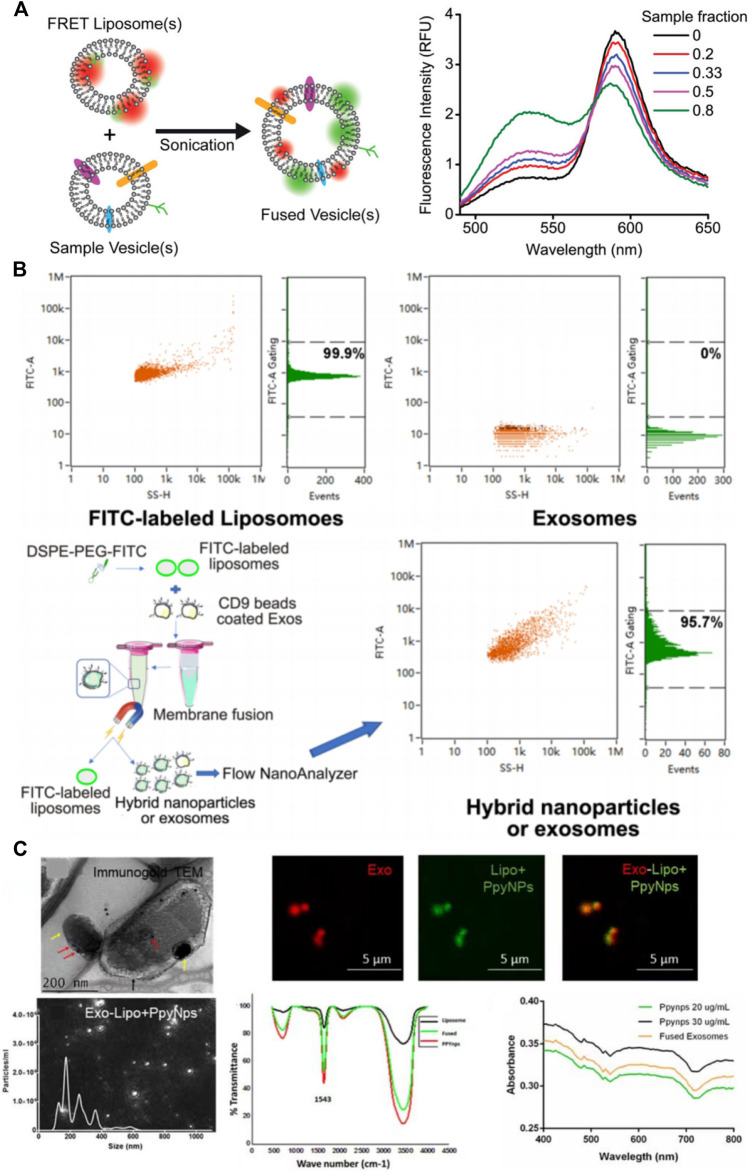
Liposomes are the earliest and most widely used nanoparticles for targeted drug delivery. Exosomes are nanosized membrane-bound particles and important mediators of intercellular communication. Combining liposomes and exosomes using various membrane fusion methods gives rise to a novel potential drug delivery system called membrane fusion-based hybrid exosomes (MFHE). These novel MFHEs not only exhibit potential advantageous features, such as high drug loading rate and targeted cellular uptake surface modification, but are also endowed with high biocompatibility and low immunogenicity. Here, we provide an overview of MFHEs' various preparation methods, characterization strategies, and their applications for disease treatment and scientific research.
脂质体是最早且应用最广泛的用于靶向给药的纳米颗粒。外泌体是纳米级的膜结合颗粒,是细胞间通讯的重要介质。使用各种膜融合方法将脂质体和外泌体结合,产生了一种新型的潜在药物递送系统,称为基于膜融合的杂交外泌体(MFHE)。这些新型的MFHE不仅具有潜在的优势特性,如高载药率、靶向细胞摄取和表面修饰,还具有高生物相容性和低免疫原性。在此,我们概述了MFHE的各种制备方法、表征策略及其在疾病治疗和科学研究中的应用。