Ørskov Per T, Norup Anne, Beatty Erin L, Jaeggi Susanne M
Department of Language and Communication, Faculty of Humanities, University of Southern Denmark, Slagelse, Denmark.
Department of Psychology, Faculty of Health Sciences, University of Southern Denmark, Odense, Denmark.
J Cogn Enhanc. 2021 Dec;5(4):480-498. doi: 10.1007/s41465-021-00216-5. Epub 2021 Jun 7.
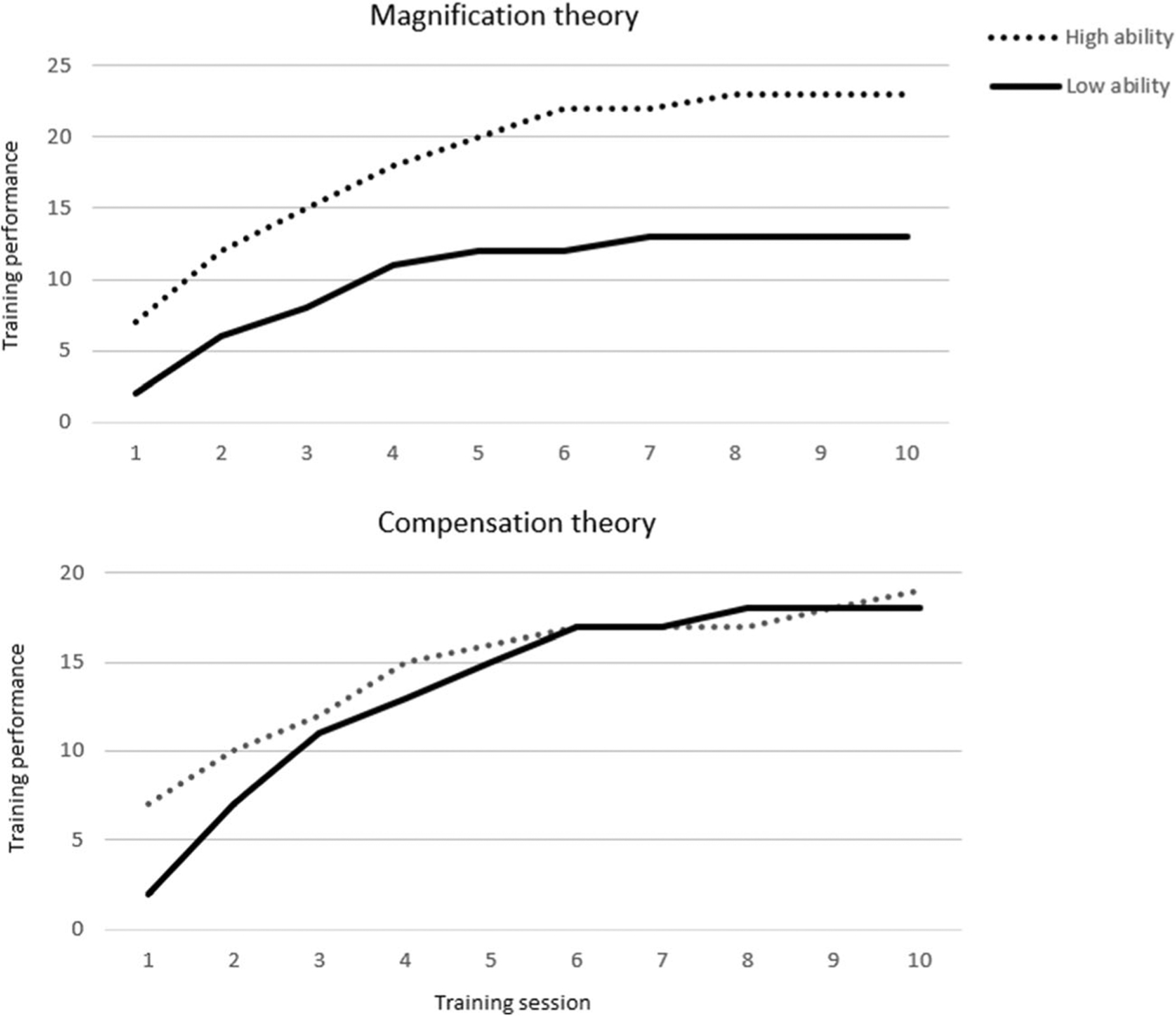
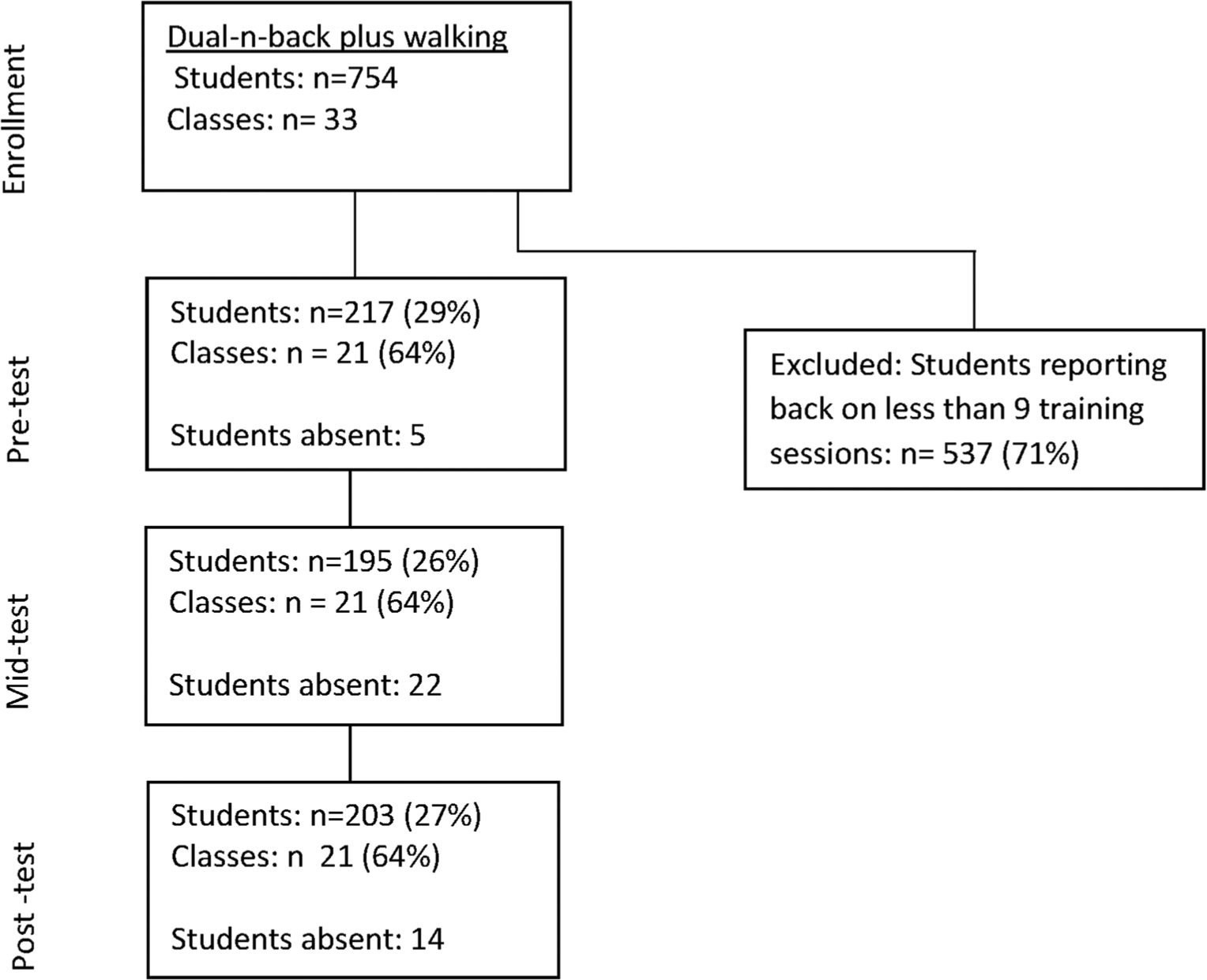
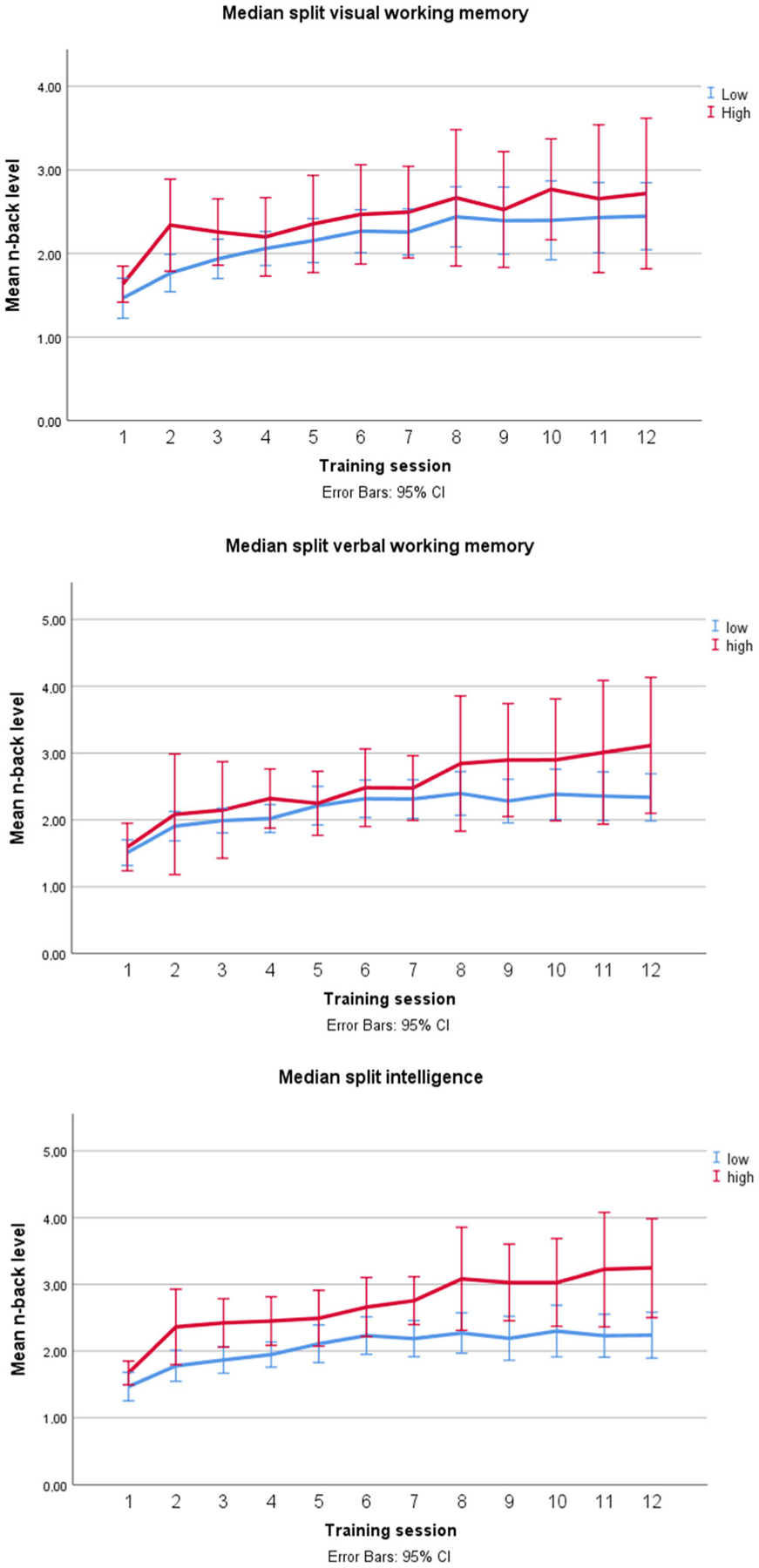
In working memory training studies, individual trajectories are known to vary considerably between participants. A better understanding of how individual differences affect training outcomes is important because it might inform the development of more effective training interventions. This study explored how measures of working memory, intelligence, sustained attention, training motivation, mindset, psychological well-being, perceived stress, and sleep quality affect initial training performance and rate of change. A total of 217 upper secondary students completed 12 weeks of adaptive dual-n-back in a classroom setting. We analyzed their self-reported training data using latent growth curve modeling. We found that working memory and intelligence predicted both, initial training performance and rate of performance change. Sustained attention and sleep quality predicted initial performance, but not the rate of change. Furthermore, we observed that participants who completed the intervention scored significantly higher on measures of working memory and intelligence and reported lower levels of perceived stress and higher levels of sleep quality at baseline compared to dropouts. In general, our study supports the magnification account with higher ability individuals starting out at a higher performance level and showing a higher rate of performance change, and moreover, being more likely to adhere to the training protocol.
在工作记忆训练研究中,已知个体轨迹在参与者之间差异很大。更好地理解个体差异如何影响训练结果很重要,因为这可能为更有效的训练干预措施的开发提供信息。本研究探讨了工作记忆、智力、持续注意力、训练动机、思维模式、心理健康、感知压力和睡眠质量等指标如何影响初始训练表现和变化率。共有217名高中生在课堂环境中完成了12周的适应性双n-back训练。我们使用潜在增长曲线模型分析了他们自我报告的训练数据。我们发现工作记忆和智力既能预测初始训练表现,也能预测表现变化率。持续注意力和睡眠质量能预测初始表现,但不能预测变化率。此外,我们观察到,与退出者相比,完成干预的参与者在工作记忆和智力指标上得分显著更高,并且在基线时报告的感知压力水平更低,睡眠质量更高。总体而言,我们的研究支持放大效应理论,即能力较高的个体从更高的表现水平开始,表现出更高的表现变化率,而且更有可能坚持训练方案。