Schulich Faculty of Chemistry, Technion - Israel Institute of Technology, Haifa 3200003, Israel.
Acc Chem Res. 2022 Sep 20;55(18):2728-2739. doi: 10.1021/acs.accounts.2c00458. Epub 2022 Sep 2.
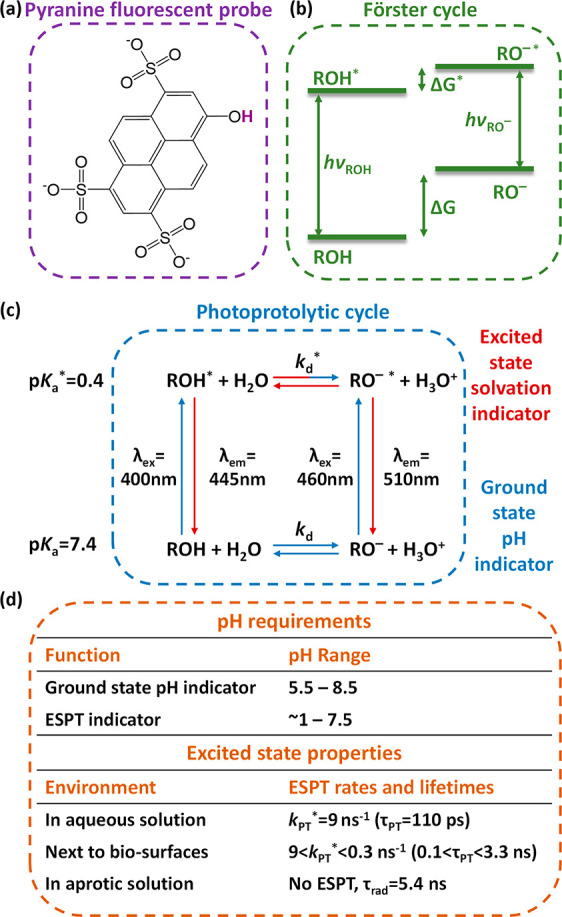
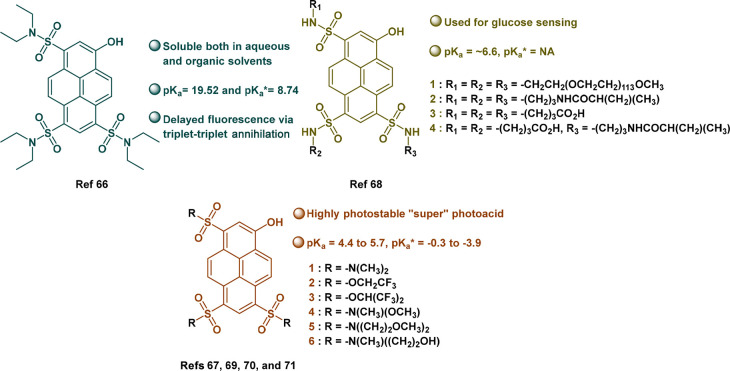
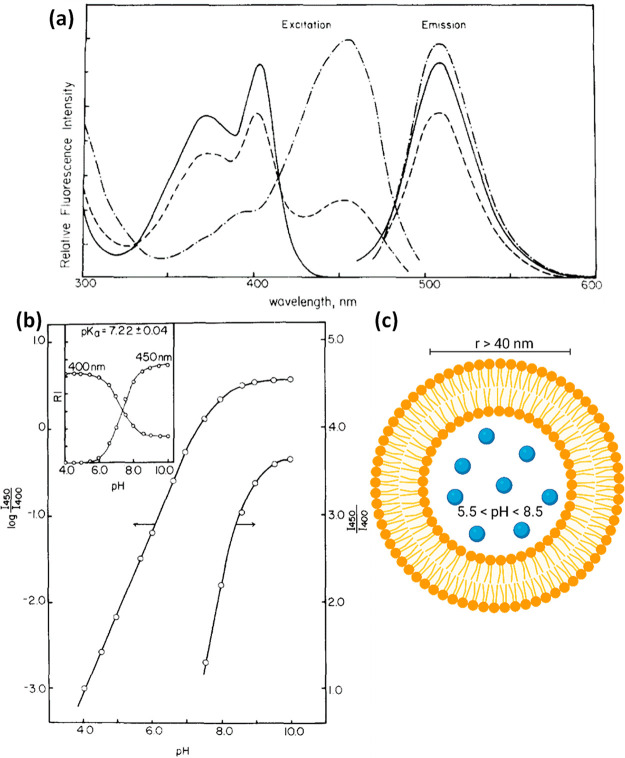
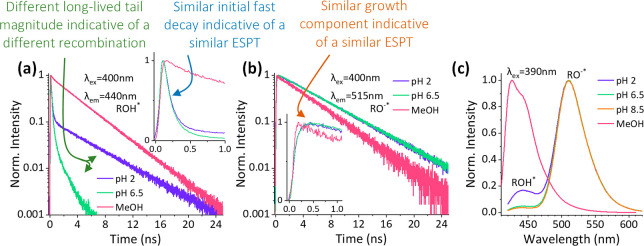
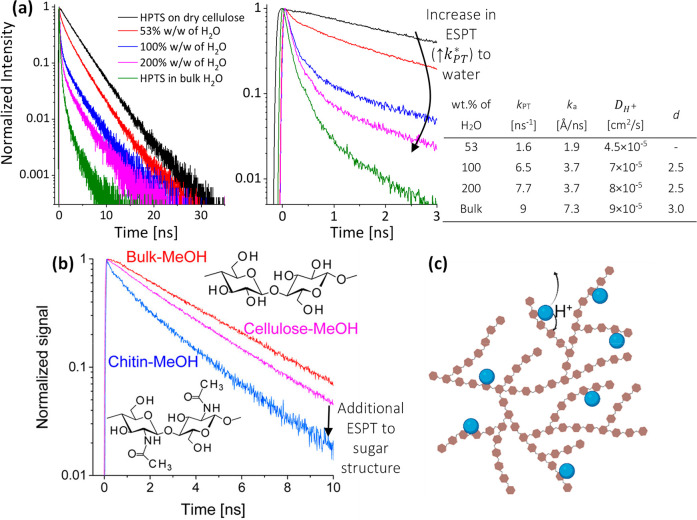
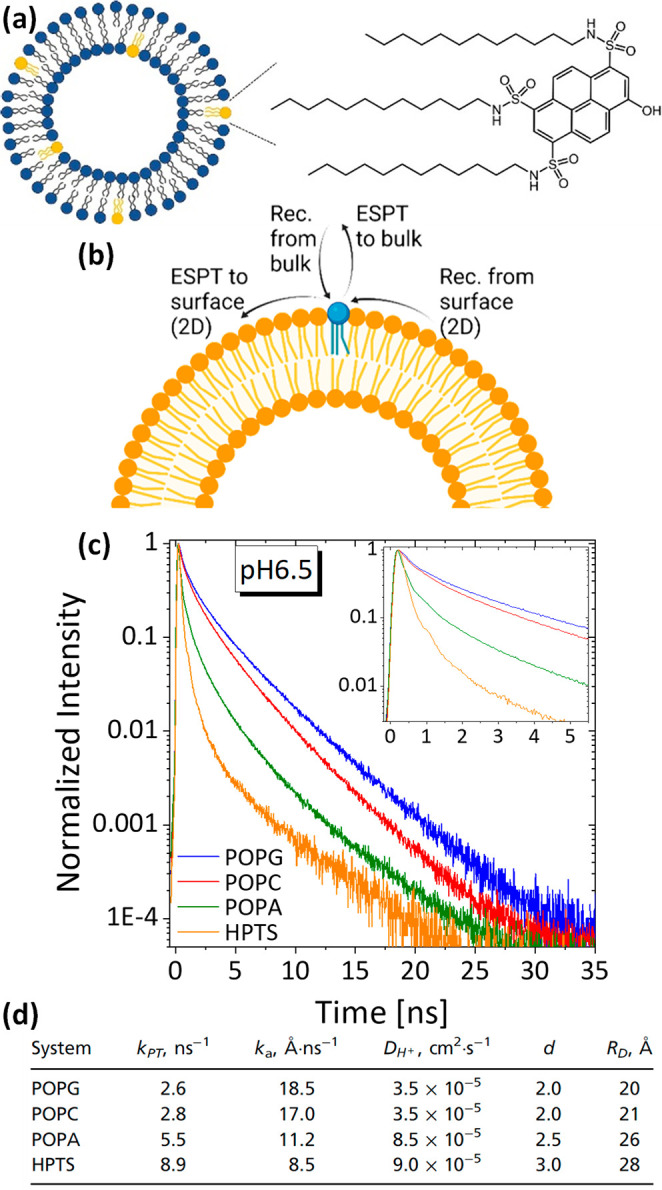
Molecular fluorescent probes are an essential experimental tool in many fields, ranging from biology to chemistry and materials science, to study the localization and other environmental properties surrounding the fluorescent probe. Thousands of different molecular fluorescent probes can be grouped into different families according to their photophysical properties. This Account focuses on a unique class of fluorescent probes that distinguishes itself from all other probes. This class is termed photoacids, which are molecules exhibiting a change in their acid-base transition between the ground and excited states, resulting in a large change in their p values between these two states, which is thermodynamically described using the Förster cycle. While there are many different photoacids, we focus only on pyranine, which is the most used photoacid, with p values of ∼7.4 and ∼0.4 for its ground and excited states, respectively. Such a difference between the p values is the basis for the dual use of the pyranine fluorescent probe. Furthermore, the protonated and deprotonated states of pyranine absorb and emit at different wavelengths, making it easy to focus on a specific state. Pyranine has been used for decades as a fluorescent pH indicator for physiological pH values, which is based on its acid-base equilibrium in the ground state. While the unique excited-state proton transfer (ESPT) properties of photoacids have been explored for more than a half-century, it is only recently that photoacids and especially pyranine have been used as fluorescent probes for the local environment of the probe, especially the hydration layer surrounding it and related proton diffusion properties. Such use of photoacids is based on their capability for ESPT from the photoacid to a nearby proton acceptor, which is usually, but not necessarily, water. In this Account, we detail the photophysical properties of pyranine, distinguishing between the processes in the ground state and the ones in the excited state. We further review the different utilization of pyranine for probing different properties of the environment. Our main perspective is on the emerging use of the ESPT process for deciphering the hydration layer around the probe and other parameters related to proton diffusion taking place while the molecule is in the excited state, focusing primarily on bio-related materials. Special attention is given to how to perform the experiments and, most importantly, how to interpret their results. We also briefly discuss the breadth of possibilities in making pyranine derivatives and the use of pyranine for controlling dynamic reactions.
分子荧光探针是生物学、化学和材料科学等多个领域的重要实验工具,用于研究荧光探针周围的定位和其他环境特性。根据光物理性质,成千上万种不同的分子荧光探针可以分为不同的家族。本专题重点介绍了一类独特的荧光探针,它有别于所有其他探针。这类探针被称为光酸,其在基态和激发态之间的酸碱转变过程中表现出性质的变化,导致其 p 值在这两种状态之间发生很大变化,这在热力学上可以用福斯特循环来描述。虽然有许多不同的光酸,但我们只关注于荧烷,它是最常用的光酸,其基态和激发态的 p 值分别约为 7.4 和 0.4。这种 p 值之间的差异是荧烷荧光探针双重用途的基础。此外,荧烷的质子化和去质子化状态在不同波长下吸收和发射,这使得专注于特定状态变得容易。几十年来,荧烷一直被用作生理 pH 值的荧光 pH 指示剂,这是基于其在基态下的酸碱平衡。虽然光酸的独特激发态质子转移(ESPT)性质已经被探索了半个多世纪,但直到最近,光酸特别是荧烷才被用作探针周围局部环境的荧光探针,特别是其周围的水合层和相关的质子扩散性质。这种光酸的使用基于其从光酸到附近质子受体(通常但不一定是水)的 ESPT 能力。在本专题中,我们详细介绍了荧烷的光物理性质,区分了基态和激发态过程。我们进一步综述了荧烷在探测环境不同性质方面的不同应用。我们的主要观点是关于 ESPT 过程在解析探针周围水合层和分子处于激发态时发生的其他质子扩散参数方面的新兴应用,主要集中在生物相关材料上。特别关注如何进行实验,以及最重要的是如何解释实验结果。我们还简要讨论了合成荧烷衍生物的广泛可能性以及使用荧烷控制动态反应的可能性。