1Centre for Cognition and Brain disorders, The Affiliated Hospital of Hangzhou Normal University, Hangzhou, Zhejiang Province, China.
2Institute of Psychological Science, Hangzhou Normal University, Hangzhou, Zhejiang Province, China.
J Behav Addict. 2022 Sep 2;11(3):778-795. doi: 10.1556/2006.2022.00057. Print 2022 Sep 26.
Sex differences in internet gaming disorder (IGD) remain unknown. Investigating sex-specific neural features that underlie the core risk factor (i.e., risk-taking) of IGD would help in understanding sex-specific vulnerabilities to IGD and advance sex-specific treatments and prevention for IGD.
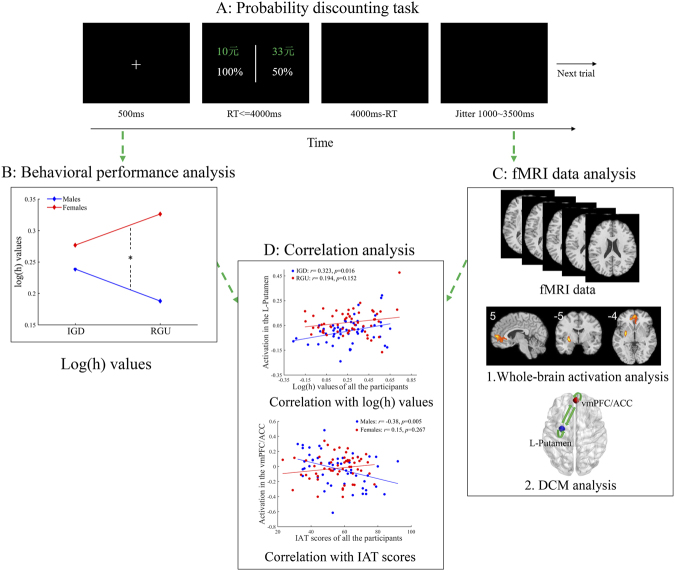
111 participants (28 IGD males, 27 IGD females, 26 recreational game user (RGU) males, 30 RGU females) completed a probability discounting task during fMRI scanning.
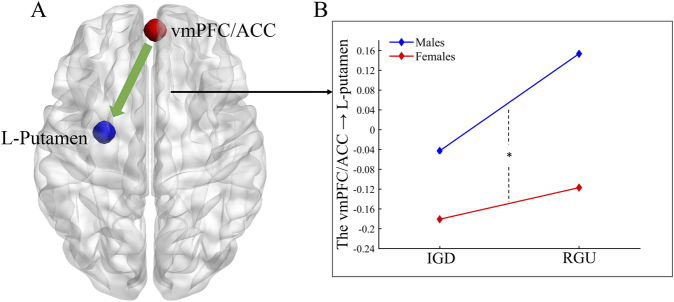
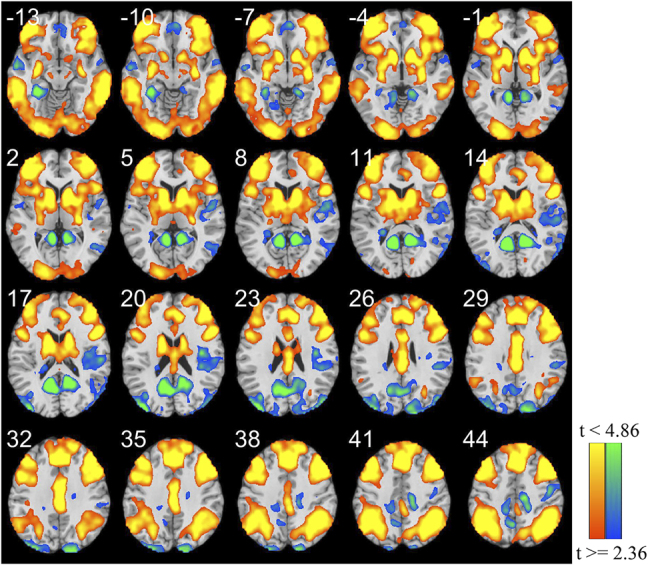
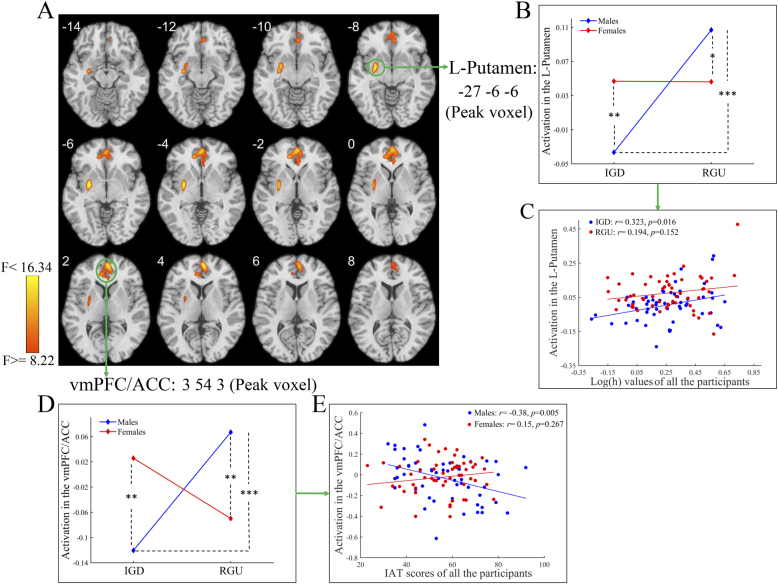
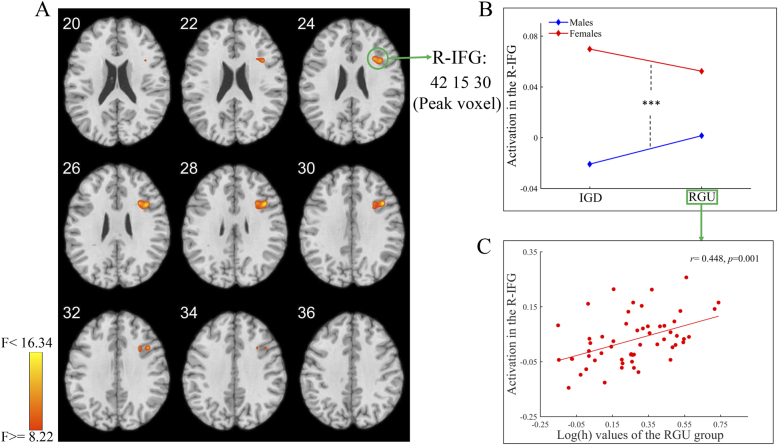
First, among RGUs, males showed a higher risk-taking tendency and greater neural activation associated with risk/value evaluation for reward (the ventromedial prefrontal cortex (vmPFC), anterior cingulate cortex (ACC), left putamen) and smaller activation associated with cognitive control (the inferior frontal gyrus) than females during the contrast of risky-safe choices. Moreover, males showed a greater modulatory effect of risky choices on the connection from the vmPFC/ACC to the left putamen than females. Second, IGD males showed decreased activation in the vmPFC/ACC and left putamen compared to RGU males, whereas this decrease did not exist in IGD females.
Males show a higher risk-taking tendency than females. Altered neural substrates associated with risky decision-making exist in IGD males but not in IGD females.
The present findings fill the gap in information on the behavioral and neural substrates underlying IGD among females and demonstrate that a high risk-taking tendency is a risk factor and core symptom only in IGD males but not in IGD females. It is necessary to design and adopt distinct treatments and prevention strategies for IGD in males and females.
网络赌博障碍(IGD)在性别上的差异尚不清楚。研究IGD 的核心风险因素(即冒险行为)所对应的性别特异性神经特征,有助于理解IGD 中存在的性别特异性脆弱性,并推进针对 IGD 的性别特异性治疗和预防。
111 名参与者(28 名 IGD 男性、27 名 IGD 女性、26 名娱乐性游戏使用者(RGU)男性、30 名 RGU 女性)在 fMRI 扫描期间完成了概率折扣任务。
首先,在 RGUs 中,男性在风险/价值评估奖励时表现出更高的冒险倾向和更强的神经激活(腹内侧前额叶皮层(vmPFC)、前扣带皮层(ACC)、左侧壳核),以及在风险-安全选择对比中认知控制的激活减少(下额叶 gyrus),而女性则表现出更强的风险选择对 vmPFC/ACC 到左侧壳核连接的调节作用。其次,与 RGU 男性相比,IGD 男性的 vmPFC/ACC 和左侧壳核的激活减少,而 IGD 女性则没有这种减少。
男性比女性表现出更高的冒险倾向。在 IGD 男性中存在与冒险决策相关的改变的神经基质,但在 IGD 女性中则不存在。
本研究结果填补了女性 IGD 行为和神经基质方面的信息空白,并表明高冒险倾向是 IGD 男性的风险因素和核心症状,而不是 IGD 女性的风险因素和核心症状。有必要为男性和女性设计和采用不同的 IGD 治疗和预防策略。