• 文献检索
  • 文档翻译
  • 深度研究
  • 学术资讯
  • Suppr Zotero 插件Zotero 插件
  • 邀请有礼
  • 套餐&价格
  • 历史记录
应用&插件
Suppr Zotero 插件Zotero 插件浏览器插件Mac 客户端Windows 客户端微信小程序
定价
高级版会员购买积分包购买API积分包
服务
文献检索文档翻译深度研究API 文档MCP 服务
关于我们
关于 Suppr公司介绍联系我们用户协议隐私条款
关注我们

Suppr 超能文献

核心技术专利:CN118964589B侵权必究
粤ICP备2023148730 号-1Suppr @ 2026

文献检索

告别复杂PubMed语法,用中文像聊天一样搜索,搜遍4000万医学文献。AI智能推荐,让科研检索更轻松。

立即免费搜索

文件翻译

保留排版,准确专业,支持PDF/Word/PPT等文件格式,支持 12+语言互译。

免费翻译文档

深度研究

AI帮你快速写综述,25分钟生成高质量综述,智能提取关键信息,辅助科研写作。

立即免费体验

利用社交媒体数据探索加拿大政府官员的 COVID-19 信息及其对公众的反应。

An exploration of Canadian government officials' COVID-19 messages and the public's reaction using social media data.

机构信息

Department of Management Information Systems, Faculty of Business Administration, Université Laval, Quebec, Canada.

Knowledge Translation Program, Li Ka Shing Knowledge Institute, Unity Health Toronto, Toronto, Canada.

出版信息

PLoS One. 2022 Sep 2;17(9):e0273153. doi: 10.1371/journal.pone.0273153. eCollection 2022.

DOI:10.1371/journal.pone.0273153
PMID:36054094
原文链接:https://pmc.ncbi.nlm.nih.gov/articles/PMC9439209/
Abstract

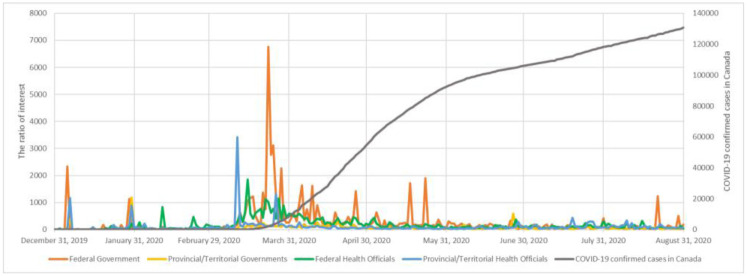
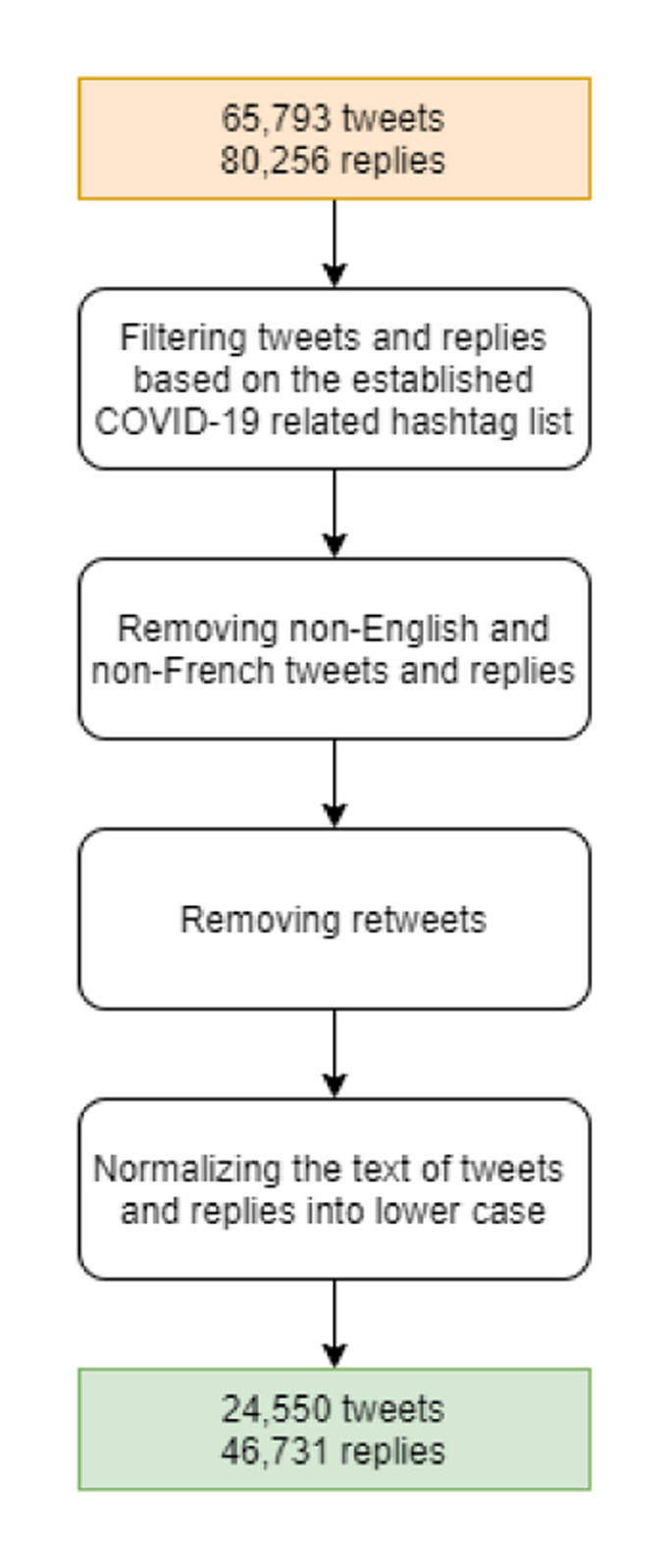
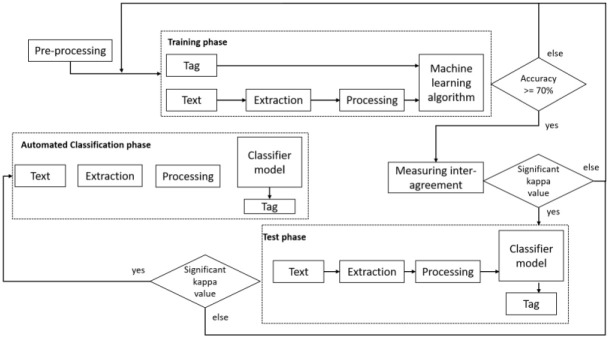
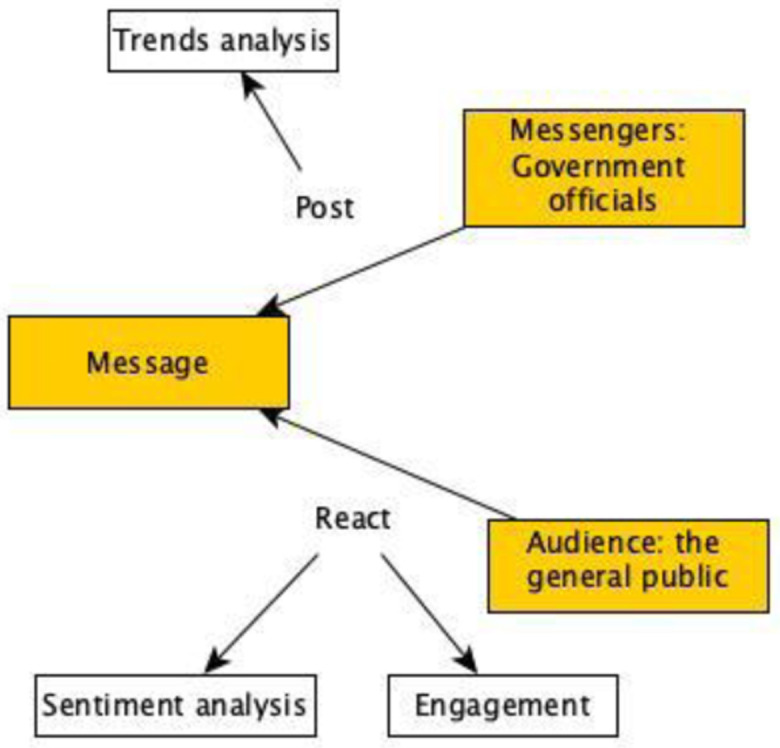
Governments can use social media platforms such as Twitter to disseminate health information to the public, as evidenced during the COVID-19 pandemic [Pershad (2018)]. The purpose of this study is to gain a better understanding of Canadian government and public health officials' use of Twitter as a dissemination platform during the pandemic and to explore the public's engagement with and sentiment towards these messages. We examined the account data of 93 Canadian public health and government officials during the first wave of the pandemic in Canada (December 31, 2019 August 31, 2020). Our objectives were to: 1) determine the engagement rates of the public with Canadian federal and provincial/territorial governments and public health officials' Twitter posts; 2) conduct a hashtag trend analysis to explore the Canadian public's discourse related to the pandemic during this period; 3) provide insights on the public's reaction to Canadian authorities' tweets through sentiment analysis. To address these objectives, we extracted Twitter posts, replies, and associated metadata available during the study period in both English and French. Our results show that the public demonstrated increased engagement with federal officials' Twitter accounts as compared to provincial/territorial accounts. For the hashtag trends analysis of the public discourse during the first wave of the pandemic, we observed a topic shift in the Canadian public discourse over time between the period prior to the first wave and the first wave of the pandemic. Additionally, we identified 11 sentiments expressed by the public when reacting to Canadian authorities' tweets. This study illustrates the potential to leverage social media to understand public discourse during a pandemic. We suggest that routine analyses of such data by governments can provide governments and public health officials with real-time data on public sentiments during a public health emergency. These data can be used to better disseminate key messages to the public.

摘要

政府可以利用 Twitter 等社交媒体平台向公众传播健康信息,这在 COVID-19 大流行期间得到了证实[Pershad(2018)]。本研究旨在更好地了解加拿大政府和公共卫生官员在大流行期间如何将 Twitter 用作传播平台,以及探讨公众对这些信息的参与度和情绪。我们研究了加拿大公共卫生和政府官员在加拿大大流行第一波期间(2019 年 12 月 31 日至 2020 年 8 月 31 日)的 93 个 Twitter 账户数据。我们的目标是:1)确定公众对加拿大联邦和省级/地区政府以及公共卫生官员 Twitter 帖子的参与度;2)进行标签趋势分析,以探讨在此期间加拿大公众与大流行相关的讨论;3)通过情感分析提供有关公众对加拿大当局推文反应的见解。为了实现这些目标,我们提取了在研究期间以英语和法语提供的 Twitter 帖子、回复和相关元数据。我们的研究结果表明,与省级/地区账户相比,公众对联邦官员的 Twitter 账户的参与度有所提高。对于大流行第一波期间公众讨论的标签趋势分析,我们观察到在大流行前时期和大流行第一波期间,加拿大公众讨论的主题发生了转变。此外,我们确定了公众在对加拿大当局推文做出反应时表达的 11 种情绪。这项研究说明了利用社交媒体来了解大流行期间公众讨论的潜力。我们建议政府定期分析此类数据,为政府和公共卫生官员在公共卫生紧急情况下提供有关公众情绪的实时数据。这些数据可用于更好地向公众传播关键信息。
https://cdn.ncbi.nlm.nih.gov/pmc/blobs/56e3/9439209/55ba690888f6/pone.0273153.g005.jpg
https://cdn.ncbi.nlm.nih.gov/pmc/blobs/56e3/9439209/5902b74ce8d1/pone.0273153.g001.jpg
https://cdn.ncbi.nlm.nih.gov/pmc/blobs/56e3/9439209/1a2765f65c55/pone.0273153.g002.jpg
https://cdn.ncbi.nlm.nih.gov/pmc/blobs/56e3/9439209/52c018e581a1/pone.0273153.g003.jpg
https://cdn.ncbi.nlm.nih.gov/pmc/blobs/56e3/9439209/46063d30f9c7/pone.0273153.g004.jpg
https://cdn.ncbi.nlm.nih.gov/pmc/blobs/56e3/9439209/55ba690888f6/pone.0273153.g005.jpg
https://cdn.ncbi.nlm.nih.gov/pmc/blobs/56e3/9439209/5902b74ce8d1/pone.0273153.g001.jpg
https://cdn.ncbi.nlm.nih.gov/pmc/blobs/56e3/9439209/1a2765f65c55/pone.0273153.g002.jpg
https://cdn.ncbi.nlm.nih.gov/pmc/blobs/56e3/9439209/52c018e581a1/pone.0273153.g003.jpg
https://cdn.ncbi.nlm.nih.gov/pmc/blobs/56e3/9439209/46063d30f9c7/pone.0273153.g004.jpg
https://cdn.ncbi.nlm.nih.gov/pmc/blobs/56e3/9439209/55ba690888f6/pone.0273153.g005.jpg

相似文献

1
An exploration of Canadian government officials' COVID-19 messages and the public's reaction using social media data.利用社交媒体数据探索加拿大政府官员的 COVID-19 信息及其对公众的反应。
PLoS One. 2022 Sep 2;17(9):e0273153. doi: 10.1371/journal.pone.0273153. eCollection 2022.
2
Public Officials' Engagement on Social Media During the Rollout of the COVID-19 Vaccine: Content Analysis of Tweets.新冠疫苗推广期间公职人员在社交媒体上的参与情况:推文内容分析
JMIR Infodemiology. 2023 Jul 20;3:e41582. doi: 10.2196/41582.
3
The Saudi Ministry of Health's Twitter Communication Strategies and Public Engagement During the COVID-19 Pandemic: Content Analysis Study.沙特卫生部在 COVID-19 大流行期间的 Twitter 传播策略和公众参与:内容分析研究。
JMIR Public Health Surveill. 2021 Jul 12;7(7):e27942. doi: 10.2196/27942.
4
Public engagement in government officials' posts on social media during coronavirus lockdown.新冠疫情封锁期间政府官员在社交媒体上的公众参与度
PLoS One. 2023 Jan 23;18(1):e0280889. doi: 10.1371/journal.pone.0280889. eCollection 2023.
5
Public Sentiment and Discourse on Domestic Violence During the COVID-19 Pandemic in Australia: Analysis of Social Media Posts.新冠疫情期间澳大利亚公众对家庭暴力问题的态度和讨论:社交媒体帖子分析
J Med Internet Res. 2021 Oct 1;23(10):e29025. doi: 10.2196/29025.
6
Social Network Analysis of COVID-19 Sentiments: Application of Artificial Intelligence.COVID-19 舆情的社会网络分析:人工智能的应用
J Med Internet Res. 2020 Aug 18;22(8):e22590. doi: 10.2196/22590.
7
The Response of Governments and Public Health Agencies to COVID-19 Pandemics on Social Media: A Multi-Country Analysis of Twitter Discourse.社交媒体上各国政府和公共卫生机构对 COVID-19 大流行的反应:对推特讨论内容的多国分析。
Front Public Health. 2021 Sep 28;9:716333. doi: 10.3389/fpubh.2021.716333. eCollection 2021.
8
Tracking Public Attitudes Toward COVID-19 Vaccination on Tweets in Canada: Using Aspect-Based Sentiment Analysis.追踪加拿大推特上公众对 COVID-19 疫苗接种的态度:使用基于方面的情感分析。
J Med Internet Res. 2022 Mar 29;24(3):e35016. doi: 10.2196/35016.
9
Examining Tweet Content and Engagement of Canadian Public Health Agencies and Decision Makers During COVID-19: Mixed Methods Analysis.研究 COVID-19 期间加拿大公共卫生机构和决策者的推文内容和参与度:混合方法分析。
J Med Internet Res. 2021 Mar 11;23(3):e24883. doi: 10.2196/24883.
10
Temporal and Emotional Variations in People's Perceptions of Mass Epidemic Infectious Disease After the COVID-19 Pandemic Using Influenza A as an Example: Topic Modeling and Sentiment Analysis Based on Weibo Data.基于微博数据的主题建模和情感分析:以甲型流感为例探讨 COVID-19 大流行后人们对大规模传染病的时间和情感变化
J Med Internet Res. 2023 Nov 2;25:e49300. doi: 10.2196/49300.

引用本文的文献

1
Exploring perceptions and experiences of stigma in Canada during the COVID-19 pandemic: a qualitative study.探索新冠疫情期间加拿大对污名化的认知与经历:一项定性研究。
BMC Glob Public Health. 2023;1(1):26. doi: 10.1186/s44263-023-00020-7. Epub 2023 Dec 2.

本文引用的文献

1
The effects of community safety support on COVID-19 event strength perception, risk perception, and health tourism intention: The moderating role of risk communication.社区安全支持对新冠疫情事件强度感知、风险感知及健康旅游意愿的影响:风险沟通的调节作用
MDE Manage Decis Econ. 2022 Mar;43(2):496-509. doi: 10.1002/mde.3397. Epub 2021 Jul 4.
2
Trust in Government Actions During the COVID-19 Crisis.对新冠疫情危机期间政府行动的信任。
Soc Indic Res. 2022;159(3):967-989. doi: 10.1007/s11205-021-02772-x. Epub 2021 Aug 24.
3
The role of risk communication in public health interventions. An analysis of risk communication for a community quarantine in Germany to curb the SARS-CoV-2 pandemic.
风险沟通在公共卫生干预措施中的作用。对德国社区隔离以遏制 SARS-CoV-2 大流行的风险沟通的分析。
PLoS One. 2021 Aug 13;16(8):e0256113. doi: 10.1371/journal.pone.0256113. eCollection 2021.
4
COVID-19 Vaccine-Related Discussion on Twitter: Topic Modeling and Sentiment Analysis.新冠疫苗相关推文的讨论:主题建模和情感分析。
J Med Internet Res. 2021 Jun 29;23(6):e24435. doi: 10.2196/24435.
5
Public Trust and Willingness to Vaccinate Against COVID-19 in the US From October 14, 2020, to March 29, 2021.2020 年 10 月 14 日至 2021 年 3 月 29 日美国民众对 COVID-19 疫苗的信任度和接种意愿
JAMA. 2021 Jun 15;325(23):2397-2399. doi: 10.1001/jama.2021.8246.
6
Global Evidence on the Determinants of Public Trust in Governments during the COVID-19.关于新冠疫情期间公众对政府信任度决定因素的全球证据。
Appl Res Qual Life. 2022;17(2):559-578. doi: 10.1007/s11482-020-09902-6. Epub 2021 Feb 5.
7
#Covid-19: An exploratory investigation of hashtag usage on Twitter.Covid-19:推特话题标签使用情况的探索性调查。
Health Policy. 2021 Apr;125(4):541-547. doi: 10.1016/j.healthpol.2021.01.001. Epub 2021 Jan 9.
8
The use of Twitter by state leaders and its impact on the public during the COVID-19 pandemic.国家领导人在新冠疫情期间使用推特及其对公众的影响。
Heliyon. 2020 Nov 19;6(11):e05540. doi: 10.1016/j.heliyon.2020.e05540. eCollection 2020 Nov.
9
Using Social Media to Communicate Sustainable Preventive Measures and Curtail Misinformation.利用社交媒体传播可持续预防措施并减少错误信息。
Front Psychol. 2020 Oct 16;11:568324. doi: 10.3389/fpsyg.2020.568324. eCollection 2020.
10
Stigmatization in social media: Documenting and analyzing hate speech for COVID-19 on Twitter.社交媒体中的污名化:记录与分析推特上关于新冠疫情的仇恨言论。
Proc Assoc Inf Sci Technol. 2020;57(1):e313. doi: 10.1002/pra2.313. Epub 2020 Oct 22.