Benlaribi Rayene, Gou Qiao, Takaba Hiroyuki
Department of Immunology, Graduate School of Medicine and Faculty of Medicine, The University of Tokyo, Tokyo, Japan.
Inflamm Regen. 2022 Sep 3;42(1):28. doi: 10.1186/s41232-022-00211-z.
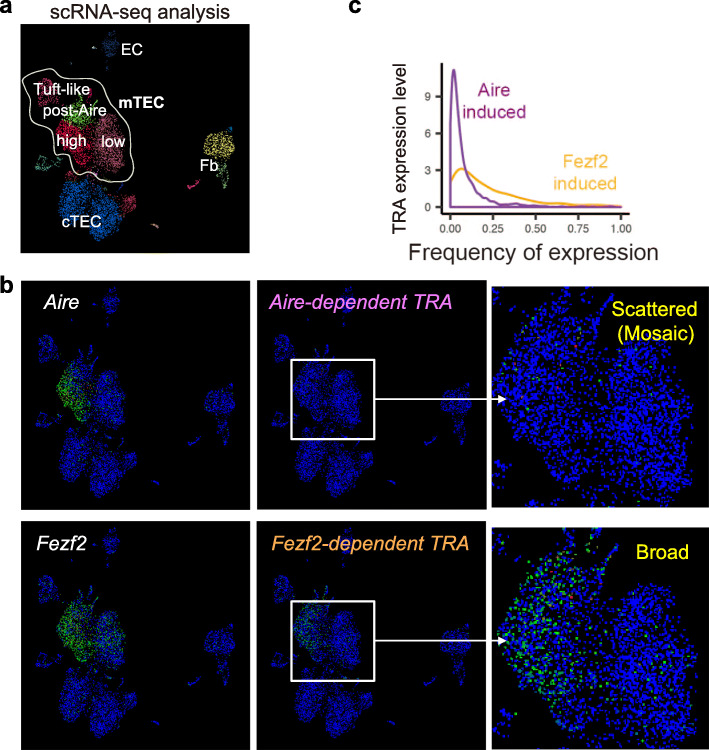
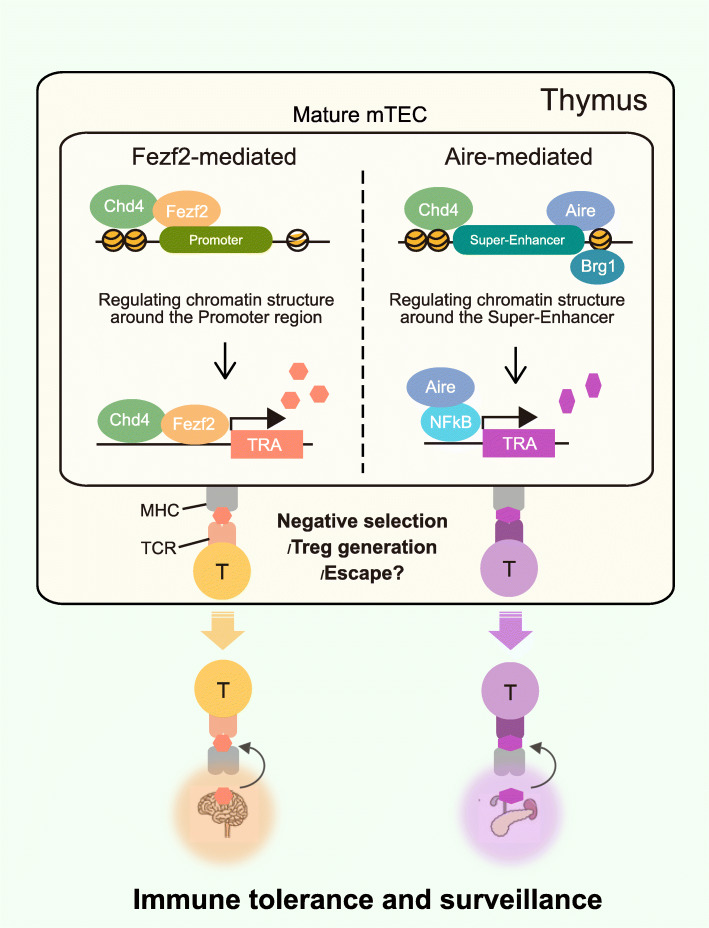
T cells are a group of lymphocytes that play a central role in the immune system, notably, eliminating pathogens and attacking cancer while being tolerant of the self. Elucidating how immune tolerance is ensured has become a significant research issue for understanding the pathogenesis of autoimmune diseases as well as cancer immunity. T cell immune tolerance is established mainly in the thymic medulla by the removal of self-responsive T cells and the generation of regulatory T cells, this process depends mainly on the expression of a variety of tissue restricted antigens (TRAs) by medullary thymic epithelial cells (mTECs). The expression of TRAs is known to be regulated by at least two independent factors, Fezf2 and Aire, which play non-redundant and complementary roles by different mechanisms. In this review, we introduce the molecular logic of thymic self-antigen expression that underlies T cell selection for the prevention of autoimmunity and the establishment of immune surveillance.
T细胞是一类淋巴细胞,在免疫系统中发挥核心作用,特别是在耐受自身的同时消除病原体并攻击癌症。阐明如何确保免疫耐受已成为理解自身免疫性疾病发病机制以及癌症免疫的重要研究问题。T细胞免疫耐受主要通过清除自身反应性T细胞和产生调节性T细胞在胸腺髓质中建立,这一过程主要依赖于胸腺髓质上皮细胞(mTECs)表达多种组织限制性抗原(TRAs)。已知TRAs的表达受至少两个独立因子Fezf2和Aire调控,它们通过不同机制发挥非冗余和互补作用。在本综述中,我们介绍了胸腺自身抗原表达的分子逻辑,其是T细胞选择以预防自身免疫和建立免疫监视的基础。