Department of Medicine Université de Montréal Montreal Canada.
Hôpital du Sacré-Coeur de Montréal Research Center Montreal Canada.
J Am Heart Assoc. 2022 Sep 6;11(17):e026603. doi: 10.1161/JAHA.122.026603. Epub 2022 Sep 3.
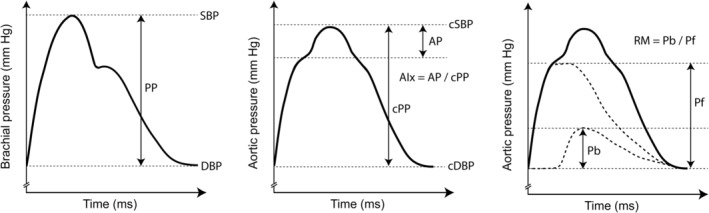
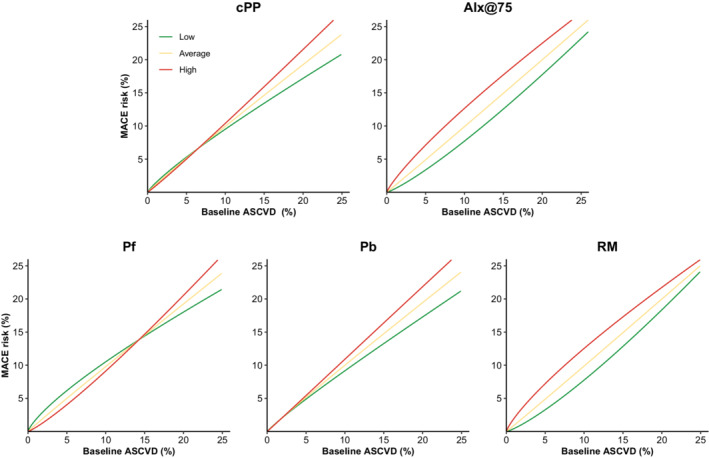
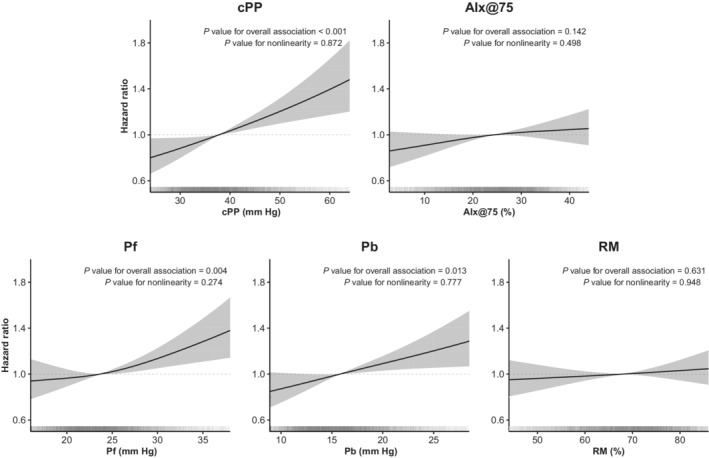
Background Waveform parameters provide approximate data about aortic wave reflection. However, their association with cardiovascular events remains controversial and their role in cardiovascular prediction is unknown. Methods and Results We analyzed participants aged between 40 and 69 from the population-based CARTaGENE cohort. Baseline pulse wave analysis (central pulse pressure, augmentation index) and wave separation analysis (forward pressure, backward pressure, reflection magnitude) parameters were derived from radial artery tonometry. Associations between each parameter and major adverse atherosclerotic events (MACE; cardiovascular death, stroke, myocardial infarction) were obtained using adjusted Cox models. The incremental predictive value of each parameter compared with the 10-year atherosclerotic cardiovascular disease score alone was assessed using hazard ratios, c-index differences, continuous net reclassification indexes, and integrated discrimination indexes. From 17 561 eligible patients, 2315 patients had a MACE during a median follow-up of 10.1 years. Central pulse pressure, forward pressure, and backward pressure, but not augmentation index and reflection magnitude, were significantly associated with MACE after full adjustment. All parameters except forward pressure statistically improved MACE prediction compared with the atherosclerotic cardiovascular disease score alone. The greatest prediction improvement was seen with augmentation index and reflection magnitude but remained small in magnitude. These 2 parameters enhanced predictive performance more strongly in patients with low baseline atherosclerotic cardiovascular disease scores. Up to 5.7% of individuals were reclassified into a different risk stratum by adding waveform parameters to atherosclerotic cardiovascular disease scores. Conclusions Some waveform parameters are independently associated with MACEs in a population-based cohort. Augmentation index and reflection magnitude slightly improve risk prediction, especially in patients at low cardiovascular risk.
背景 波形参数可提供有关主动脉波反射的近似数据。然而,它们与心血管事件的关联仍存在争议,其在心血管预测中的作用尚不清楚。
方法和结果 我们分析了来自基于人群的 CARTaGENE 队列中年龄在 40 至 69 岁的参与者。从桡动脉张力测定中得出基线脉搏波分析(中心脉压、增强指数)和波分离分析(前向压力、后向压力、反射幅度)参数。使用调整后的 Cox 模型获得每个参数与主要不良动脉粥样硬化事件(MACE;心血管死亡、中风、心肌梗死)之间的关联。使用危险比、c 指数差异、连续净重新分类指数和综合鉴别指数评估每个参数与单独的 10 年动脉粥样硬化性心血管疾病评分相比的增量预测价值。在 17561 名合格患者中,2315 名患者在中位随访 10.1 年内发生 MACE。在充分调整后,中心脉压、前向压力和后向压力与 MACE 显著相关,但增强指数和反射幅度则不然。除了前向压力外,所有参数与单独的动脉粥样硬化性心血管疾病评分相比,均显著改善了 MACE 预测。与单独的动脉粥样硬化性心血管疾病评分相比,增强指数和反射幅度的预测改善最大,但幅度仍然较小。这两个参数在基线动脉粥样硬化性心血管疾病评分较低的患者中对预测性能的增强作用更强。通过将波形参数添加到动脉粥样硬化性心血管疾病评分中,多达 5.7%的个体被重新分类到不同的风险分层。
结论 在基于人群的队列中,一些波形参数与 MACE 独立相关。增强指数和反射幅度可略微改善风险预测,尤其是在心血管风险较低的患者中。