Department of Ophthalmology, Affiliated Hospital of Weifang Medical University, Weifang, China.
Department of Ophthalmology, The First Hospital of China Medical University, Shenyang, China.
Front Immunol. 2022 Aug 17;13:943325. doi: 10.3389/fimmu.2022.943325. eCollection 2022.
Diabetic retinopathy (DR) is a common microvascular complication of diabetes mellitus (DM) and is one of the leading causes of blindness among DM patients. However, the molecular mechanism involving DR remains unclear.
A case-control study with age-, sex-, and duration-matched diabetic patients and controls was conducted, which included 15 type 2 DM (T2DM) patients with DR and 15 T2DM patients without DR. Shotgun sequencing and non-targeted metabolomic profiling analyses of fecal samples were performed, and comprehensive bioinformatics analyses were conducted.
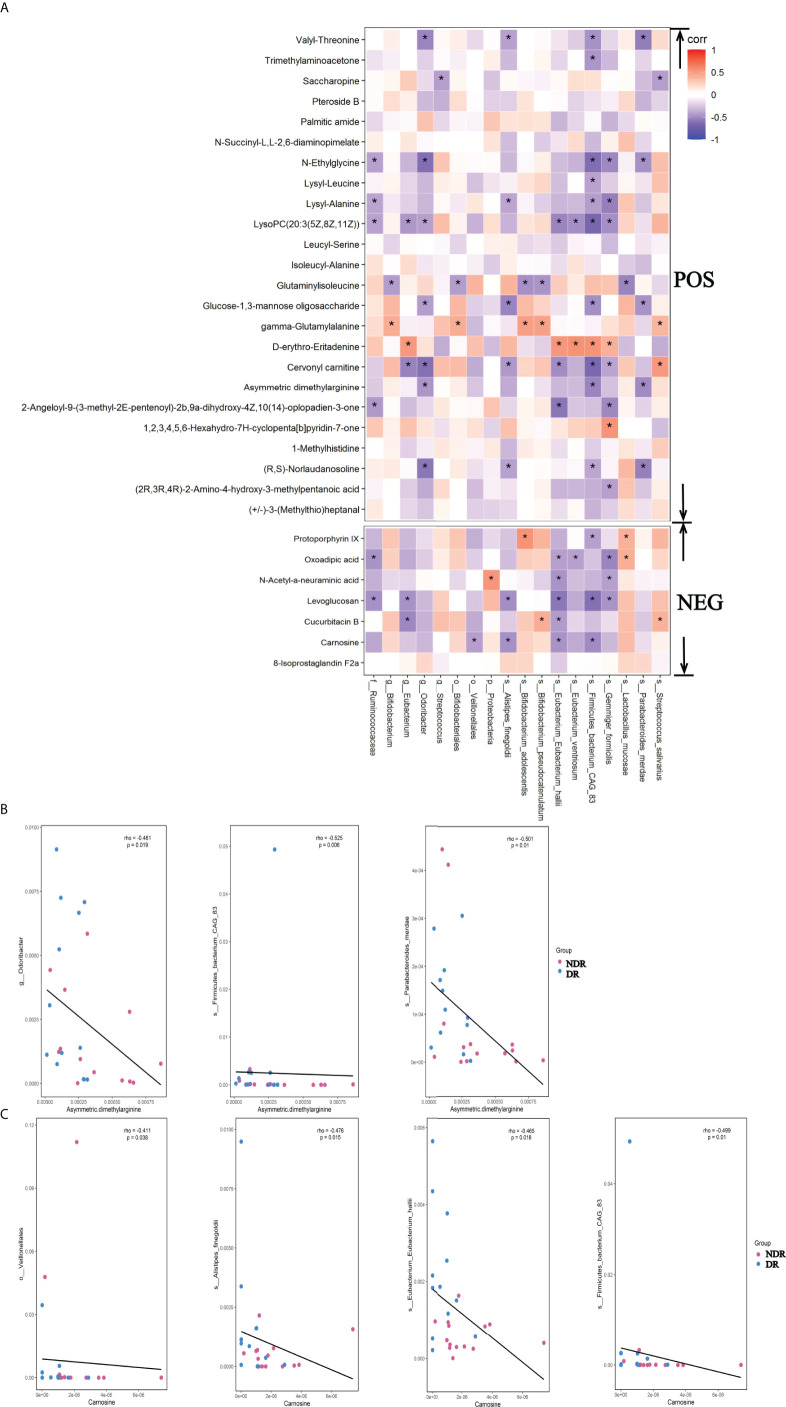
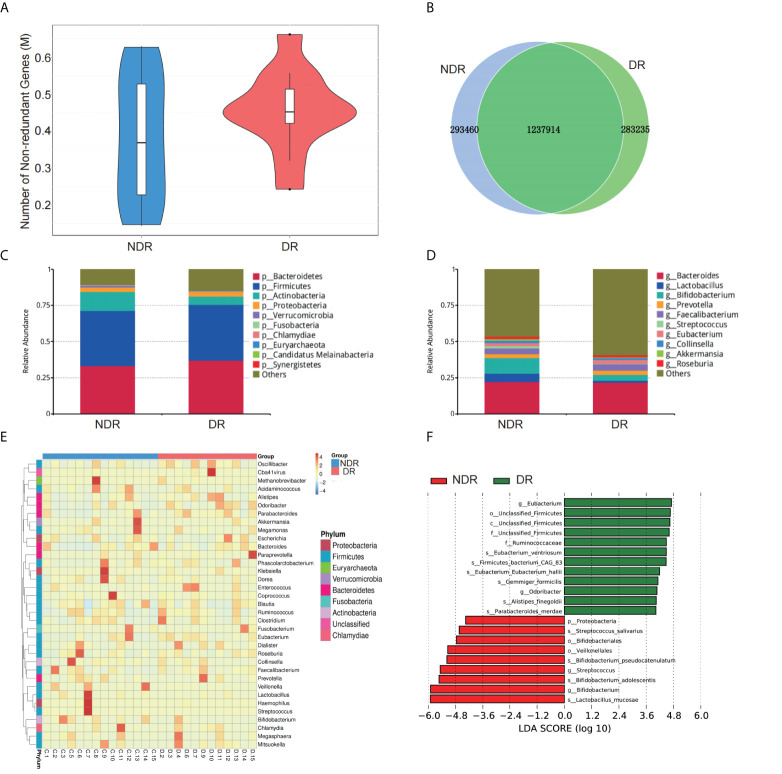
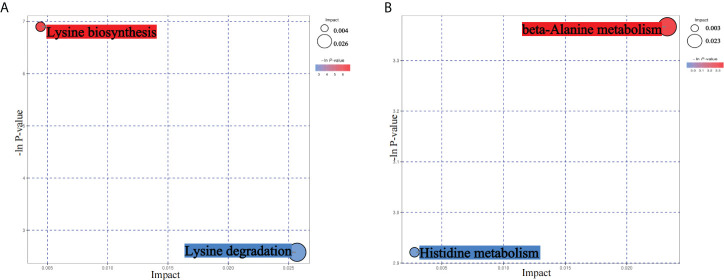
Using metagenomic analyses, we identified 293,460 unique genes in the non-DR group, while that in the DR group was 283,235, and the number of overlapping genes was 1,237,914. Regarding phylum levels, decreased but increased in the DR group when compared with those in the control group. Regarding genus levels, and decreased. Cellular processes, environmental information processes, and metabolism-related pathways were found at higher levels in the gut microbiome of DR patients. Using metabolomic analyses, we found 116 differentially expressed metabolites with a positive ion model and 168 differentially expressed metabolites with a negative ion model between the two groups. Kyoto Encyclopedia of Genes and Genomes annotation revealed six pathways with different levels between DR and diabetic controls, namely, cellular processes, environmental information processing, genetic information processing, human diseases, organismal systems and metabolism. Moreover, lysine biosynthesis and lysine degradation were enriched using a positive model, but histidine metabolism and β-alanine metabolism were enriched using a negative model.
Together, the metagenomic profiles of DR patients indicated different gut microbiota compositions and characteristic fecal metabolic phenotypes in DR patients. Our findings of microbial pathways therefore provided potential etiological and therapeutic targets for DR patients.
糖尿病视网膜病变(DR)是糖尿病(DM)的一种常见微血管并发症,也是 DM 患者失明的主要原因之一。然而,涉及 DR 的分子机制尚不清楚。
进行了一项病例对照研究,纳入了年龄、性别和病程匹配的糖尿病患者和对照者,包括 15 例伴有 DR 的 2 型糖尿病(T2DM)患者和 15 例无 DR 的 T2DM 患者。对粪便样本进行了 shotgun 测序和非靶向代谢组学分析,并进行了综合生物信息学分析。
使用宏基因组分析,我们在非 DR 组中鉴定出 293460 个独特基因,而在 DR 组中则为 283235 个,重叠基因数为 1237914 个。在门水平上,与对照组相比,DR 组中 减少,但 增加。在属水平上, 和 减少。DR 患者肠道微生物组中发现细胞过程、环境信息处理和代谢相关途径的水平更高。使用代谢组学分析,我们在两组之间发现了 116 种正离子模式差异表达代谢物和 168 种负离子模式差异表达代谢物。京都基因与基因组百科全书注释显示,DR 与糖尿病对照组之间有六个不同水平的途径,分别是细胞过程、环境信息处理、遗传信息处理、人类疾病、机体系统和代谢。此外,正模型中富集了赖氨酸生物合成和赖氨酸降解途径,而负模型中则富集了组氨酸代谢和β-丙氨酸代谢途径。
DR 患者的宏基因组谱表明 DR 患者的肠道微生物组成不同,粪便代谢表型特征明显。因此,我们发现的微生物途径为 DR 患者提供了潜在的病因和治疗靶点。