Seeliger Benjamin, Carleo Alfonso, Wendel-Garcia Pedro David, Fuge Jan, Montes-Warboys Ana, Schuchardt Sven, Molina-Molina Maria, Prasse Antje
Department of Respiratory Medicine, Hannover Medical School and Biomedical Research in End-stage and Obstructive Lung Disease (BREATH), German Center for Lung Research (DZL), Hannover, Germany.
Institute of Intensive Care Medicine, University Hospital Zurich, Zurich, Switzerland.
Front Pharmacol. 2022 Aug 17;13:837680. doi: 10.3389/fphar.2022.837680. eCollection 2022.
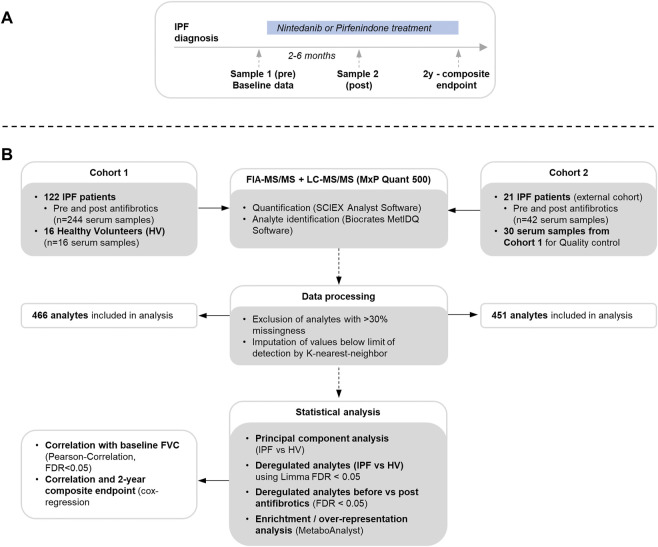
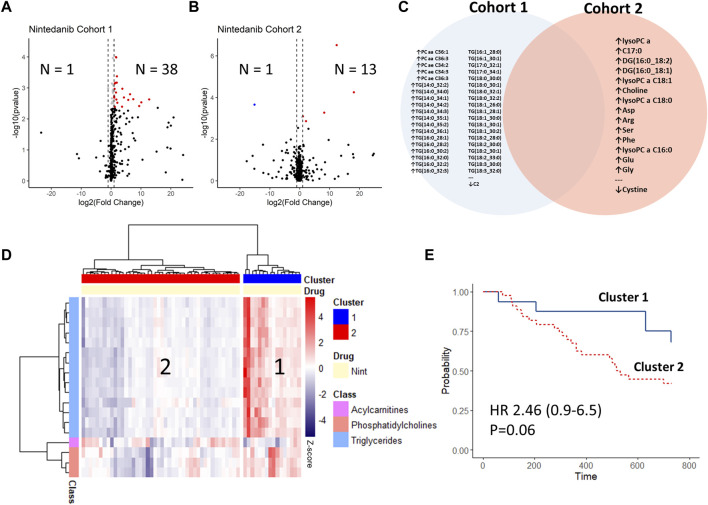
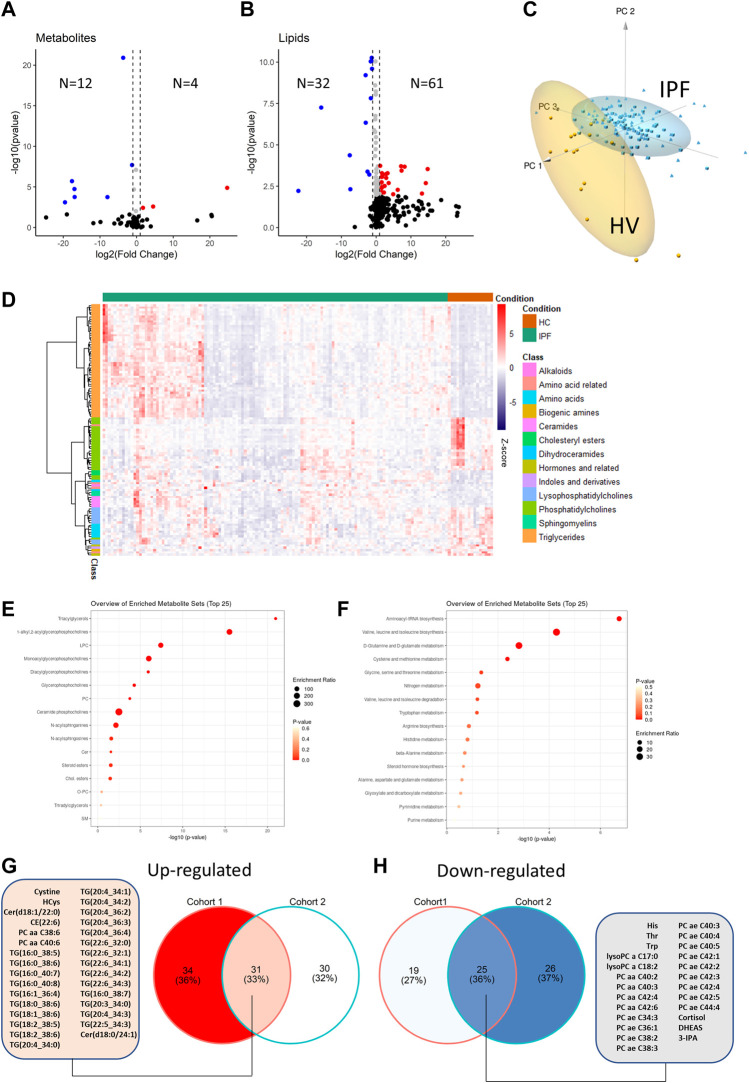
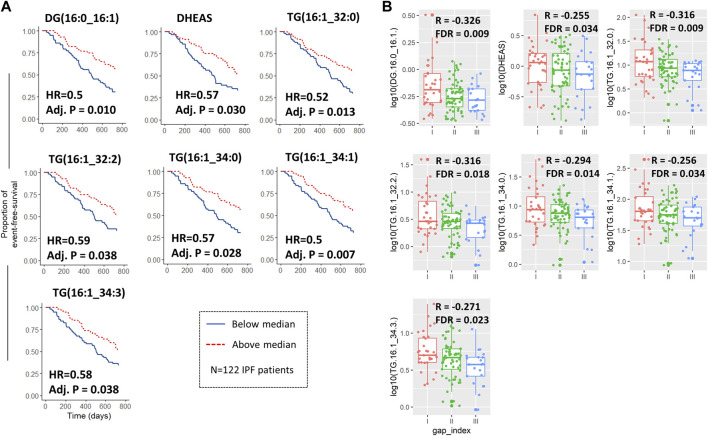
Idiopathic pulmonary fibrosis (IPF) is a progressive disease with significant mortality and morbidity. Approval of antifibrotic therapy has ameliorated disease progression, but therapy response is heterogeneous and to date, adequate biomarkers predicting therapy response are lacking. In recent years metabolomic technology has improved and is broadly applied in cancer research thus enabling its use in other fields. Recently both aberrant metabolic and lipidomic pathways have been described to influence profibrotic responses. We thus aimed to characterize the metabolomic and lipidomic changes between IPF and healthy volunteers (HV) and analyze metabolomic changes following treatment with nintedanib and pirfenidone. We collected serial serum samples from two IPF cohorts from Germany ( = 122) and Spain ( = 21) and additionally age-matched healthy volunteers (n = 16). Metabolomic analysis of 630 metabolites covering 14 small molecule and 12 different lipid classes was carried out using flow injection analysis tandem mass spectrometry for lipids and liquid chromatography tandem mass spectrometry for small molecules. Levels were correlated with survival and disease severity. We identified 109 deregulated analytes in IPF compared to HV in cohort 1 and 112 deregulated analytes in cohort 2. Metabolites which were up-regulated in both cohorts were mainly triglycerides while the main class of down-regulated metabolites were phosphatidylcholines. Only a minority of de-regulated analytes were small molecules. Triglyceride subclasses were inversely correlated with baseline disease severity (GAP-score) and a clinical compound endpoint of lung function decline or death. No changes in the metabolic profiles were observed following treatment with pirfenidone. Nintedanib treatment induced up-regulation of triglycerides and phosphatidylcholines. Patients in whom an increase in these metabolites was observed showed a trend towards better survival using the 2-years composite endpoint (HR 2.46, = 0.06). In conclusion, we report major changes in metabolites in two independent cohorts testing a large number of patients. Specific lipidic metabolite signatures may serve as biomarkers for disease progression or favorable treatment response to nintedanib.
特发性肺纤维化(IPF)是一种具有显著死亡率和发病率的进行性疾病。抗纤维化治疗的获批改善了疾病进展,但治疗反应存在异质性,且迄今为止,仍缺乏预测治疗反应的合适生物标志物。近年来,代谢组学技术有所改进,并广泛应用于癌症研究,从而使其能够应用于其他领域。最近有研究表明,异常的代谢和脂质组学途径均会影响促纤维化反应。因此,我们旨在描述IPF患者与健康志愿者(HV)之间的代谢组学和脂质组学变化,并分析使用尼达尼布和吡非尼酮治疗后的代谢组学变化。我们从德国(n = 122)和西班牙(n = 21)的两个IPF队列以及年龄匹配的健康志愿者(n = 16)中收集了系列血清样本。使用脂质的流动注射分析串联质谱和小分子的液相色谱串联质谱对涵盖14种小分子和12种不同脂质类别的630种代谢物进行了代谢组学分析。各代谢物水平与生存率和疾病严重程度相关。与队列1中的HV相比,我们在IPF中鉴定出109种失调分析物,在队列2中鉴定出112种失调分析物。两个队列中上调的代谢物主要是甘油三酯,而下调代谢物的主要类别是磷脂酰胆碱。只有少数失调分析物是小分子。甘油三酯亚类与基线疾病严重程度(GAP评分)以及肺功能下降或死亡的临床复合终点呈负相关。使用吡非尼酮治疗后未观察到代谢谱的变化。尼达尼布治疗导致甘油三酯和磷脂酰胆碱上调。观察到这些代谢物增加的患者使用2年复合终点显示出更好的生存趋势(HR = 2.46,P = 0.06)。总之,我们在两个独立队列中对大量患者进行测试后报告了代谢物的主要变化。特定的脂质代谢物特征可能作为疾病进展或对尼达尼布良好治疗反应的生物标志物。