Loewner Sebastian, Heene Sebastian, Baroth Timo, Heymann Henrik, Cholewa Fabian, Blume Holger, Blume Cornelia
Institute of Technical Chemistry, Leibniz University Hannover, Hannover, Germany.
Institute of Microelectronic Systems, Leibniz University Hannover, Hannover, Germany.
Front Bioeng Biotechnol. 2022 Aug 17;10:896719. doi: 10.3389/fbioe.2022.896719. eCollection 2022.
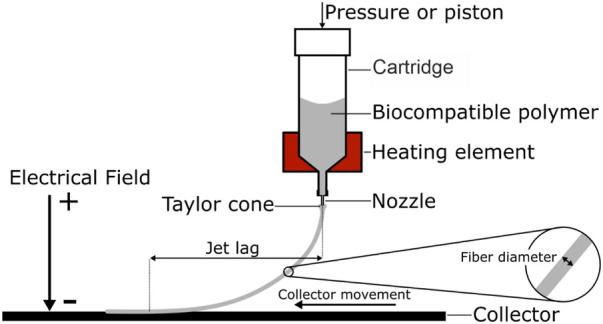
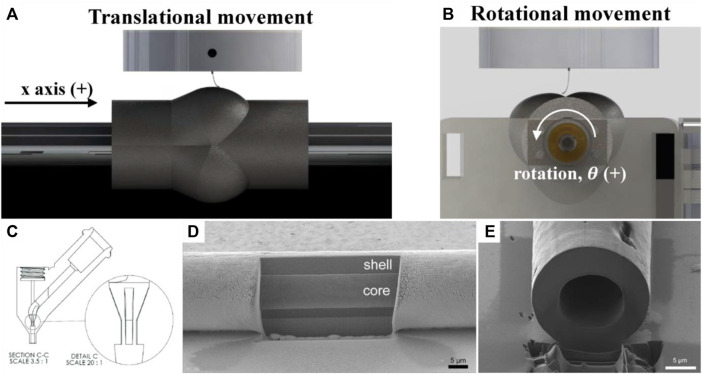
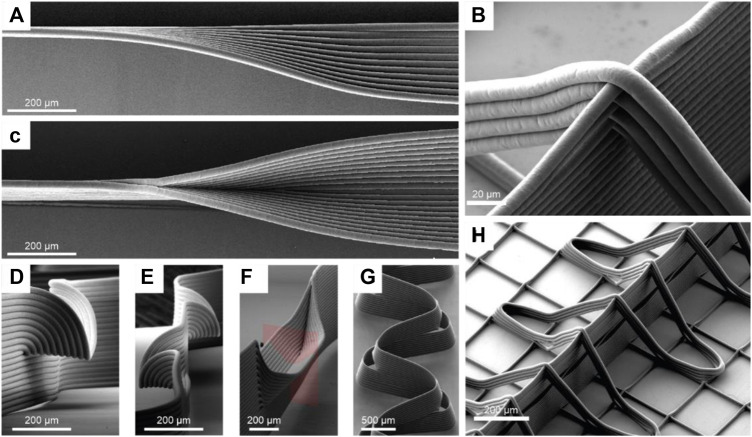
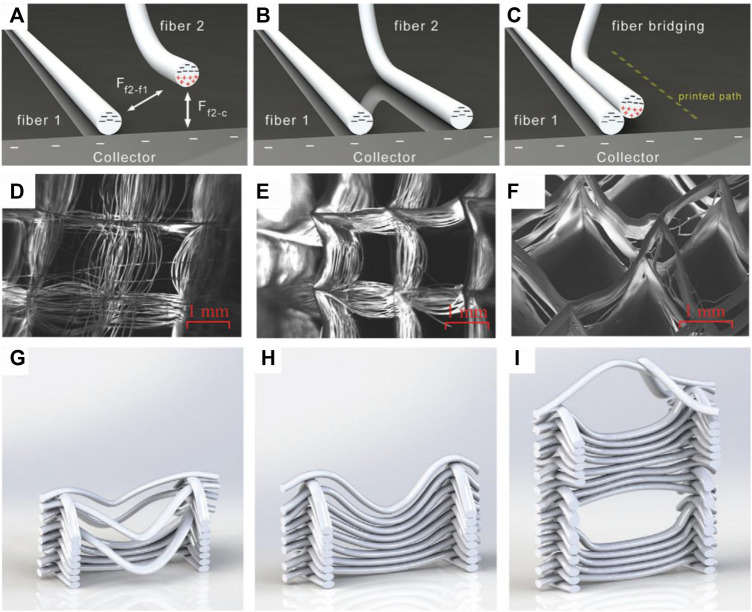
Melt electro writing (MEW) is a high-resolution 3D printing technique that combines elements of electro-hydrodynamic fiber attraction and melts extrusion. The ability to precisely deposit micro- to nanometer strands of biocompatible polymers in a layer-by-layer fashion makes MEW a promising scaffold fabrication method for all kinds of tissue engineering applications. This review describes possibilities to optimize multi-parametric MEW processes for precise fiber deposition over multiple layers and prevent printing defects. Printing protocols for nonlinear scaffolds structures, concrete MEW scaffold pore geometries and printable biocompatible materials for MEW are introduced. The review discusses approaches to combining MEW with other fabrication techniques with the purpose to generate advanced scaffolds structures. The outlined MEW printer modifications enable customizable collector shapes or sacrificial materials for non-planar fiber deposition and nozzle adjustments allow redesigned fiber properties for specific applications. Altogether, MEW opens a new chapter of scaffold design by 3D printing.
熔体静电写入(MEW)是一种高分辨率3D打印技术,它结合了电流体动力学纤维吸引和熔体挤出的元素。能够以逐层方式精确沉积微米到纳米级的生物相容性聚合物细丝,使得MEW成为用于各种组织工程应用的有前途的支架制造方法。本文综述描述了优化多参数MEW工艺以在多层上精确沉积纤维并防止打印缺陷的可能性。介绍了非线性支架结构的打印方案、具体的MEW支架孔隙几何形状以及用于MEW的可打印生物相容性材料。本文综述讨论了将MEW与其他制造技术相结合以生成先进支架结构的方法。所概述的MEW打印机改进能够实现可定制的收集器形状或用于非平面纤维沉积的牺牲材料,而喷嘴调整则允许针对特定应用重新设计纤维特性。总之,MEW开启了通过3D打印进行支架设计的新篇章。