Pediatrics, Affiliated Hospital of Jiangsu University, Zhenjiang, China.
School of Medicine, Jiangsu University, Zhenjiang, China.
Front Cell Infect Microbiol. 2022 Aug 19;12:945851. doi: 10.3389/fcimb.2022.945851. eCollection 2022.
The brain development of preterm infants is easily affected by various adverse extrauterine factors and complications, resulting in abnormal neurological and cognitive development. Recent studies have found that there is a significant correlation between intestinal microbial changes and cognitive behavior. Nevertheless, the correlation between the cognitive impairment and abnormal changes of intestinal microflora in the preterm newborn has been rarely elucidated.
To analyze the differences of fecal intestinal flora, short chain fatty acids (SCFAs) and microbiota-gut-brain axis (MGBA)-related serum factors between preterm birth with and without cognitive impairment.
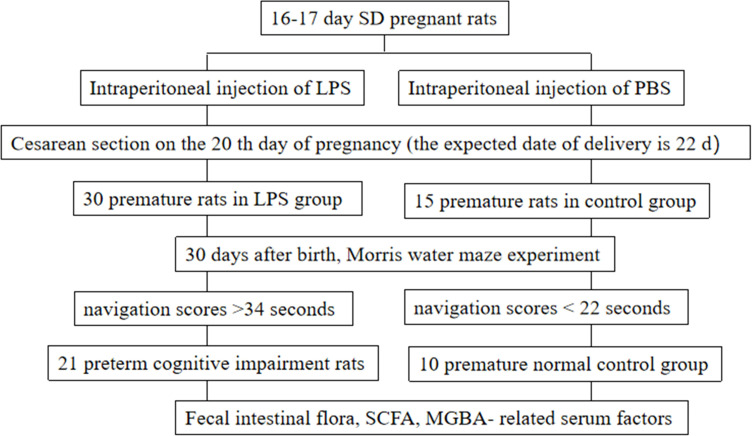
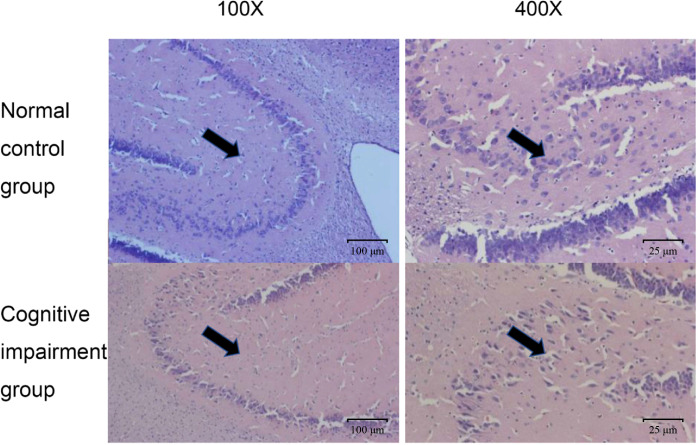
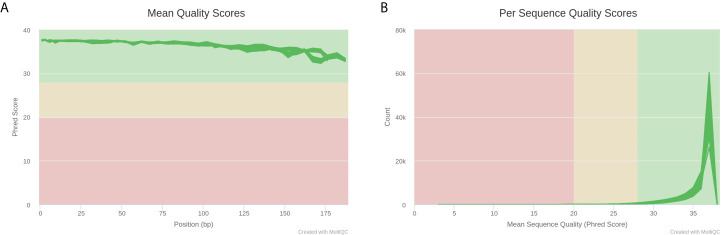
Healthy female rats (body weight 410 ± 40 g) of 16-17 days of gestation were selected for the establishment of preterm cognitive impairment model and screened by Morris water maze navigation experiments. The pathological change of rat hippocampus was confirmed by HE staining. The abundance of fecal intestinal microflora was determined by 16sRNA sequencing, while the contents of fecal SCFAs were examined by gas chromatography.
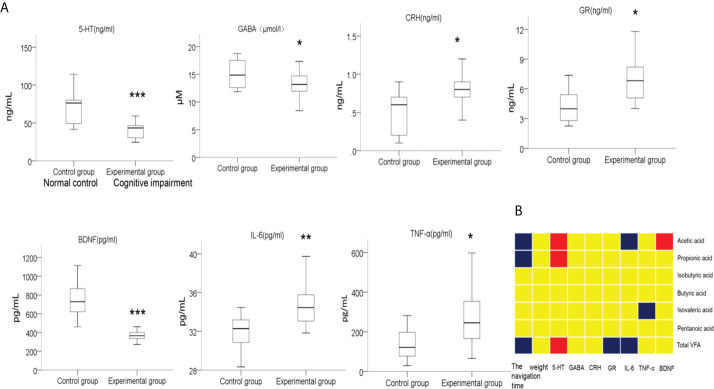
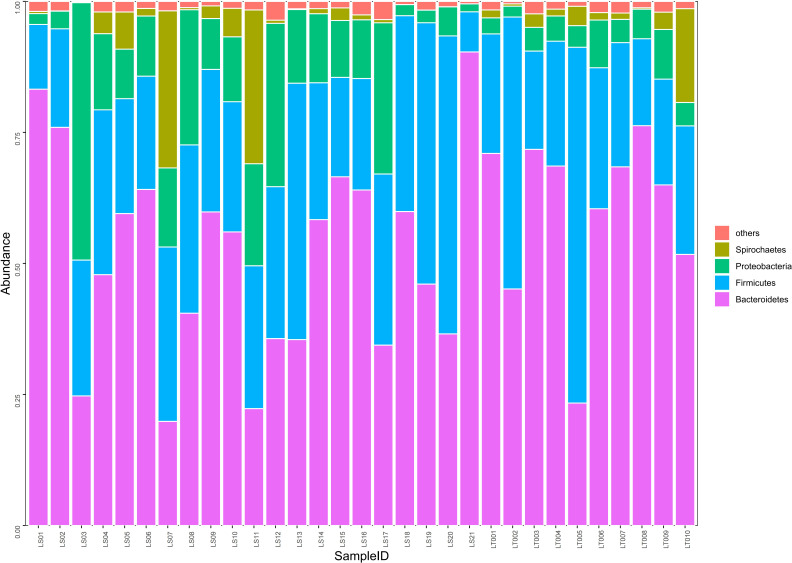
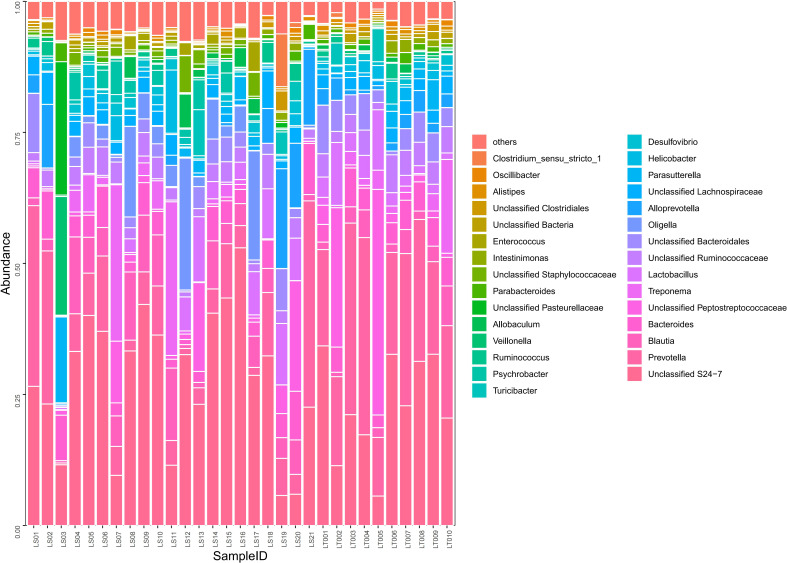
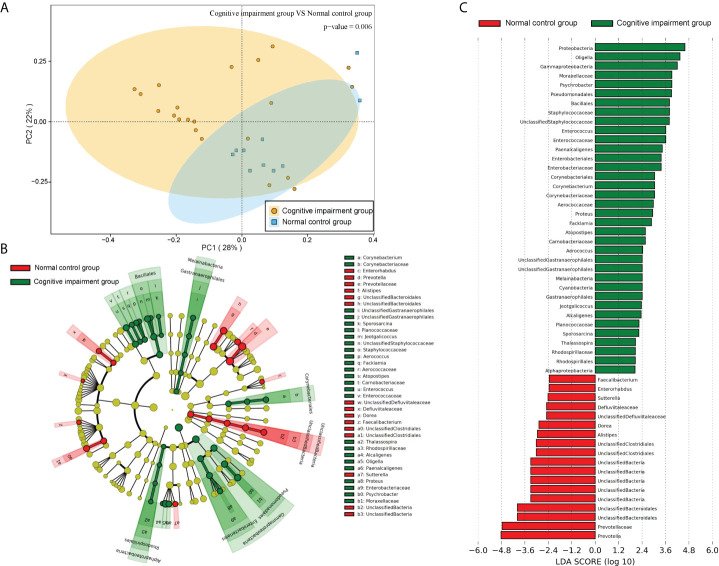
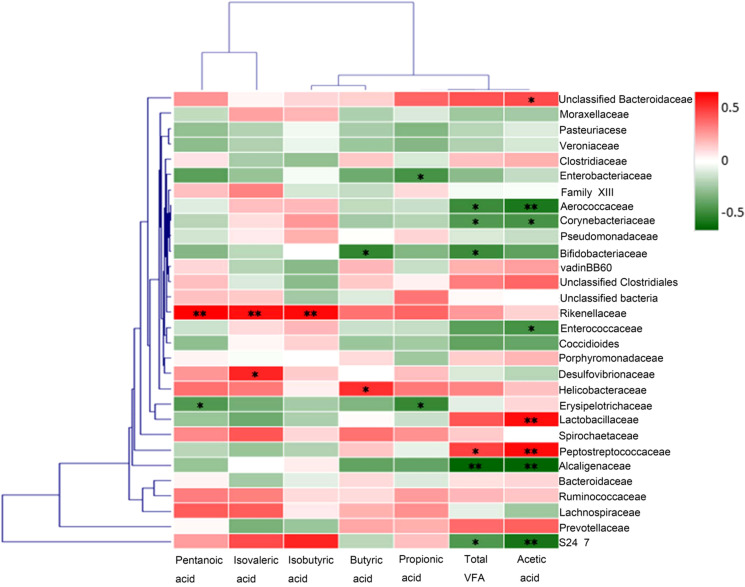
Compared with the control group, the cognitive impairment group had decreased abundance and diversity of intestinal microflora and increased abundance of at the level of phylum. While the abundances of , , , and decreased significantly at the level of order, family, and genus, the abundances of , , , and increased significantly. Moreover, the levels of total SCFAs and acetic acid in the disease group were significantly lower. The fecal abundance of acetic acid was positively correlated with that of or , and negatively correlated with that of , and in disease rats. Furthermore, cognitive impairment caused significantly decreased levels of 5-HT, GABA, and BDNF, and increased levels of GR, CRH, IL-6, and TNF-α in rat blood.
Alterations in intestinal microflora structure and the abundances of SCFAs contributed substantially to the cognitive impairment in preterm rats, which was associated with significant changes in MGBA-related soluble factors.
早产儿的大脑发育容易受到各种不良的宫外因素和并发症的影响,导致神经和认知发育异常。最近的研究发现,肠道微生物的变化与认知行为之间存在显著的相关性。然而,早产儿肠道微生物菌群的异常变化与认知障碍之间的相关性尚未得到充分阐明。
分析早产儿伴或不伴认知障碍时粪便肠道菌群、短链脂肪酸(SCFAs)和微生物群-肠-脑轴(MGBA)相关血清因子的差异。
选择 16-17 日龄、体重为 410±40g 的健康雌性大鼠建立早产儿认知障碍模型,并通过 Morris 水迷宫导航实验进行筛选。通过 HE 染色证实大鼠海马的病理变化。通过 16sRNA 测序确定粪便肠道微生物群落的丰度,通过气相色谱法检测粪便 SCFAs 的含量。
与对照组相比,认知障碍组肠道微生物群落的丰度和多样性降低,菌门水平的 增加。而目、科和属水平的 、 、 、 、 、 、 和 丰度显著降低, 、 、 、 、 、 和 丰度显著增加。此外,疾病组总 SCFAs 和乙酸水平显著降低。疾病大鼠粪便中乙酸的丰度与 或 的丰度呈正相关,与 或 的丰度呈负相关。此外,认知障碍导致大鼠血液中 5-HT、GABA 和 BDNF 水平显著降低,GR、CRH、IL-6 和 TNF-α水平显著升高。
肠道微生物群落结构和 SCFAs 丰度的改变对早产儿认知障碍有重要贡献,与 MGBA 相关可溶性因子的显著变化有关。