Geriatric Neuroscience Center, The Affiliated Brain Hospital of Guangzhou Medical University, Guangzhou, China.
Guangdong Engineering Technology Research Center for Translational Medicine of Mental Disorders, Guangzhou, China.
J Neuroinflammation. 2022 Sep 6;19(1):218. doi: 10.1186/s12974-022-02582-z.
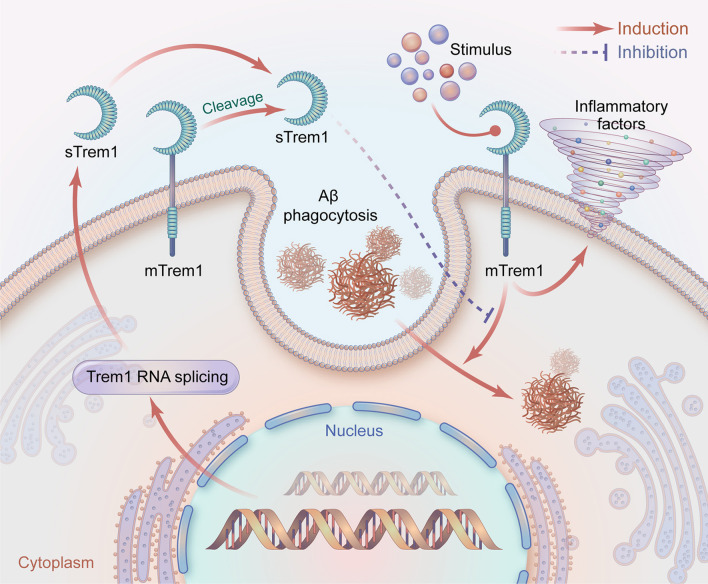
Triggering receptor expressed on myeloid cell 1 (Trem1) is an important regulator of cellular inflammatory responses. Neuroinflammation is a common thread across various neurological diseases. Soluble Trem1 (sTrem1) in plasma is associated with the development of central nervous system disorders. However, the extent of any causative effects of plasma sTrem1 on the risk of these disorders is still unclear.
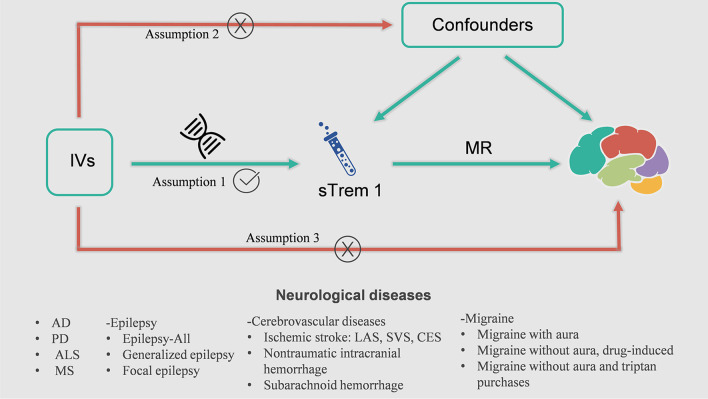
Genetic variants for plasma sTrem1 levels were selected as instrumental variables. Summary-level statistics of neurological disorders, including Alzheimer's disease (AD), Parkinson's disease (PD), amyotrophic lateral sclerosis (ALS), multiple sclerosis (MS), epilepsy, cerebrovascular diseases, and migraine were collected from genome-wide association studies (GWASs). Whether plasma sTrem1 was causally associated with neurological disorders was assessed using a two-sample Mendelian randomization (MR) analysis, with false discovery rate (FDR)-adjusted methods applied.
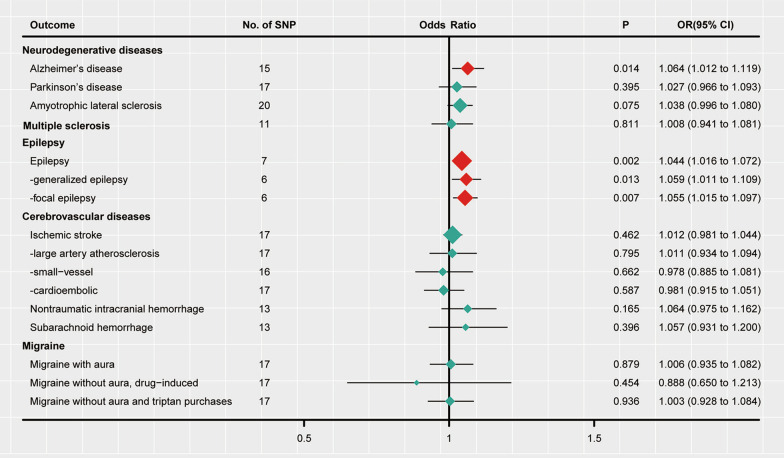
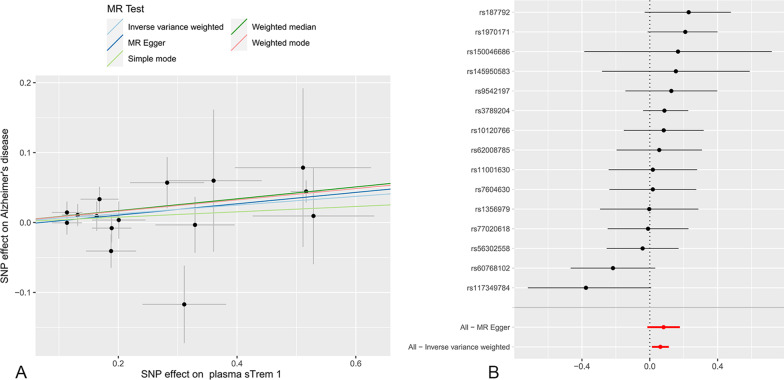
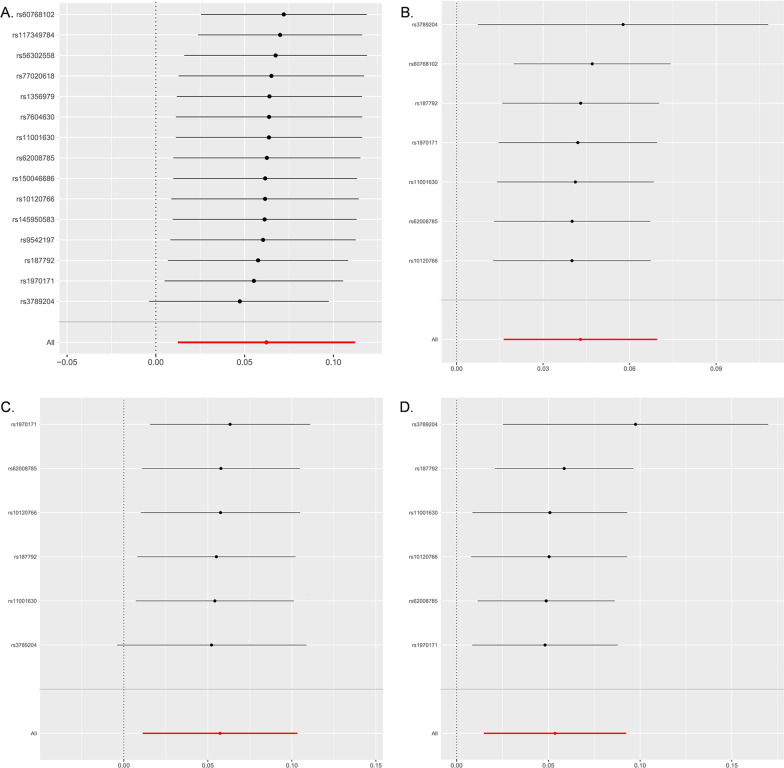
We inferred suggestive association of higher plasma sTrem1 with the risk of AD (odds ratio [OR] per one standard deviation [SD] increase = 1.064, 95% CI 1.012-1.119, P = 0.014, P = 0.056). Moreover, there was significant association between plasma sTrem1 level and the risk of epilepsy (OR per one SD increase = 1.044, 95% CI 1.016-1.072, P = 0.002, P = 0.032), with a modest statistical power of 41%. Null associations were found for plasma sTrem1 with other neurological diseases and their subtypes.
Taken together, this study indicates suggestive association between plasma sTrem1 and AD. Moreover, higher plasma sTrem1 was associated with the increased risk of epilepsy. The findings support the hypothesis that sTrem1 may be a vital element on the causal pathway to AD and epilepsy.
髓样细胞触发受体 1(Trem1)是细胞炎症反应的重要调节因子。神经炎症是各种神经疾病的共同特征。血浆可溶性 Trem1(sTrem1)与中枢神经系统疾病的发展有关。然而,血浆 sTrem1 对这些疾病风险的任何因果影响的程度仍不清楚。
选择血浆 sTrem1 水平的遗传变异作为工具变量。从全基因组关联研究(GWAS)中收集了包括阿尔茨海默病(AD)、帕金森病(PD)、肌萎缩侧索硬化症(ALS)、多发性硬化症(MS)、癫痫、脑血管疾病和偏头痛在内的神经系统疾病的汇总统计数据。使用两样本 Mendelian 随机化(MR)分析评估了血浆 sTrem1 是否与神经系统疾病存在因果关系,并应用了错误发现率(FDR)调整方法。
我们推断出较高的血浆 sTrem1 与 AD 风险之间存在提示性关联(每增加一个标准差的比值比 [OR] = 1.064,95%置信区间 1.012-1.119,P = 0.014,P = 0.056)。此外,血浆 sTrem1 水平与癫痫风险之间存在显著关联(每增加一个标准差的 OR = 1.044,95%置信区间 1.016-1.072,P = 0.002,P = 0.032),统计效能为 41%。血浆 sTrem1 与其他神经系统疾病及其亚型之间没有关联。
总的来说,这项研究表明血浆 sTrem1 与 AD 之间存在提示性关联。此外,较高的血浆 sTrem1 与癫痫风险增加有关。这些发现支持了 sTrem1 可能是 AD 和癫痫因果途径上重要因素的假说。