Department of Neurology, Ecumenic Hainich Hospital gGmbH, Pfafferode 102, 99974, Mühlhausen, Germany.
Department of Neurology, Neuroimmunology Section, University Medical Centre of Rostock, Gehlsheimer Str. 20, 18147, Rostock, Germany.
Sci Rep. 2022 Sep 7;12(1):15147. doi: 10.1038/s41598-022-18912-3.
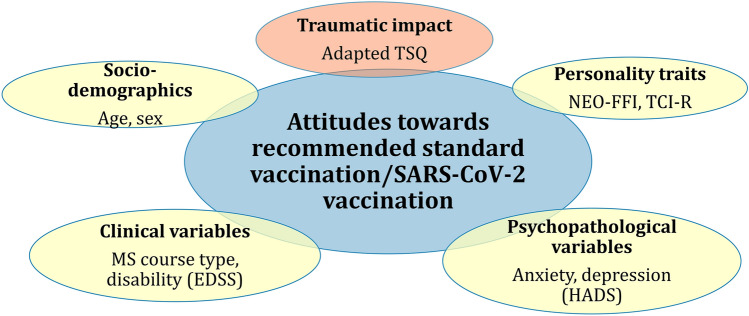
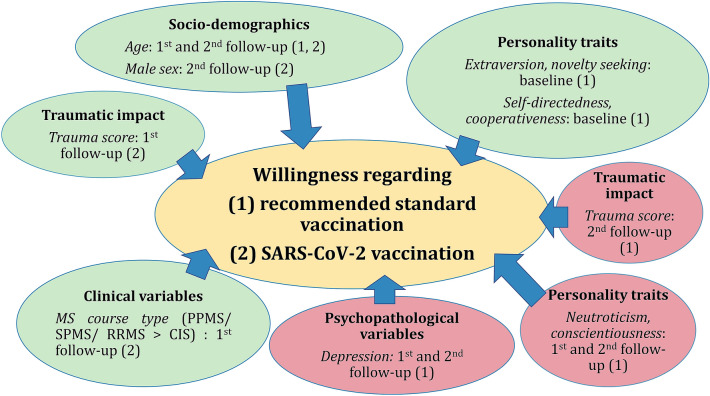
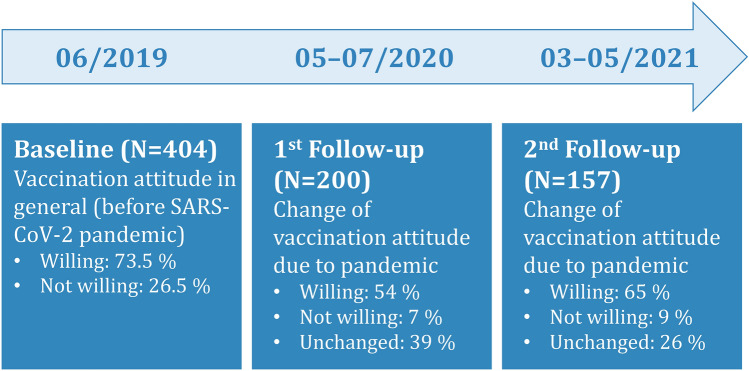
Vaccination is a key strategy for controlling the SARS-CoV-2 pandemic. Acceptance of SARS-CoV-2 vaccines by chronically ill patients, such as multiple sclerosis (MS) patients, plays an important role in prevention of complicated disease course. This longitudinal, prospective, multi-centre-study of German MS-patients aimed to detect socio-demographic, clinical, or psychological determinants of attitudes towards standard vaccines, SARS-CoV-2 vaccines, and governmental measures before/during the pandemic. Exactly 404 MS-patients were investigated by standardized questionnaires and structured interviews on socio-demographic, clinical-neurological, and psychological characteristics, vaccination status, and vaccination from June 2019. Data on SARS-CoV-2 vaccination willingness were collected in two follow-up assessments (1st: June to July 2020, before SARS-CoV-2 vaccine availability, N = 200; 2nd: March to May 2021, after SARS-CoV-2 vaccine availability, N = 157). Age, sex, MS course type, depression, and personality characteristics (Extraversion, Novelty seeking, Self-directedness, and Cooperativeness) were significantly associated with vaccination willingness. Although the majority of MS-patients showed SARS-CoV-2 vaccination willingness at both follow-ups (1st: 60%, 2nd: 61%), a substantial proportion had concerns and were undecided or opposed to vaccination. Socio-demographic variables like age and sex, psychopathological status, and various personality characteristics might influence vaccination willingness and should be considered when discussing with MS-patients about SARS-CoV-2 vaccination.
接种疫苗是控制 SARS-CoV-2 大流行的关键策略。慢性病患者(如多发性硬化症 [MS] 患者)对接种 SARS-CoV-2 疫苗的接受程度,对于预防疾病的复杂进程起着重要作用。本研究是一项针对德国 MS 患者的纵向、前瞻性、多中心研究,旨在发现对标准疫苗、SARS-CoV-2 疫苗和大流行期间政府措施的态度的社会人口学、临床或心理决定因素。在 2019 年 6 月,我们使用标准化问卷和关于社会人口学、临床神经学和心理特征、疫苗接种状况和疫苗接种的结构访谈,对恰好 404 名 MS 患者进行了调查。在两次随访评估中(1 次:2020 年 6 月至 7 月,在 SARS-CoV-2 疫苗可获得之前,N=200;2 次:2021 年 3 月至 5 月,在 SARS-CoV-2 疫苗可获得之后,N=157),我们收集了 SARS-CoV-2 疫苗接种意愿的数据。年龄、性别、MS 病程类型、抑郁和人格特征(外向性、寻求新奇、自我导向和合作性)与接种意愿显著相关。尽管大多数 MS 患者在两次随访中都表现出 SARS-CoV-2 疫苗接种意愿(第 1 次:60%,第 2 次:61%),但仍有相当一部分患者表示担忧,对疫苗接种犹豫不决或持反对意见。社会人口学变量,如年龄和性别、心理病理状况以及各种人格特征,可能会影响接种意愿,在与 MS 患者讨论 SARS-CoV-2 疫苗接种时应加以考虑。