Yang Yicheng, Zeng Qixian, Gao Jianing, Yang Beilan, Zhou Jingjing, Li Ke, Li Li, Wang Anxin, Li Xin, Liu Zhihong, Luo Qin, Zhao Zhihui, Liu Bingyang, Xue Jing, Jiang Xue, Konerman Matthew C, Zheng Lemin, Xiong Changming
Center of Pulmonary Vascular Disease, State Key Laboratory of Cardiovascular Disease, Fuwai Hospital, National Center for Cardiovascular Disease, Chinese Academy of Medical Sciences and Peking Union Medical College, Beijing, China.
The Institute of Cardiovascular Sciences and Institute of Systems Biomedicine, School of Basic Medical Sciences, Key Laboratory of Molecular Cardiovascular Sciences of Ministry of Education, NHC Key Laboratory of Cardiovascular Molecular Biology and Regulatory Peptides, Health Science Center, Peking University, Beijing, China.
Eur Heart J Open. 2022 Mar 29;2(5):oeac021. doi: 10.1093/ehjopen/oeac021. eCollection 2022 Sep.
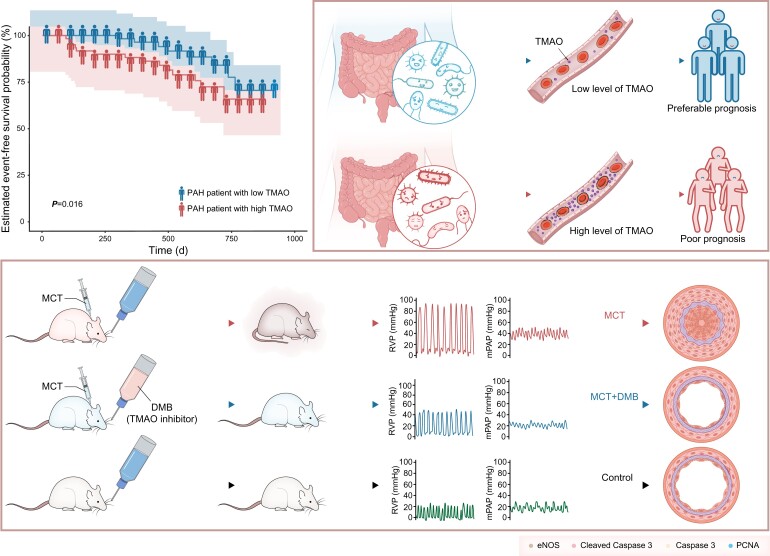
We aimed to examine the hypothesis that circulating trimethylamine-N-oxide (TMAO) levels serve as a biomarker in pulmonary arterial hypertension (PAH), and to determine whether 3,3-dimethyl-1-butanol (DMB), a TMAO inhibitor, exerted a protective effect in monocrotaline (MCT)-induced PAH rats.
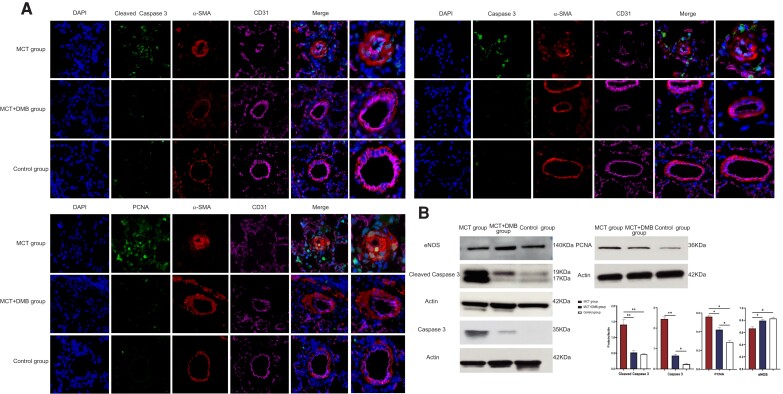
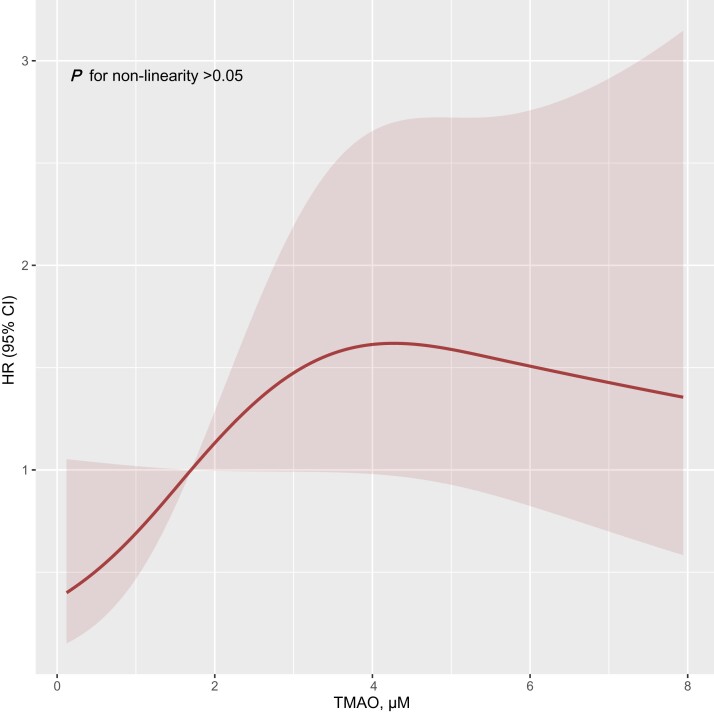
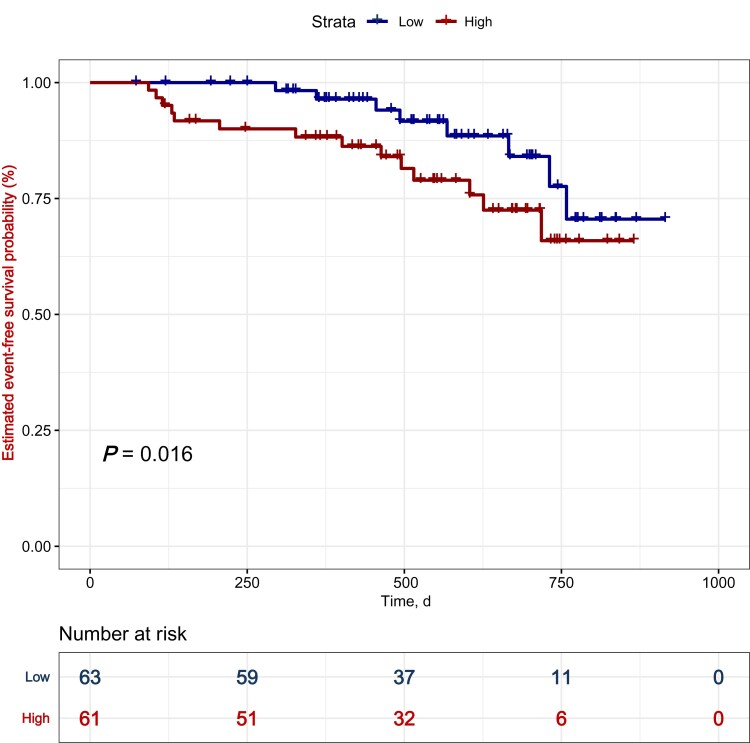
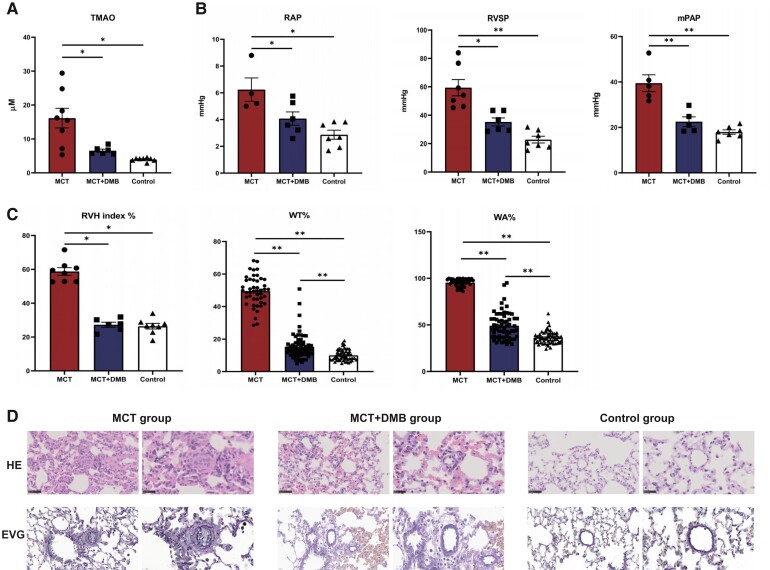
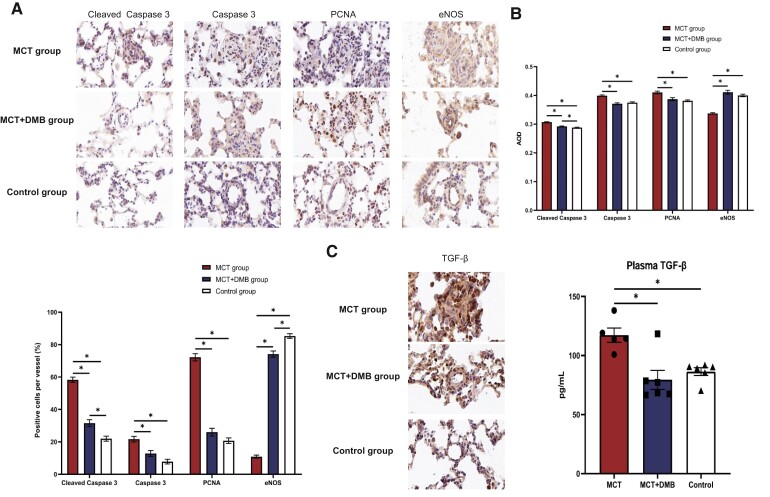
In-patients with PAH were prospectively recruited from the Fuwai Hospital. Fasting blood samples were obtained to assess the TMAO levels and other laboratory values during the initial and second hospitalization. In a MCT-induced PAH rat, a normal diet and water supplemented with or without 1% DMB were administered for 4 weeks. The TMAO levels, haemodynamic examinations, changes in organ-tissue, and molecular levels were evaluated. In total, 124 patients with PAH were enrolled in this study. High TMAO levels were correlated with increased disease severity and poor prognosis even after adjusting for confounders. The TMAO levels in the rats decreased in the MCT + DMB group, accompanied by improved haemodynamic parameters, decreased right ventricular hypertrophy, and amelioration of pulmonary vascular remodelling. The decrease in abnormal apoptosis, excessive cell proliferation, transforming growth factor-β expression, and restoration of endothelial nitric oxide synthase after DMB treatment further explained the amelioration of PAH.
Increased TMAO levels were associated with poor prognosis in patients with PAH, and DMB played a protective effect in MCT-induced PAH rat.
我们旨在检验循环中的氧化三甲胺(TMAO)水平作为肺动脉高压(PAH)生物标志物的假说,并确定TMAO抑制剂3,3-二甲基-1-丁醇(DMB)是否对野百合碱(MCT)诱导的PAH大鼠具有保护作用。
从阜外医院前瞻性招募PAH住院患者。在初次和第二次住院期间采集空腹血样,以评估TMAO水平和其他实验室指标。在MCT诱导的PAH大鼠中,给予正常饮食和补充或不补充1% DMB的水,持续4周。评估TMAO水平、血流动力学检查、器官组织变化和分子水平。本研究共纳入124例PAH患者。即使在调整混杂因素后,高TMAO水平仍与疾病严重程度增加和预后不良相关。MCT + DMB组大鼠的TMAO水平降低,同时血流动力学参数改善、右心室肥厚减轻、肺血管重塑改善。DMB治疗后异常凋亡减少、细胞过度增殖减少、转化生长因子-β表达降低以及内皮型一氧化氮合酶恢复,进一步解释了PAH的改善情况。
PAH患者TMAO水平升高与预后不良相关,DMB对MCT诱导的PAH大鼠具有保护作用。