Jung Jaewoo, Chung Hyun Young, Ko Youngtak, Moon Inkyeong, Suh Yeon Jee, Kim Kitae
Global Ocean Research Center, Korea Institute of Ocean Science and Technology, Busan, South Korea.
Korea Polar Research Institute, Incheon, South Korea.
Front Microbiol. 2022 Aug 22;13:980078. doi: 10.3389/fmicb.2022.980078. eCollection 2022.
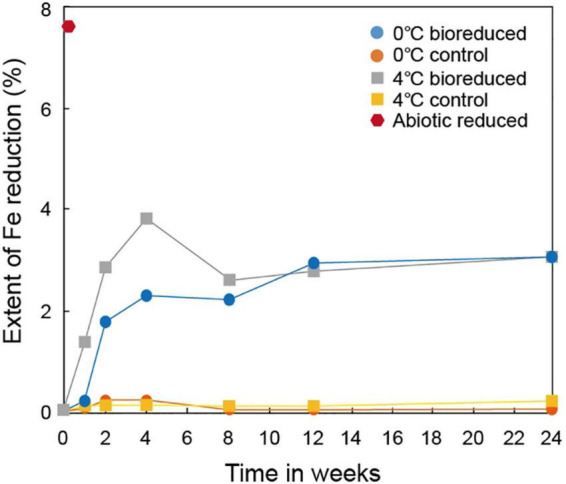
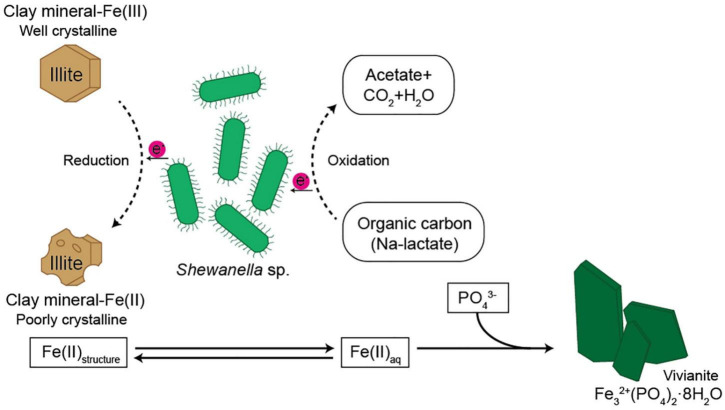
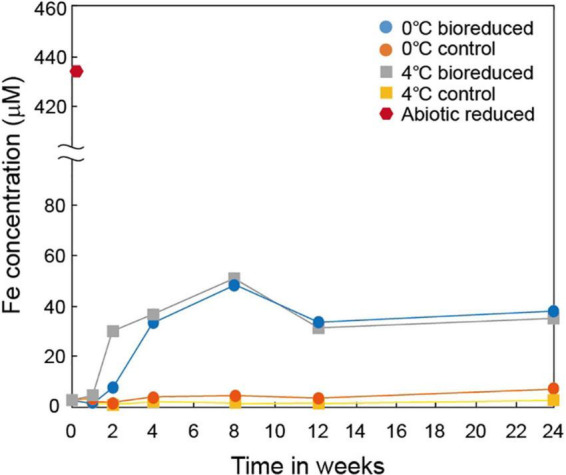
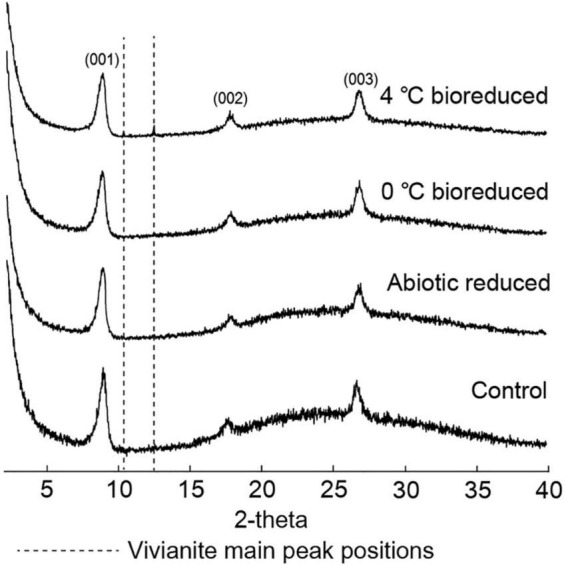
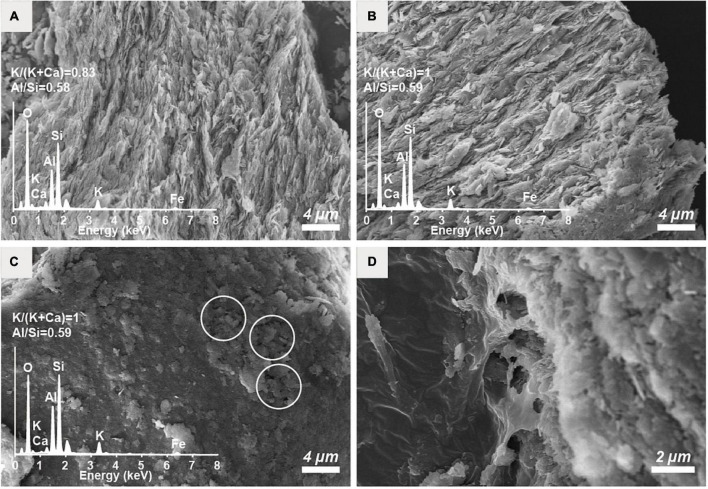
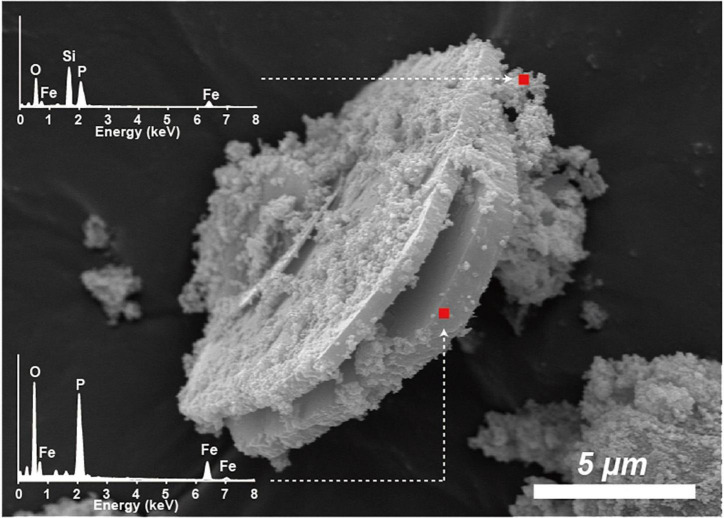
Biotic and abiotic Fe(III) reduction of clay minerals (illite IMt-1) under low-temperature (0 and 4°C, pH 6) was studied to evaluate the effects of bioalteration on soil properties including clay structure and elemental composition. The extent of Fe reduction in bioreduced samples (∼3.8 % at 4°C and ∼3.1 % at 0°C) was lower than abiotic reduction (∼7.6 %) using dithionite as a strong reductant. However, variations in the illite crystallinity value of bioreduced samples (°Δ2θ = 0.580-0.625) were greater than those of abiotic reduced samples (°Δ2θ = 0.580-0.601), indicating that modification of crystal structure is unlikely to have occurred in abiotic reduction. Moreover, precipitation of secondary-phase minerals such as vivianite [Fe (PO) 8HO] and nano-sized biogenic silica were shown as evidence of reductive dissolution of Fe-bearing minerals that is observed only in a bioreduced setting. Our observation of a previously undescribed microbe-mineral interaction at low-temperature suggests a significant implication for the microbially mediated mineral alteration in Arctic permafrost, deep sea sediments, and glaciated systems resulting in the release of bioavailable Fe with an impact on low-temperature biogeochemical cycles.
研究了低温(0和4°C,pH 6)下粘土矿物(伊利石IMt-1)的生物和非生物铁(III)还原,以评估生物蚀变对包括粘土结构和元素组成在内的土壤性质的影响。使用连二亚硫酸盐作为强还原剂时,生物还原样品中的铁还原程度(4°C时约为3.8%,0°C时约为3.1%)低于非生物还原(约7.6%)。然而,生物还原样品的伊利石结晶度值变化(°Δ2θ = 0.580 - 0.625)大于非生物还原样品(°Δ2θ = 0.580 - 0.601),这表明非生物还原中晶体结构不太可能发生改变。此外,次生相矿物如蓝铁矿[Fe (PO) 8HO]和纳米级生物源二氧化硅的沉淀被证明是含铁矿物还原溶解的证据,这仅在生物还原环境中观察到。我们对低温下以前未描述的微生物 - 矿物相互作用的观察表明,这对北极永久冻土、深海沉积物和冰川系统中微生物介导的矿物蚀变具有重要意义,导致生物可利用铁的释放,影响低温生物地球化学循环。