• 文献检索
  • 文档翻译
  • 深度研究
  • 学术资讯
  • Suppr Zotero 插件Zotero 插件
  • 邀请有礼
  • 套餐&价格
  • 历史记录
应用&插件
Suppr Zotero 插件Zotero 插件浏览器插件Mac 客户端Windows 客户端微信小程序
定价
高级版会员购买积分包购买API积分包
服务
文献检索文档翻译深度研究API 文档MCP 服务
关于我们
关于 Suppr公司介绍联系我们用户协议隐私条款
关注我们

Suppr 超能文献

核心技术专利:CN118964589B侵权必究
粤ICP备2023148730 号-1Suppr @ 2026

文献检索

告别复杂PubMed语法,用中文像聊天一样搜索,搜遍4000万医学文献。AI智能推荐,让科研检索更轻松。

立即免费搜索

文件翻译

保留排版,准确专业,支持PDF/Word/PPT等文件格式,支持 12+语言互译。

免费翻译文档

深度研究

AI帮你快速写综述,25分钟生成高质量综述,智能提取关键信息,辅助科研写作。

立即免费体验

将快速诊断检测添加到基于社区的疟疾治疗方案中。

Adding rapid diagnostic tests to community-based programmes for treating malaria.

机构信息

Division of Clinical Pharmacology, Department of Medicine, University of Cape Town, Cape Town, South Africa.

Cochrane South Africa, South African Medical Research Council, Cape Town, South Africa.

出版信息

Cochrane Database Syst Rev. 2022 Sep 8;9(9):CD009527. doi: 10.1002/14651858.CD009527.pub3.

DOI:10.1002/14651858.CD009527.pub3
PMID:36073718
原文链接:https://pmc.ncbi.nlm.nih.gov/articles/PMC9453882/
Abstract

BACKGROUND

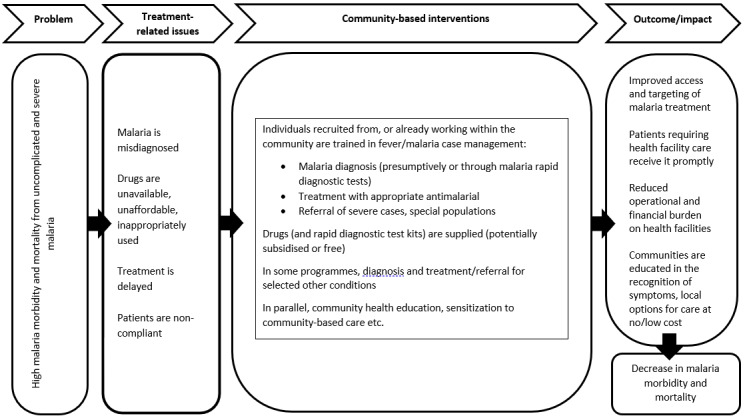
The World Health Organization (WHO) recommends parasitological testing of all suspected malaria cases using malaria rapid diagnostic tests (mRDTs) or microscopy prior to treatment. Some governments have extended this responsibility to community health workers (CHWs) to reduce malaria morbidity and mortality through prompt and appropriate treatment. This is an update of a Cochrane Review first published in 2013.

OBJECTIVES

To evaluate community-based management strategies for treating malaria or fever that incorporate both a definitive diagnosis with an mRDT and appropriate antimalarial treatment.

SEARCH METHODS

We searched CENTRAL, MEDLINE, Embase, five other databases, and three trials registers up to 14 September 2021.

SELECTION CRITERIA

We included individually randomized trials and cluster-randomized controlled trials (cRCTs), controlled before-after studies, and controlled interrupted time series studies in people living in malaria-endemic areas, comparing programmes that train CHWs and drug shop vendors to perform mRDTs and provide appropriate treatment versus similar programmes that do not use mRDTs, and versus routine health facility care.

DATA COLLECTION AND ANALYSIS

We used standard Cochrane methods. For each dichotomous outcome, we extracted the number of participants with the event and the total number of participants in each group, unless studies presented results at a population level only. Primary outcomes were all-cause mortality, hospitalizations, and number of people receiving an antimalarial within 24 hours. Secondary outcomes were malaria-specific mortality, severe malaria, outcomes related to antimalarial treatments, antibiotic prescribing to people with a negative microscopy or polymerase chain reaction (PCR) result, parasitaemia, anaemia, and all adverse events.

MAIN RESULTS

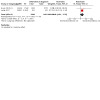
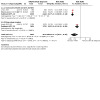
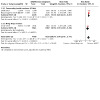
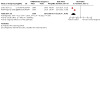
We included eight studies from several African countries, Afghanistan, and Myanmar. Staff included CHWs and drug shop vendors.  Community use of malaria rapid diagnostic tests compared to clinical diagnosis Compared to clinical diagnosis, mRDT diagnosis results in reduced prescribing of antimalarials to people who are found to be malaria parasite-negative by microscopy or PCR testing (71 fewer per 100 people, 95% confidence interval (CI) 79 to 51 fewer; risk ratio (RR) 0.17, 95% CI 0.07 to 0.40; 3 cRCTs, 7877 participants; moderate-certainty evidence). This reduction may be greater among CHWs compared to drug shop vendors. People diagnosed by mRDT are more likely to receive appropriate treatment; that is, an antimalarial if they are microscopy- or PCR-positive and no antimalarial if they are microscopy- or PCR-negative (RR 3.04, 95% CI 2.46 to 3.74, 3 cRCTs, 9332 participants; high-certainty evidence). Three studies found that a small percentage of people with a negative mRDT result (as read by the CHW or drug shop vendors at the time of treatment) were nevertheless given an antimalarial: 38/1368 (2.8%), 44/724 (6.1%) and 124/950 (13.1%). Conversely, in two studies, a few mRDT-positive people did not receive an antimalarial (0.5% and 0.3%), and one small cross-over study found that 6/57 (10.5%) people classified as non-malaria in the clinical diagnosis arm received an antimalarial. Use of mRDTs probably increases antibiotic use compared to clinical diagnosis (13 more per 100 people, 95% CI 3 to 29 more; RR 2.02, 95% CI 1.21 to 3.37; 2 cRCTs, 5179 participants; moderate-certainty evidence). We were unable to demonstrate any effect on mortality. Community use of malaria rapid diagnostic tests compared to health facility care Results were insufficient to reach any conclusion.

AUTHORS' CONCLUSIONS: Use of mRDTs by CHWs and drug shop vendors compared to clinical diagnosis reduces prescribing of antimalarials to people without malaria. Deaths were uncommon in both groups. Antibiotic prescribing was higher in those with a negative mRDT than in those with a negative clinical diagnosis.

摘要

背景

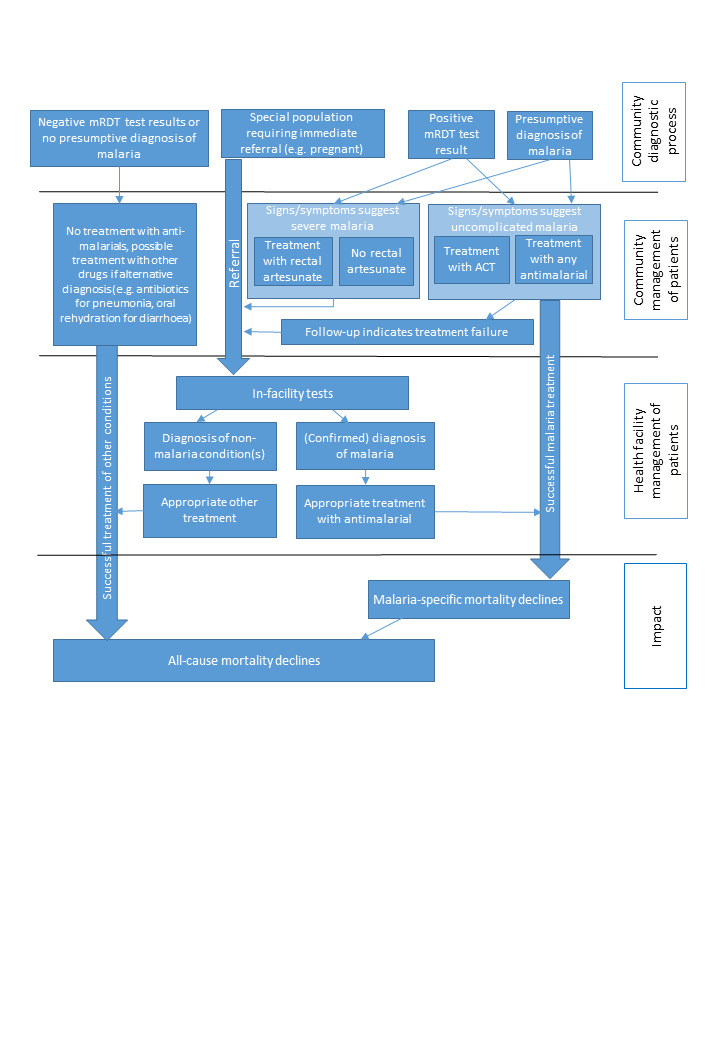
世界卫生组织(WHO)建议在治疗之前,使用疟疾快速诊断检测(mRDT)或显微镜对所有疑似疟疾病例进行寄生虫学检测。一些政府已将这一责任扩大到社区卫生工作者(CHW),以通过及时和适当的治疗来降低疟疾发病率和死亡率。这是 2013 年首次发表的 Cochrane 综述的更新。

目的

评估基于社区的疟疾或发热管理策略,这些策略结合了 mRDT 的明确诊断和适当的抗疟治疗。

检索方法

我们检索了 CENTRAL、MEDLINE、Embase、其他五个数据库和三个试验登记处,检索时间截至 2021 年 9 月 14 日。

选择标准

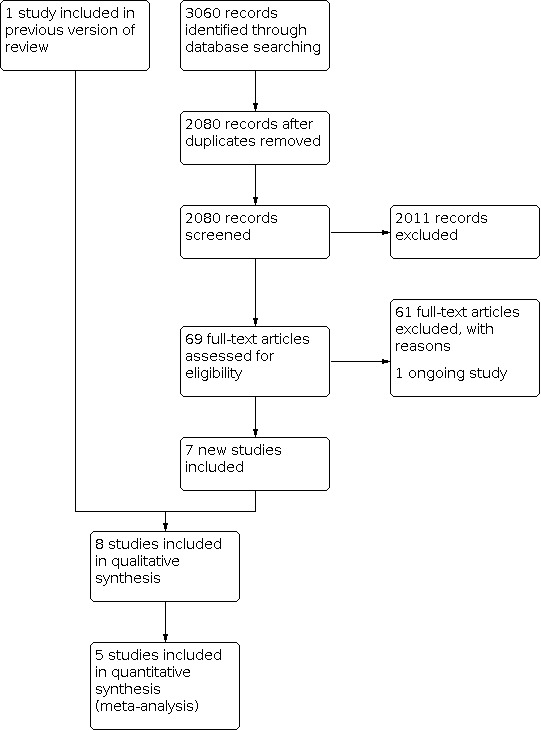
我们纳入了个体随机试验和群组随机对照试验(cRCTs)、对照前后研究和对照中断时间序列研究,研究对象为生活在疟疾流行地区的人群,比较了培训 CHW 和药店供应商进行 mRDT 并提供适当治疗的方案与不使用 mRDT 的类似方案,以及与常规卫生机构护理的方案。

数据收集和分析

我们使用了标准的 Cochrane 方法。对于每个二项结局,我们提取了有事件的参与者数量和每个组的总参与者数量,除非研究仅在人群水平上呈现结果。主要结局是全因死亡率、住院率和 24 小时内接受抗疟治疗的人数。次要结局是疟疾特异性死亡率、严重疟疾、与抗疟治疗相关的结局、对显微镜或聚合酶链反应(PCR)结果为阴性的人开抗生素处方、寄生虫血症、贫血和所有不良事件。

主要结果

我们纳入了来自几个非洲国家、阿富汗和缅甸的八项研究。工作人员包括 CHW 和药店供应商。社区使用疟疾快速诊断检测与临床诊断相比,mRDT 诊断结果导致抗疟药物的处方减少,对显微镜或 PCR 检测为疟原虫阴性的人(每 100 人减少 71 人,95%置信区间 79 至 51 人减少;风险比(RR)0.17,95%置信区间 0.07 至 0.40;3 个 cRCT,7877 名参与者;中等确定性证据)。与药店供应商相比,CHW 可能会有更大的减少。通过 mRDT 诊断的人更有可能接受适当的治疗,即如果显微镜或 PCR 阳性,则给予抗疟药物,如果显微镜或 PCR 阴性,则不给予抗疟药物(RR 3.04,95%置信区间 2.46 至 3.74,3 个 cRCT,9332 名参与者;高确定性证据)。三项研究发现,一小部分 mRDT 阴性结果(由 CHW 或药店供应商在治疗时读取)的人仍被给予抗疟药物:38/1368(2.8%),44/724(6.1%)和 124/950(13.1%)。相反,在两项研究中,少数 mRDT 阳性的人没有接受抗疟药物:0.5%和 0.3%,一项小型交叉研究发现,临床诊断组的 6/57(10.5%)人被归类为非疟疾患者接受了抗疟药物。与临床诊断相比,使用 mRDT 可能会增加抗生素的使用(每 100 人增加 13 人,95%置信区间 3 至 29 人增加;RR 2.02,95%置信区间 1.21 至 3.37;2 个 cRCT,5179 名参与者;中等确定性证据)。我们无法证明对死亡率有任何影响。社区使用疟疾快速诊断检测与卫生机构护理相比,结果不足以得出任何结论。

作者结论

与临床诊断相比,CHW 和药店供应商使用 mRDT 可减少对无疟疾患者的抗疟药物处方。两组的死亡人数都很少。与临床诊断阴性的人相比,mRDT 阴性的人开抗生素的比例更高。
https://cdn.ncbi.nlm.nih.gov/pmc/blobs/07a5/9453882/5af4a3b2d18a/tCD009527-CMP-001.04.jpg
https://cdn.ncbi.nlm.nih.gov/pmc/blobs/07a5/9453882/1d2893f85a2e/nCD009527-FIG-01.jpg
https://cdn.ncbi.nlm.nih.gov/pmc/blobs/07a5/9453882/3a68be8bfea8/nCD009527-FIG-02.jpg
https://cdn.ncbi.nlm.nih.gov/pmc/blobs/07a5/9453882/f3965c363229/nCD009527-FIG-03.jpg
https://cdn.ncbi.nlm.nih.gov/pmc/blobs/07a5/9453882/ac121b667221/tCD009527-FIG-04.jpg
https://cdn.ncbi.nlm.nih.gov/pmc/blobs/07a5/9453882/de0b1c67816f/tCD009527-FIG-05.jpg
https://cdn.ncbi.nlm.nih.gov/pmc/blobs/07a5/9453882/ea4b19f7f6df/tCD009527-CMP-001.01.jpg
https://cdn.ncbi.nlm.nih.gov/pmc/blobs/07a5/9453882/31fec71e6310/tCD009527-CMP-001.02.jpg
https://cdn.ncbi.nlm.nih.gov/pmc/blobs/07a5/9453882/dc5c5edabe68/tCD009527-CMP-001.03.jpg
https://cdn.ncbi.nlm.nih.gov/pmc/blobs/07a5/9453882/5af4a3b2d18a/tCD009527-CMP-001.04.jpg
https://cdn.ncbi.nlm.nih.gov/pmc/blobs/07a5/9453882/1d2893f85a2e/nCD009527-FIG-01.jpg
https://cdn.ncbi.nlm.nih.gov/pmc/blobs/07a5/9453882/3a68be8bfea8/nCD009527-FIG-02.jpg
https://cdn.ncbi.nlm.nih.gov/pmc/blobs/07a5/9453882/f3965c363229/nCD009527-FIG-03.jpg
https://cdn.ncbi.nlm.nih.gov/pmc/blobs/07a5/9453882/ac121b667221/tCD009527-FIG-04.jpg
https://cdn.ncbi.nlm.nih.gov/pmc/blobs/07a5/9453882/de0b1c67816f/tCD009527-FIG-05.jpg
https://cdn.ncbi.nlm.nih.gov/pmc/blobs/07a5/9453882/ea4b19f7f6df/tCD009527-CMP-001.01.jpg
https://cdn.ncbi.nlm.nih.gov/pmc/blobs/07a5/9453882/31fec71e6310/tCD009527-CMP-001.02.jpg
https://cdn.ncbi.nlm.nih.gov/pmc/blobs/07a5/9453882/dc5c5edabe68/tCD009527-CMP-001.03.jpg
https://cdn.ncbi.nlm.nih.gov/pmc/blobs/07a5/9453882/5af4a3b2d18a/tCD009527-CMP-001.04.jpg

相似文献

1
Adding rapid diagnostic tests to community-based programmes for treating malaria.将快速诊断检测添加到基于社区的疟疾治疗方案中。
Cochrane Database Syst Rev. 2022 Sep 8;9(9):CD009527. doi: 10.1002/14651858.CD009527.pub3.
2
Indoor residual spraying for preventing malaria in communities using insecticide-treated nets.室内残留喷洒用杀虫剂处理过的蚊帐预防疟疾在社区中使用。
Cochrane Database Syst Rev. 2022 Jan 17;1(1):CD012688. doi: 10.1002/14651858.CD012688.pub3.
3
Biomarkers as point-of-care tests to guide prescription of antibiotics in people with acute respiratory infections in primary care.生物标志物作为即时检测手段,指导初级保健中急性呼吸道感染患者使用抗生素的处方。
Cochrane Database Syst Rev. 2022 Oct 17;10(10):CD010130. doi: 10.1002/14651858.CD010130.pub3.
4
Electronic cigarettes for smoking cessation.电子烟戒烟。
Cochrane Database Syst Rev. 2021 Sep 14;9(9):CD010216. doi: 10.1002/14651858.CD010216.pub6.
5
Electronic cigarettes for smoking cessation.电子烟戒烟。
Cochrane Database Syst Rev. 2022 Nov 17;11(11):CD010216. doi: 10.1002/14651858.CD010216.pub7.
6
Inhaled corticosteroids for the treatment of COVID-19.吸入性皮质类固醇治疗 COVID-19。
Cochrane Database Syst Rev. 2022 Mar 9;3(3):CD015125. doi: 10.1002/14651858.CD015125.
7
Electronic cigarettes for smoking cessation.用于戒烟的电子烟。
Cochrane Database Syst Rev. 2025 Jan 29;1(1):CD010216. doi: 10.1002/14651858.CD010216.pub9.
8
Electronic cigarettes for smoking cessation.电子烟戒烟。
Cochrane Database Syst Rev. 2024 Jan 8;1(1):CD010216. doi: 10.1002/14651858.CD010216.pub8.
9
Sertindole for schizophrenia.用于治疗精神分裂症的舍吲哚。
Cochrane Database Syst Rev. 2005 Jul 20;2005(3):CD001715. doi: 10.1002/14651858.CD001715.pub2.
10
Signs and symptoms to determine if a patient presenting in primary care or hospital outpatient settings has COVID-19.在基层医疗机构或医院门诊环境中,如果患者出现以下症状和体征,可判断其是否患有 COVID-19。
Cochrane Database Syst Rev. 2022 May 20;5(5):CD013665. doi: 10.1002/14651858.CD013665.pub3.

引用本文的文献

1
Diagnostic accuracy of HRP2-based malaria rapid diagnostic tests and antigenemia persistence in Kenyan children from a holoendemic region: implications for case management and surveillance.基于HRP2的疟疾快速诊断检测在肯尼亚高度流行地区儿童中的诊断准确性及抗原血症持续时间:对病例管理和监测的影响
Exp Biol Med (Maywood). 2025 May 22;250:10585. doi: 10.3389/ebm.2025.10585. eCollection 2025.
2
Mental health care cascade performance and associated factors: longitudinal analyses of routine Ministry of Health services in Mozambique.精神卫生保健服务链绩效及相关因素:莫桑比克卫生部常规服务的纵向分析
BMJ Public Health. 2025 Mar 13;3(1):e001024. doi: 10.1136/bmjph-2024-001024. eCollection 2025 Jan.
3

本文引用的文献

1
Integrated community case management of childhood illness in low- and middle-income countries.低收入和中等收入国家儿童疾病的综合社区病例管理
Cochrane Database Syst Rev. 2021 Feb 10;2(2):CD012882. doi: 10.1002/14651858.CD012882.pub2.
2
Non-malarial febrile illness: a systematic review of published aetiological studies and case reports from Africa, 1980-2015.非疟疾性发热性疾病:1980-2015 年非洲发表的病因学研究和病例报告的系统评价。
BMC Med. 2020 Sep 21;18(1):279. doi: 10.1186/s12916-020-01744-1.
3
Evaluating interventions to improve test, treat, and track (T3) malaria strategy among over-the-counter medicine sellers (OTCMS) in some rural communities of Fanteakwa North district, Ghana: study protocol for a cluster randomized controlled trial.
Assessment of the Performance of Lactate Dehydrogenase-Based Rapid Diagnostic Test for Malaria in Djibouti in 2022-2023.
2022 - 2023年吉布提基于乳酸脱氢酶的疟疾快速诊断检测性能评估
Diagnostics (Basel). 2024 Jan 25;14(3):262. doi: 10.3390/diagnostics14030262.
4
Advances in the application of recombinase-aided amplification combined with CRISPR-Cas technology in quick detection of pathogenic microbes.重组酶辅助扩增与CRISPR-Cas技术联用在病原微生物快速检测中的应用进展
Front Bioeng Biotechnol. 2023 Aug 31;11:1215466. doi: 10.3389/fbioe.2023.1215466. eCollection 2023.
评估干预措施以改善加纳芳蒂克瓦北地区一些农村社区非处方药销售者(OTCMS)中检测、治疗和跟踪(T3)疟疾策略:一项整群随机对照试验研究方案。
Trials. 2020 Jul 8;21(1):623. doi: 10.1186/s13063-020-04509-6.
4
Modelling the cost-effectiveness of introducing subsidised malaria rapid diagnostic tests in the private retail sector in sub-Saharan Africa.在撒哈拉以南非洲的私营零售部门引入补贴性疟疾快速诊断检测的成本效益建模。
BMJ Glob Health. 2020 May;5(5). doi: 10.1136/bmjgh-2019-002138.
5
Proactive community case management in Senegal 2014-2016: a case study in maximizing the impact of community case management of malaria.塞内加尔 2014-2016 年的主动社区病例管理:最大限度发挥社区疟疾病例管理影响的案例研究。
Malar J. 2020 Apr 25;19(1):166. doi: 10.1186/s12936-020-03238-0.
6
GRADE guidelines 26: informative statements to communicate the findings of systematic reviews of interventions.GRADE 指南 26:用于沟通干预措施系统评价结果的信息性陈述。
J Clin Epidemiol. 2020 Mar;119:126-135. doi: 10.1016/j.jclinepi.2019.10.014. Epub 2019 Nov 9.
7
False-negative malaria rapid diagnostic test results and their impact on community-based malaria surveys in sub-Saharan Africa.疟疾病例快速诊断检测结果呈假阴性及其对撒哈拉以南非洲地区社区疟疾调查的影响。
BMJ Glob Health. 2019 Jul 29;4(4):e001582. doi: 10.1136/bmjgh-2019-001582. eCollection 2019.
8
The Accuracy and Perception of Test-Based Management of Malaria at Private Licensed Chemical Shops in the Middle Belt of Ghana.加纳中地带私人持照化学店基于检测的疟疾管理的准确性和认知。
Am J Trop Med Hyg. 2019 Feb;100(2):264-274. doi: 10.4269/ajtmh.17-0970.
9
Insecticide-treated nets for preventing malaria.用于预防疟疾的经杀虫剂处理的蚊帐。
Cochrane Database Syst Rev. 2018 Nov 6;11(11):CD000363. doi: 10.1002/14651858.CD000363.pub3.
10
Evaluation of malaria rapid diagnostic test (RDT) use by community health workers: a longitudinal study in western Kenya.社区卫生工作者使用疟疾快速诊断检测(RDT)的评估:肯尼亚西部的一项纵向研究。
Malar J. 2018 May 18;17(1):206. doi: 10.1186/s12936-018-2358-6.