Institute for Complex Systems (ISC), National Research Council (CNR), Sesto Fiorentino, Italy.
Department of Physics and Astronomy, University of Florence, Sesto Fiorentino, Italy.
J Neurosci Methods. 2022 Nov 1;381:109703. doi: 10.1016/j.jneumeth.2022.109703. Epub 2022 Sep 6.
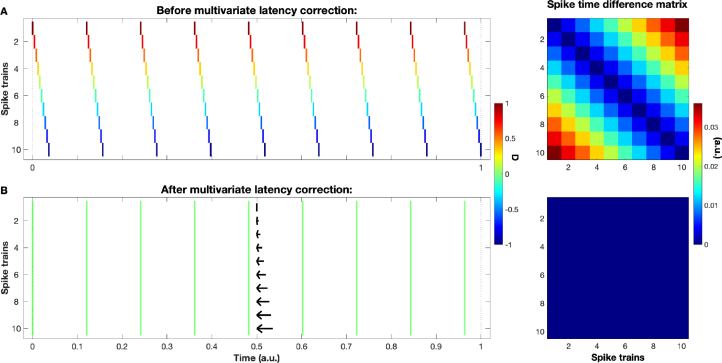
In neurophysiological data, latency refers to a global shift of spikes from one spike train to the next, either caused by response onset fluctuations or by finite propagation speed. Such systematic shifts in spike timing lead to a spurious decrease in synchrony which needs to be corrected.
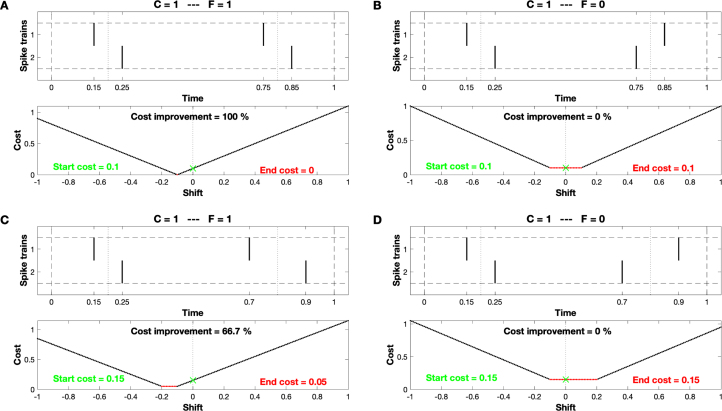
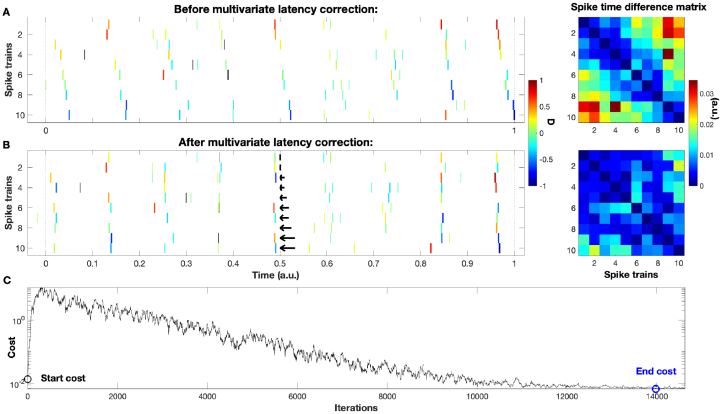
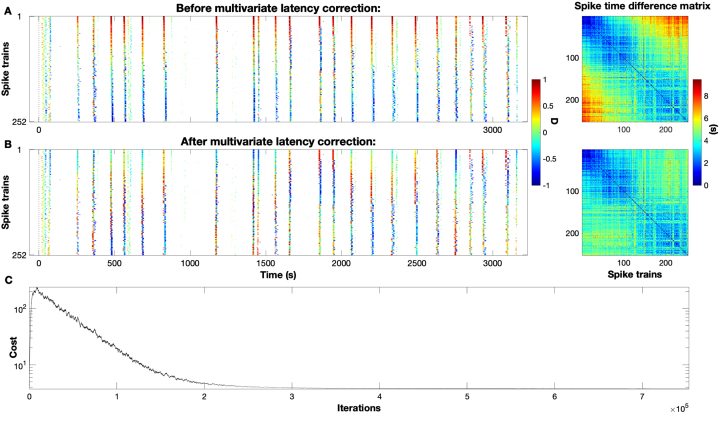
We propose a new algorithm of multivariate latency correction suitable for sparse data for which the relevant information is not primarily in the rate but in the timing of each individual spike. The algorithm is designed to correct systematic delays while maintaining all other kinds of noisy disturbances. It consists of two steps, spike matching and distance minimization between the matched spikes using simulated annealing.
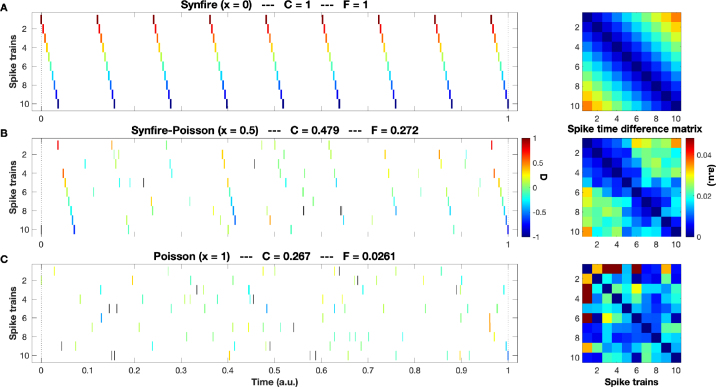
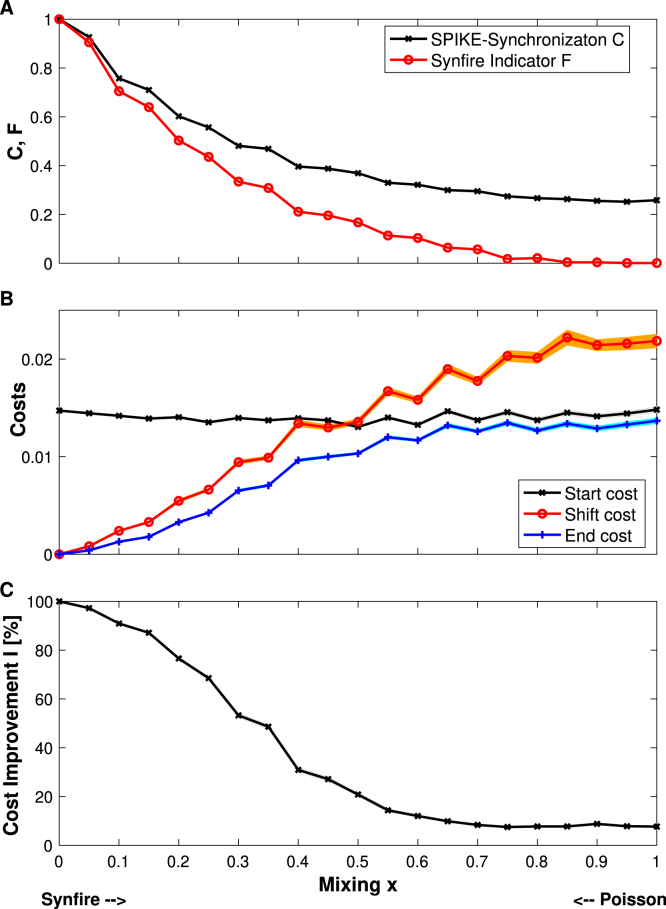
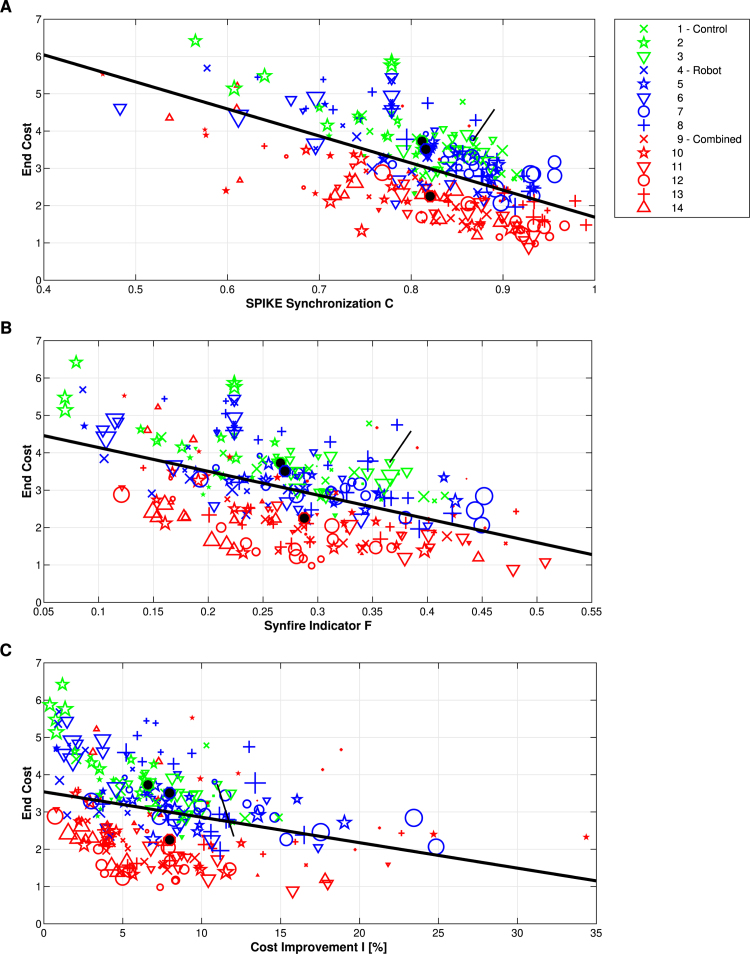
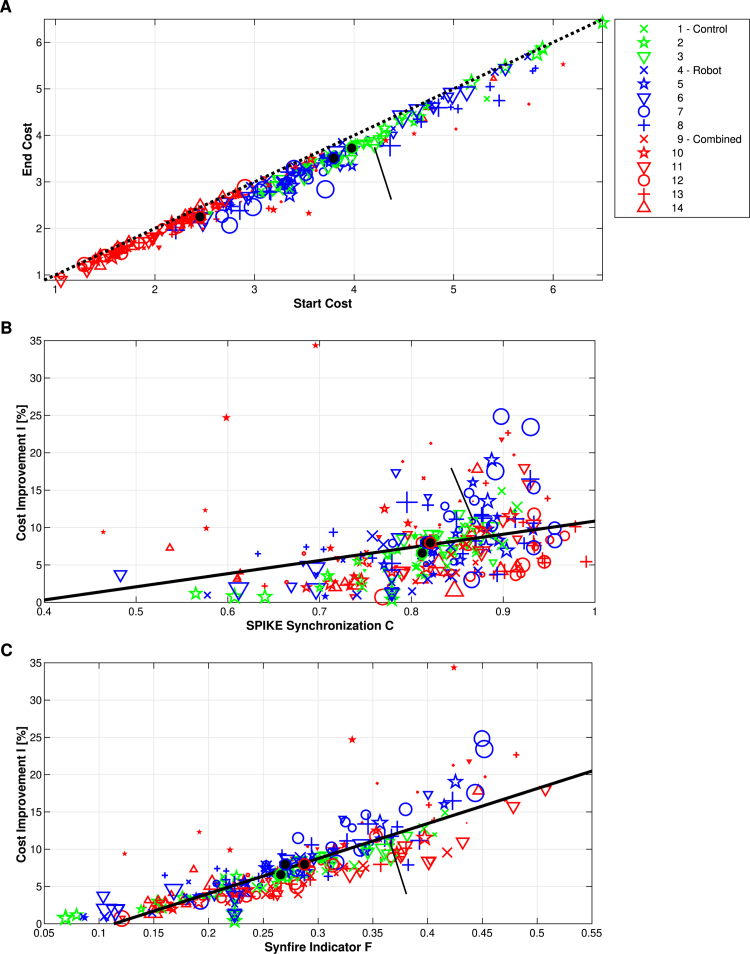
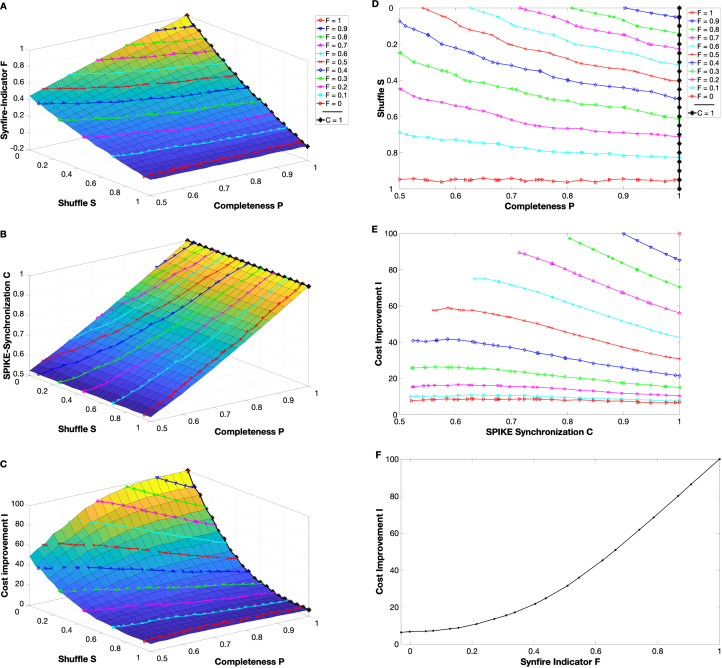
We show its effectiveness on simulated and real data: cortical propagation patterns recorded via calcium imaging from mice before and after stroke. Using simulations of these data we also establish criteria that can be evaluated beforehand in order to anticipate whether our algorithm is likely to yield a considerable improvement for a given dataset.
COMPARISON WITH EXISTING METHOD(S): Existing methods of latency correction rely on adjusting peaks in rate profiles, an approach that is not feasible for spike trains with low firing in which the timing of individual spikes contains essential information.
For any given dataset the criterion for applicability of the algorithm can be evaluated quickly and in case of a positive outcome the latency correction can be applied easily since the source codes of the algorithm are publicly available.
在神经生理数据中,潜伏期是指从一个尖峰序列到下一个尖峰序列的全局尖峰时移,这种尖峰时间的系统偏移会导致同步性的虚假下降,需要进行校正。
我们提出了一种新的多变量潜伏期校正算法,适用于稀疏数据,其中相关信息主要不是在率中,而是在每个单个尖峰的时间中。该算法旨在在保持所有其他类型噪声干扰的情况下,校正系统延迟。它由两步组成,即使用模拟退火进行尖峰匹配和匹配尖峰之间的距离最小化。
我们在模拟和真实数据上展示了其有效性:通过钙成像从中风前后的小鼠记录的皮质传播模式。使用这些数据的模拟,我们还建立了可以事先评估的标准,以便预测我们的算法是否可能对给定数据集产生显著的改进。
现有的潜伏期校正方法依赖于调整率谱中的峰值,对于发射率低的尖峰序列,这种方法不可行,因为单个尖峰的时间包含重要信息。
对于任何给定的数据集,可以快速评估算法的适用性标准,如果结果为正,可以轻松应用潜伏期校正,因为算法的源代码是公开的。