Biochemistry Department, College of Pharmaceutical Sciences and Drug Manufacturing, Misr University for Science and Technology, 6th of October, Giza, Egypt.
Tissue Culture and Cytogenetics Unit, Pathology Department, National Cancer Institute, Cairo University, Cairo, Egypt.
Mol Genet Genomics. 2022 Nov;297(6):1671-1687. doi: 10.1007/s00438-022-01950-x. Epub 2022 Sep 8.
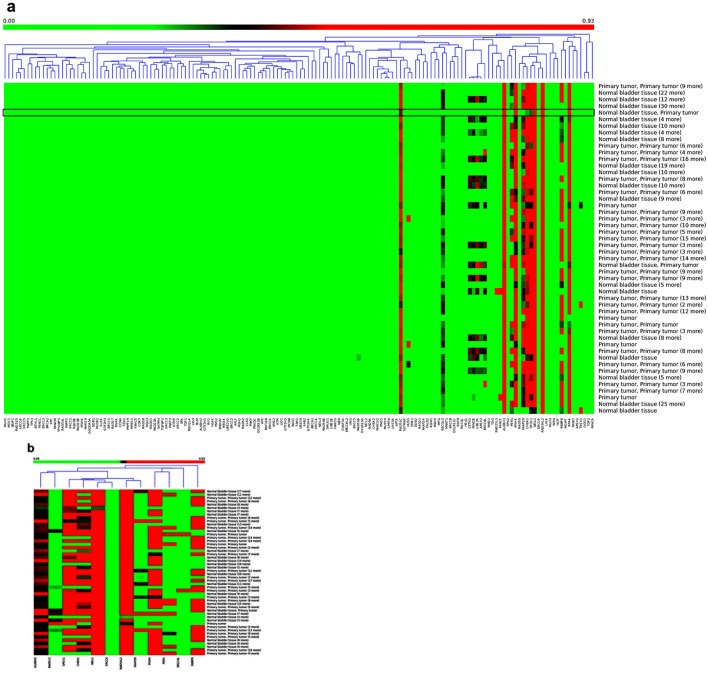
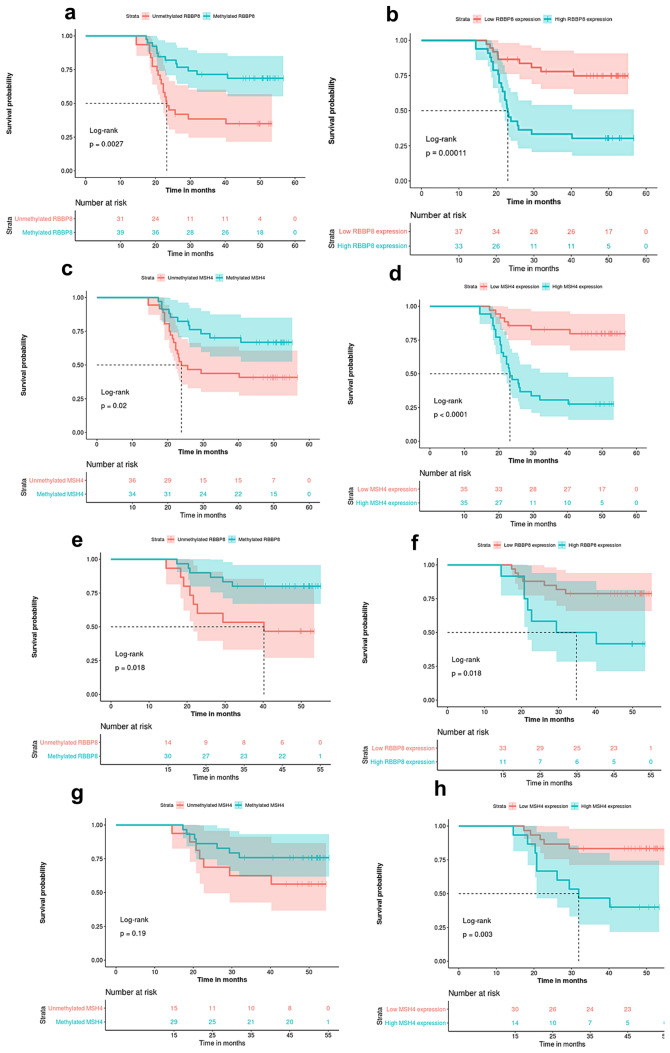
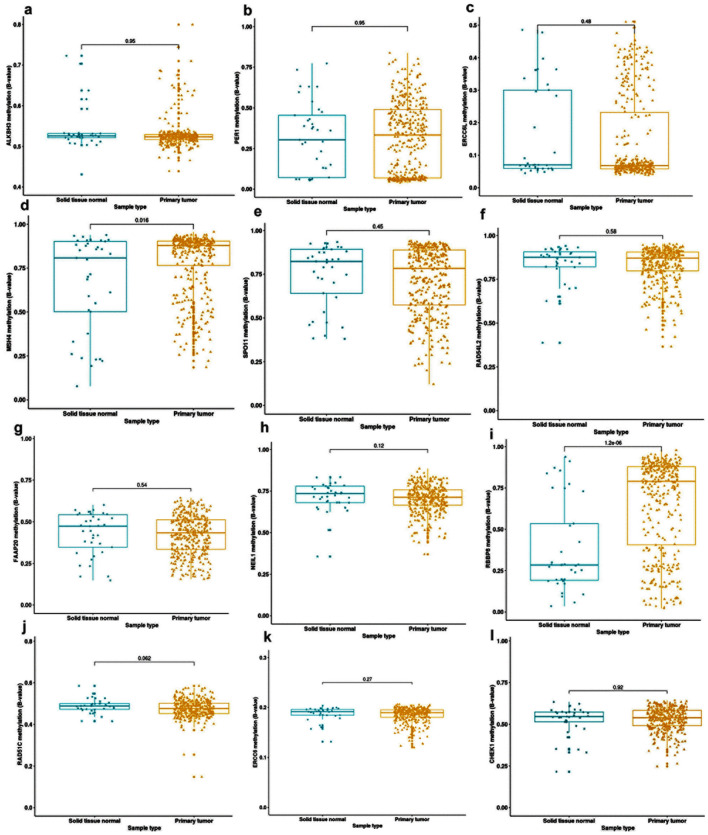
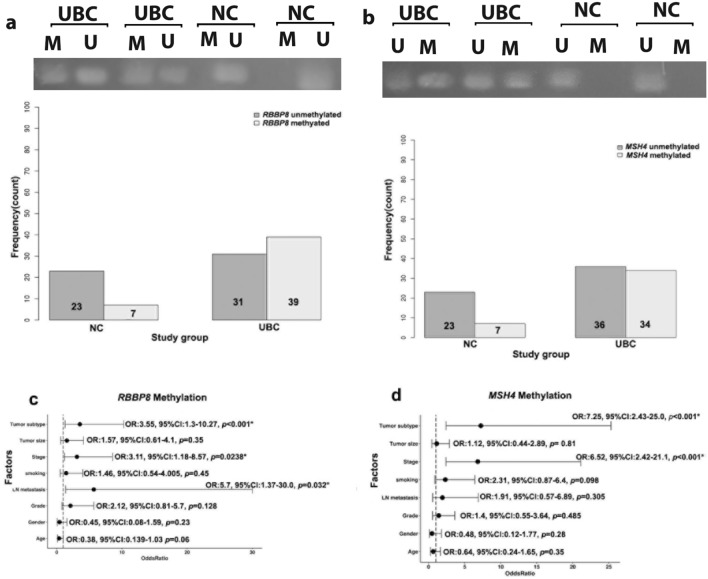
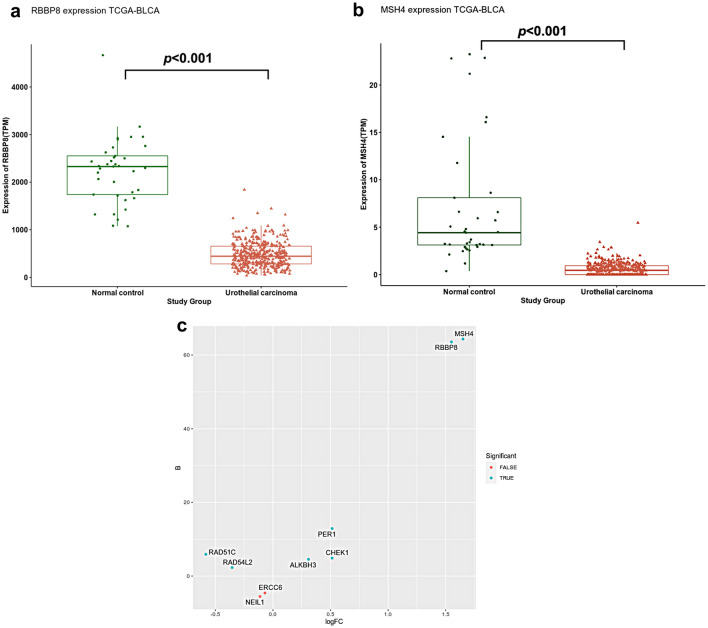
We sought to examine epigenetic inactivation of DNA damage repair (DDR) genes as prognostic and predictive biomarkers for urothelial bladder cancer (UBC) as there are currently no reliable prognostic biomarkers that identify UBC patients who would benefit from chemotherapy. Genome-wide DNA methylome using the cancer genome atlas-bladder cancer (TCGA-BLCA) datasets (primary tumors = 374 and normal tissues = 37) was performed for 154 DDR genes. The most two significant differentially methylated genes, Retinoblastoma binding protein 8 (RBBP8) and MutS homologue 4 (MSH4), between primary tumors and normal tissues of TCGA-BLCA were validated by methylation-specific PCR (MSP) in UBC (n = 70) compared to normal tissues (n = 30). RBBP8 and MSH4 expression was measured using qRT-PCR. We developed a predictive model for therapeutic response based on the RBBP8- and MSH4-methylation along with patients' clinical features. Then, we assessed the prognostic significance of RBBP8 and MSH4. RBBP8- and MSH4 methylation and corresponding gene downregulation significantly associated with muscle-invasive phenotype, prolonged progression-free survival (PFS) and increased susceptibility to cisplatin chemotherapy in UBC. Promoter methylation of RBBP8 and MSH4 was positively correlated with each other and with their corresponding gene repression. The best machine-learning classification model predicted UBC patients' response to cisplatin-based chemotherapy with an accuracy of 90.05 ± 4.5%. Epigenetic inactivation of RBBP8 and MSH4 in UBC could sensitize patients to DNA-damaging agents. A predictive machine-learning modeling approach based on the clinical features along with RBBP8- and MSH4-methylation might be a promising tool for stratification of UBC responders from nonresponders to chemotherapy.
我们试图研究 DNA 损伤修复(DDR)基因的表观遗传失活是否可作为尿路上皮膀胱癌(UBC)的预后和预测生物标志物,因为目前尚无可靠的预后生物标志物可以识别出需要化疗获益的 UBC 患者。对癌症基因组图谱-膀胱癌(TCGA-BLCA)数据集(原发肿瘤 = 374 例,正常组织 = 37 例)中的 154 个 DDR 基因进行了全基因组 DNA 甲基化组分析。在 TCGA-BLCA 的原发肿瘤与正常组织之间,最显著的两个差异甲基化基因是视网膜母细胞瘤结合蛋白 8(RBBP8)和错配修复蛋白 4(MSH4),我们通过甲基化特异性 PCR(MSP)在 UBC(n = 70)中对其进行了验证,与正常组织(n = 30)进行比较。使用 qRT-PCR 测量 RBBP8 和 MSH4 的表达。我们基于 RBBP8 和 MSH4 的甲基化以及患者的临床特征,开发了一种用于治疗反应预测的模型。然后,我们评估了 RBBP8 和 MSH4 的预后意义。在 UBC 中,RBBP8 和 MSH4 的甲基化及其相应基因的下调与肌层浸润表型、延长无进展生存期(PFS)和增加对顺铂化疗的敏感性显著相关。RBBP8 和 MSH4 启动子的甲基化彼此之间以及与相应基因的抑制呈正相关。最佳的机器学习分类模型预测 UBC 患者对顺铂为基础的化疗的反应准确率为 90.05±4.5%。UBC 中 RBBP8 和 MSH4 的表观遗传失活可能使患者对 DNA 损伤剂敏感。基于临床特征以及 RBBP8 和 MSH4 甲基化的机器学习预测模型可能是分层 UBC 患者对化疗的反应者和非反应者的有前途的工具。