McKusick-Nathans Department of Genetic Medicine, Johns Hopkins University School of Medicine, Baltimore, MD, 21205, USA.
Department of Pediatrics, Johns Hopkins University School of Medicine, Baltimore, MD, 21205, USA.
J Neuroinflammation. 2022 Sep 8;19(1):223. doi: 10.1186/s12974-022-02584-x.
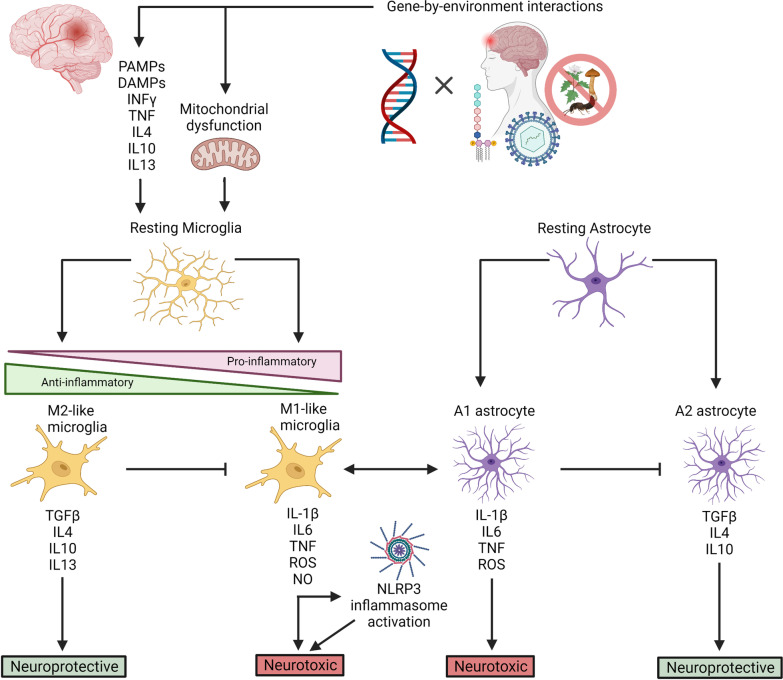
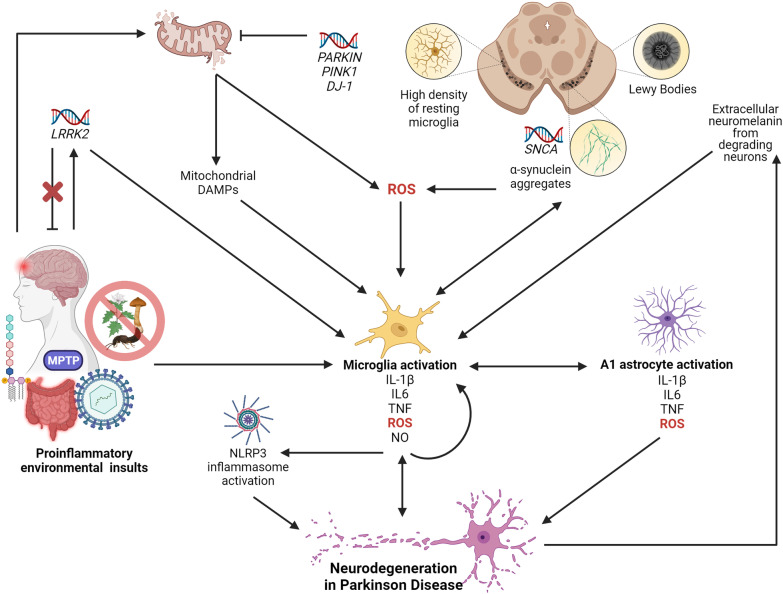
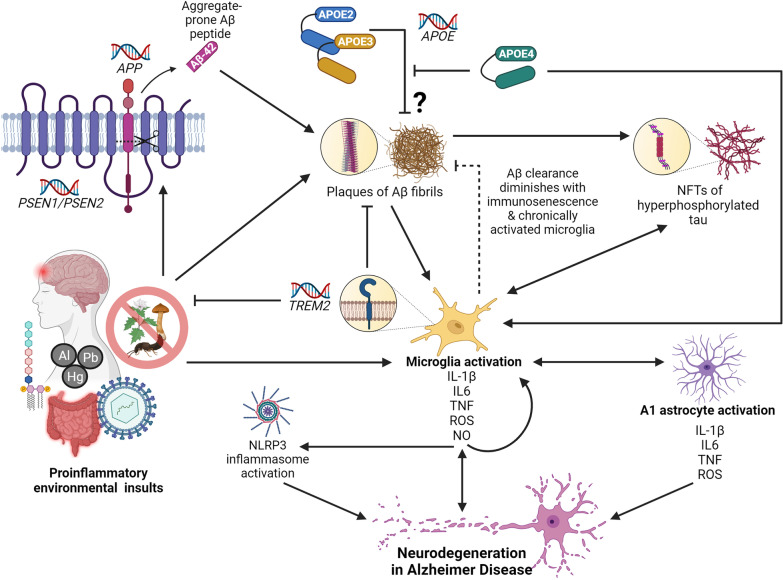
Multifactorial diseases are characterized by inter-individual variation in etiology, age of onset, and penetrance. These diseases tend to be relatively common and arise from the combined action of genetic and environmental factors; however, parsing the convoluted mechanisms underlying these gene-by-environment interactions presents a significant challenge to their study and management. For neurodegenerative disorders, resolving this challenge is imperative, given the enormous health and societal burdens they impose. The mechanisms by which genetic and environmental effects may act in concert to destabilize homeostasis and elevate risk has become a major research focus in the study of common disease. Emphasis is further being placed on determining the extent to which a unifying biological principle may account for the progressively diminishing capacity of a system to buffer disease phenotypes, as risk for disease increases. Data emerging from studies of common, neurodegenerative diseases are providing insights to pragmatically connect mechanisms of genetic and environmental risk that previously seemed disparate. In this review, we discuss evidence positing inflammation as a unifying biological principle of homeostatic destabilization affecting the risk, onset, and progression of neurodegenerative diseases. Specifically, we discuss how genetic variation associated with Alzheimer disease and Parkinson disease may contribute to pro-inflammatory responses, how such underlying predisposition may be exacerbated by environmental insults, and how this common theme is being leveraged in the ongoing search for effective therapeutic interventions.
多因素疾病的病因、发病年龄和外显率在个体间存在差异。这些疾病往往较为常见,是遗传和环境因素共同作用的结果;然而,解析这些基因-环境相互作用背后错综复杂的机制,对其研究和管理提出了重大挑战。对于神经退行性疾病而言,鉴于其给健康和社会带来的巨大负担,解决这一挑战至关重要。遗传和环境效应可能协同作用破坏内稳状态并增加风险的机制,已成为常见疾病研究的一个主要关注点。目前,人们更加关注确定一个统一的生物学原理在多大程度上可以解释随着疾病风险的增加,系统缓冲疾病表型的能力逐渐下降。从常见神经退行性疾病研究中获得的数据为我们提供了深入的见解,使人们能够更实际地将遗传和环境风险的机制联系起来,这些机制之前似乎是截然不同的。在这篇综述中,我们讨论了将炎症作为影响神经退行性疾病风险、发病和进展的内稳破坏的统一生物学原理的证据。具体而言,我们讨论了与阿尔茨海默病和帕金森病相关的遗传变异如何导致促炎反应,这种潜在倾向如何因环境损伤而加剧,以及这一共同主题如何在寻找有效的治疗干预措施的过程中被利用。